Government dole-outs are growing at an alarming rate, and what should have been temporary relief has become a permanent political instrument. A nation cannot survive when dependency becomes state policy and productive labor is forced to support an ever-expanding population sustained by subsidies rather than opportunity.
There is nothing wrong with helping the truly needy during calamities, economic collapse, or personal hardship. A civilized society must protect its vulnerable citizens. But the problem begins when poverty itself becomes massive and permanent, while government response remains limited to endless cash assistance. That approach does not solve poverty; it merely manages it for political convenience. A country where millions survive through recurring handouts is not progressing. It is slowly normalizing helplessness.
Instead of developing industries, strengthening agriculture, encouraging entrepreneurship, and creating stable employment, the government keeps distributing aid as though envelopes, sacks of rice, and cash cards can cure poverty. It cannot. No nation in history rose from poverty by training its people to wait for the next payout.
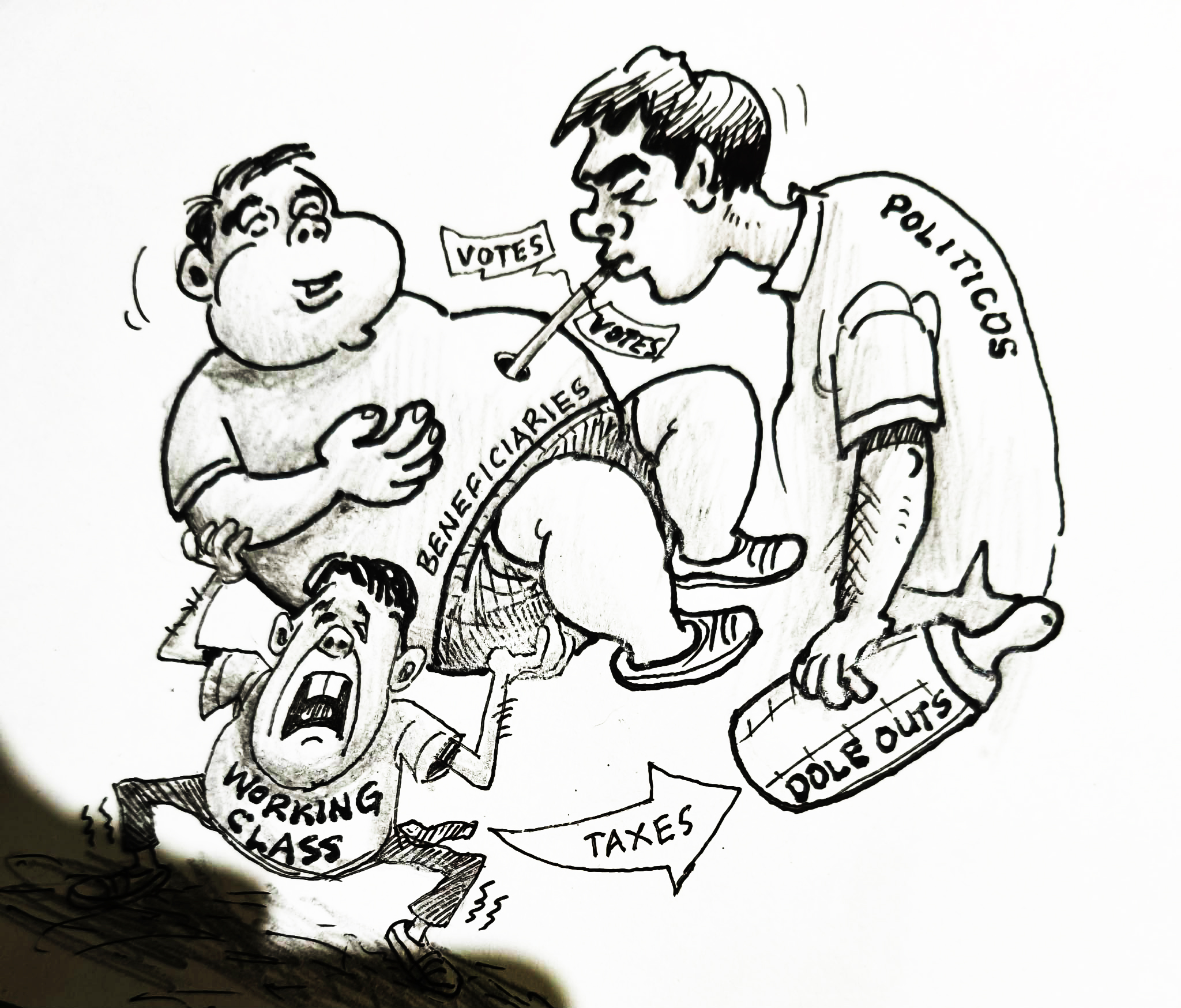
Even worse, these programs quietly punish the working and productive sectors of society. The taxes of ordinary employees, small business owners, professionals, vendors, and laborers are continually extracted to sustain a system that often rewards idleness more than effort. Many workers now carry the bitter sentiment that they labor endlessly only to finance a growing culture of dependence. The injustice becomes sharper when some beneficiaries begin treating assistance not as emergency support but as an entitlement that must continue regardless of personal initiative. The state should uplift citizens toward self-reliance, not condition them to survive through perpetual dependence on public funds. A government that constantly feeds people without teaching them how to earn eventually weakens the discipline, ambition, and responsibility needed for national growth.
Behind this system lies a political machinery that thrives on dependency. Politicians understand that jobs, factories, irrigation systems, livelihood programs, and long-term investments do not produce immediate political loyalty. But cash assistance does. Those who control the list of beneficiaries control a reliable voting bloc. This is why some public officials prefer highly visible dole-out programs over serious economic reforms that take years to bear fruit. Poverty becomes politically useful because dependent citizens are easier to influence during elections. The assistance may appear charitable on the surface, but beneath it often lies a calculated strategy of securing gratitude and obedience from economically desperate voters. In many areas, government aid has become a modern form of vote buying financed not by private money but by taxpayers themselves.
The country must abandon the dangerous illusion that endless handouts are compassion. Real compassion equips people to stand on their own feet. Government resources should focus on employment generation, agricultural modernization, skills training, small-business support, infrastructure development, and industries that generate lasting income.
Assistance must remain temporary, targeted, and tied to programs that lead beneficiaries toward productivity. Otherwise, the nation will continue sinking into a cycle where politicians preserve poverty to preserve power, while the working population carries an ever-heavier burden. A state that truly respects the poor does not keep them dependent forever; it gives them the means to escape poverty with dignity.