
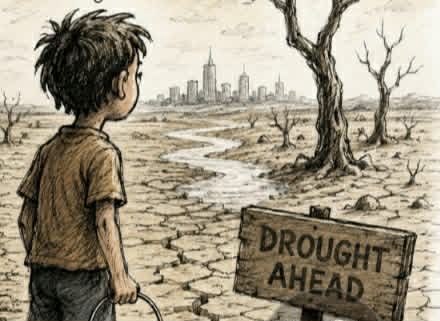
The warnings are becoming louder, and the forecasts are becoming more alarming. Weather experts are saying that a severe El Niño may once again affect the country in the coming months. Faced with this threat, conserving water is no longer merely a good habit but an urgent responsibility.
El Niño has always been associated with prolonged dry spells, scorching temperatures, and declining water levels in rivers, dams, and reservoirs. When rainfall becomes scarce, communities immediately feel the consequences. Households struggle with water shortages, farmers watch their crops wither under the heat, and livestock suffer from the lack of drinking water. Conserving water today is one of the simplest yet most effective ways of preparing for the difficult months ahead. Every drop saved now helps reduce the pressure on limited water supplies when drought conditions worsen.
The agricultural sector is particularly vulnerable during severe El Niño events. Agriculture remains heavily dependent on water, and a prolonged lack of rainfall can devastate rice fields, vegetable farms, and other crops that sustain both livelihoods and food security. Reduced harvests often lead to higher food prices, affecting not only farmers but also ordinary consumers. By using water wisely and avoiding waste, communities can help ensure that available water resources are sufficient for both domestic and agricultural needs during periods of scarcity.
Water conservation is also important for maintaining public health and essential services. Hospitals, schools, fire departments, and other institutions require a steady supply of water to operate effectively. During droughts, competition for limited water resources often intensifies, creating hardships for vulnerable sectors of society. Simple practices such as repairing leaks, collecting rainwater when possible, reducing unnecessary water use, and promoting efficient water management can collectively make a significant difference in extending available supplies.
The approaching El Niño should serve as a wake-up call rather than a cause for panic. Waiting until reservoirs are nearly empty and communities are already experiencing shortages would be a costly mistake. Conserving water now is a practical act of preparedness that protects households, supports agriculture, safeguards public services, and strengthens community resilience. The best time to save water is not when the drought has already arrived, but while there is still enough water to save.