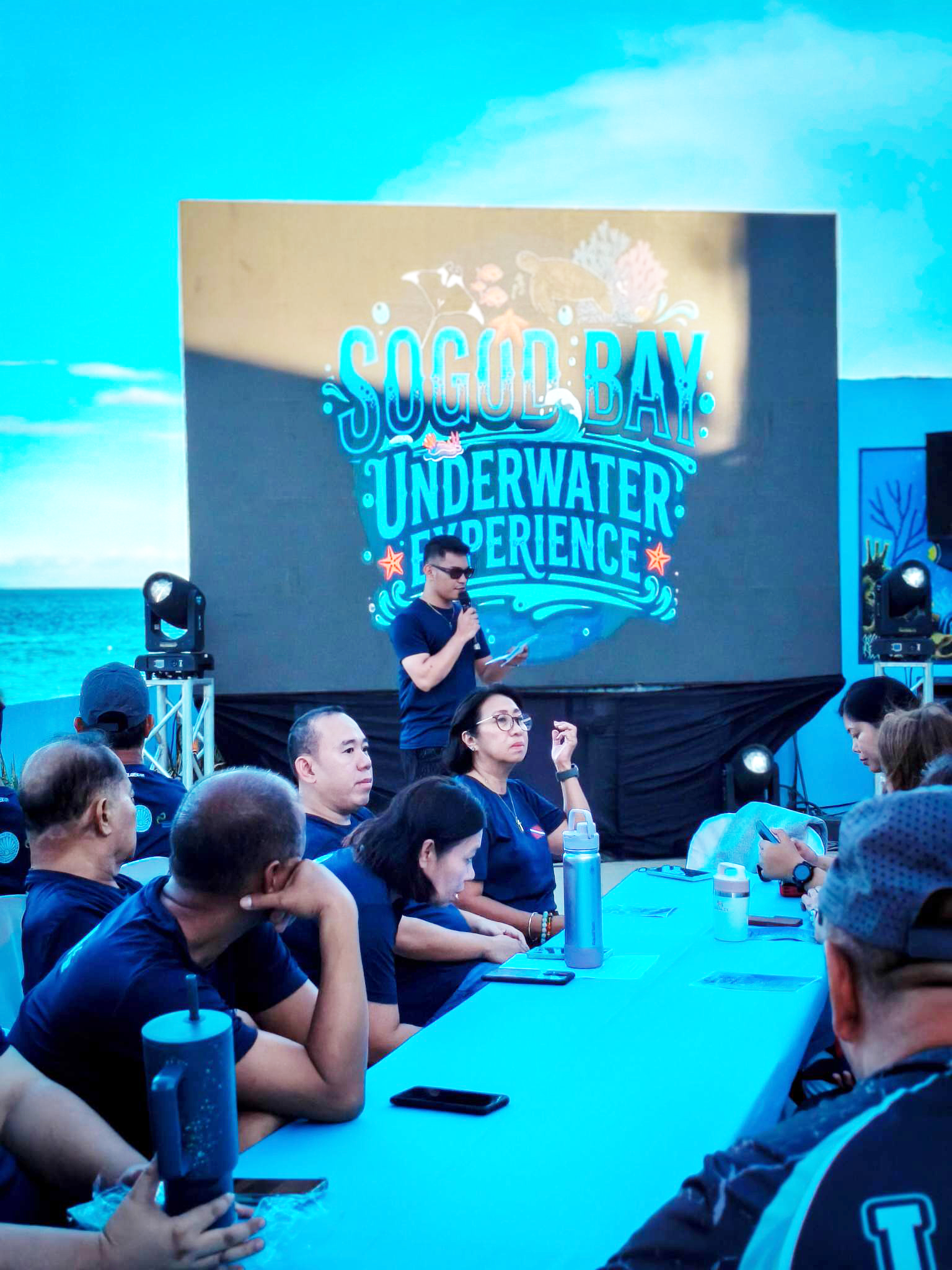
PADRE BURGOS, Southern Leyte — Stakeholders from the tourism, fishing, environmental, and government sectors gathered in Southern Leyte to strengthen cooperation in protecting Sogod Bay’s marine resources while ensuring sustainable livelihoods for coastal communities.
The dialogue took place during the closing of the dive conversation, one of the highlights of the three-day Sogod Bay Underwater Experience organized to promote sustainable dive tourism and marine conservation initiatives in the area.
In her message, Department of Tourism (DOT) Eastern Visayas Regional Director Karina Rosa Tiopes thanked local government officials, barangay leaders, fisherfolk, dive resort owners, tourism stakeholders, environmental groups, academe representatives, media practitioners, and national government agencies for participating in the discussions.
“Dive tourism and marine conservation are closely connected. Divers travel from different places because they want to experience healthy reefs and thriving marine life. This is why protecting our seas also supports tourism and local livelihoods,” Tiopes said.
Tiopes described the gathering as an open and inclusive platform where stakeholders were encouraged to share experiences, concerns, and recommendations regarding the future of Sogod Bay and its dive tourism industry.
She emphasized that communities surrounding the bay have long depended on the sea for food, livelihood, culture, and survival, with fishing sustaining families for generations.
At the same time, Tiopes acknowledged the continuing challenge of balancing economic needs with environmental protection to ensure that marine resources remain available for future generations.
The DOT regional director stressed that meaningful discussions among communities, tourism operators, and government agencies are essential in building a shared understanding of how individual actions impact marine ecosystems over time.
She also expressed hope that insights shared during the event demonstrate how dive tourism in other destinations has successfully supported both conservation efforts and local livelihoods through collaboration among communities and local governments.
Tiopes highlighted the ecological significance of Sogod Bay, citing its rich marine biodiversity, healthy coral reefs, and unique dive sites that continue to attract divers from different parts of the country and abroad.
She likewise recognized that fishing remains a primary source of livelihood for many families in Southern Leyte, emphasizing that the goal is not to choose between conservation and livelihood, but to achieve a sustainable balance between the two.
“This is why what we are really aiming for is balance — ensuring that our seas continue to provide for our needs today while remaining healthy enough to sustain future generations,” Tiopes added.
Tiopes also encouraged stakeholders to commit to practical and meaningful actions such as responsible fishing, coral reef protection, improved tourism operations, and support for sound environmental policies and governance.
“If we each take one small step that we can truly commit to, then together those steps can create meaningful change,” she said.
Meanwhile, guest speaker Sedfrey Cabaluna underscored the importance of collaboration among local governments, communities, and the dive sector in protecting marine ecosystems.
“The local government, the community, and the dive community need to work hand in hand on this matter,” Cabaluna said.
He added that communities should better understand how healthy reefs directly affect livelihoods, families, and future generations.
“People may only see the beauty of the coral cover. We can talk about percentages such as 40 percent or 80 percent coral cover, but communities may not fully appreciate that kind of language. We need to help them understand the implications of having healthy reefs and how these directly affect their livelihood, their families, their children, and their future,” he added.
(ROEL T. AMAZONA)