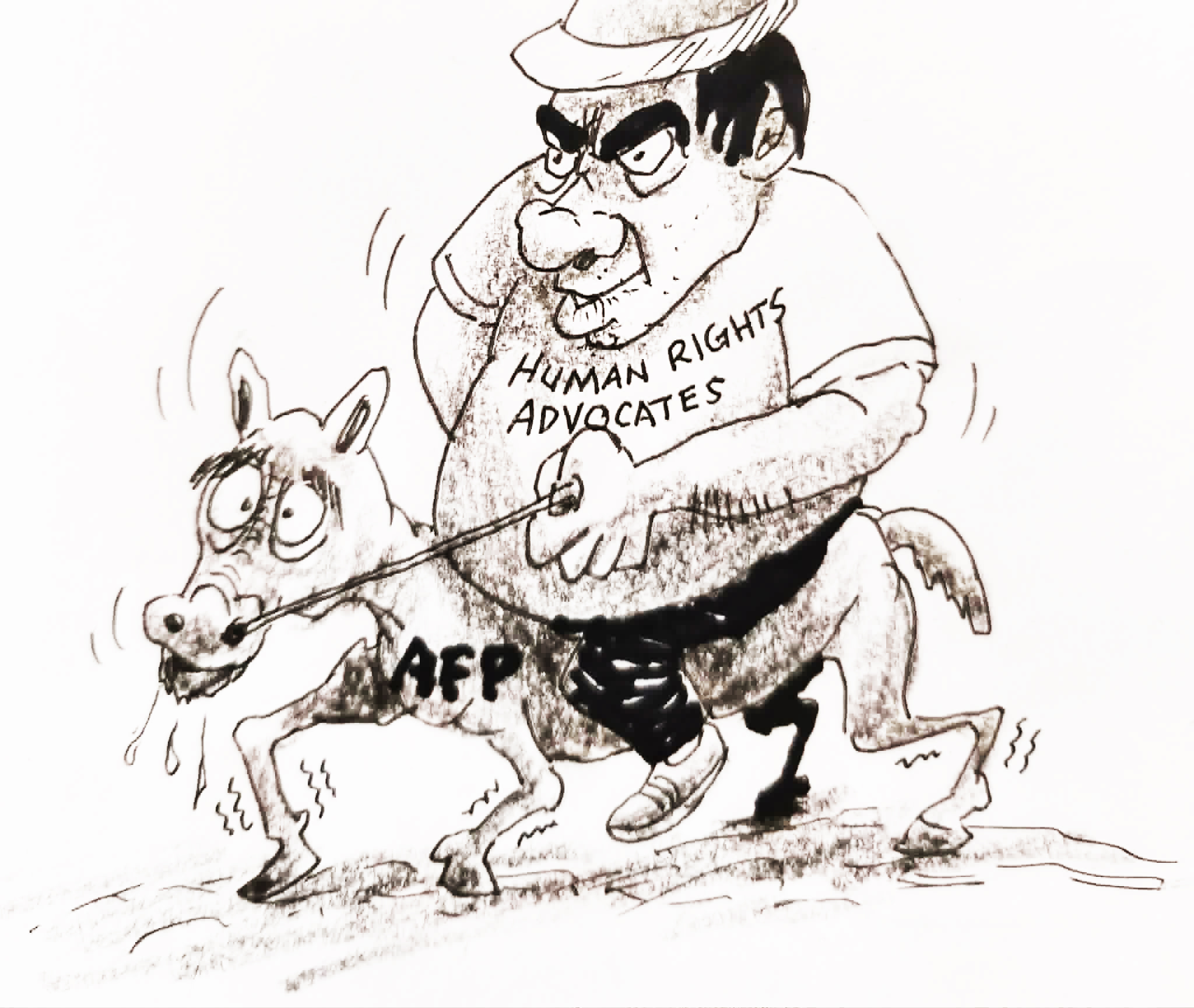
The growing tendency of certain rights groups to assume excessive authority in national affairs has crossed into dangerous territory. Demands that undermine the state’s duty to maintain order and security are not only unreasonable but also reckless.
The recent clash in Toboso involving government forces and elements of the New People’s Army has exposed this troubling pattern. Instead of recognizing the legitimacy of military operations against an armed insurgency, some groups and officials have gone so far as to suggest that these combatants be left undisturbed. Such a position defies basic logic. No sovereign state can allow an armed organization, openly committed to overthrowing the government, to operate freely without consequence.
The role of the Armed Forces of the Philippines is clear and non-negotiable: to defend the Constitution and protect the public from threats, both foreign and domestic. The NPA is neither a civic organization nor a peaceful advocacy group. It is an armed force with a long history of violence, extortion, and disruption in rural communities. To demand that the military refrain from acting against such a group is to effectively abandon the state’s responsibility to uphold law and order.
Equally concerning is the posture of certain public officials who echo these demands. Holding office carries the obligation to act in the interest of national stability, not to indulge ideological sympathies that weaken state authority. When leaders lend their voices to calls that excuse or protect armed insurgents, they shatter public confidence and blur the line between lawful dissent and active subversion. This is not a matter of political preference; it is a matter of national security.
Rights advocacy has an important place in any democracy, but it must remain grounded in reason and accountability. Civil liberties cannot be invoked to shield armed rebellion or to paralyze legitimate state action. There is a clear distinction between defending human rights and enabling forces that seek to dismantle democratic institutions. When that line is crossed, advocacy becomes obstruction, and its consequences harm the very society it claims to protect.
What is needed now is a firm reassertion of boundaries. The government must continue to act decisively against armed threats while ensuring that its operations remain within the law. At the same time, rights groups and public officials must be held to a standard that respects both civil liberties and national security. Demands that defy this balance should be rejected outright, for no nation can endure if it allows its defenders to be restrained while its enemies are given free rein.