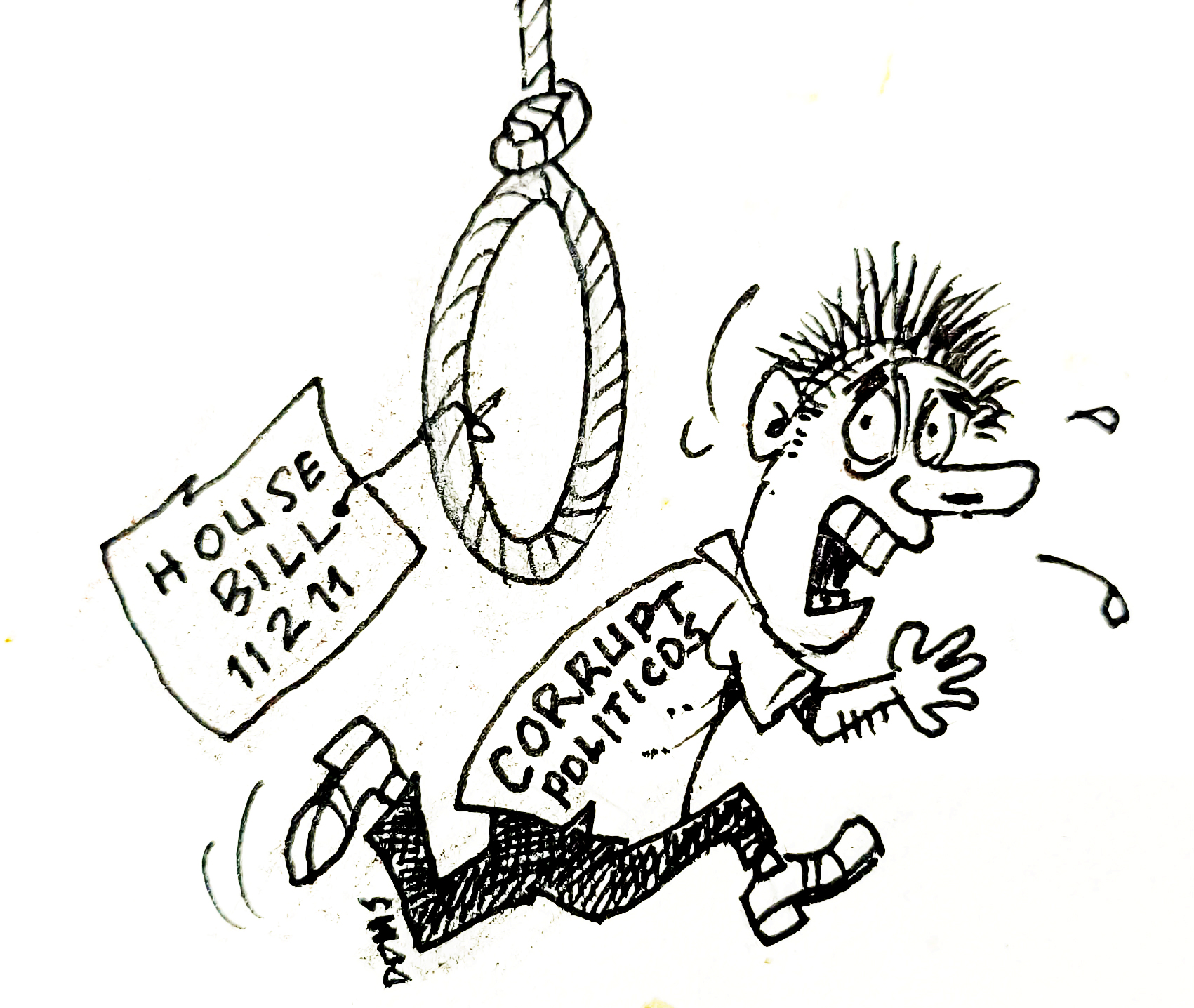
House Bill No. 11211, known as the Death Penalty for Corruption Act, demands urgent passage. The scale and brazenness of corruption in public office have reached a point where ordinary penalties no longer deter wrongdoing. A harsh response is now necessary to protect the state and its people.
Corruption in government is not a minor offense; it is an act that robs millions of citizens of basic services, distorts development, and deepens poverty. Funds meant for hospitals, schools, and infrastructure are siphoned off with impunity, leaving entire communities to suffer the consequences. When corruption becomes systemic, it ceases to be a simple crime and becomes a form of national sabotage. Under such conditions, penalties that merely imprison or fine offenders fail to match the gravity of the damage inflicted on society.
Critics argue that the death penalty is inhumane and excessive. That concern carries weight in ordinary circumstances, but corruption at the highest levels is not an ordinary offense. It is calculated, deliberate, and often repeated over years, with full awareness of its consequences. Those who engage in it are not acting out of desperation but out of greed and abuse of power. A punishment of equal severity sends a clear message that the state will no longer tolerate betrayal from those entrusted with public authority.
Deterrence must be the central goal. Existing laws have not stopped officials from amassing illicit wealth or manipulating systems for personal gain. The persistence of corruption despite decades of reforms shows that fear of imprisonment alone is insufficient. A stronger consequence changes the calculus. Only those who intend to steal from the public will fear such a law; those who serve honestly have nothing to dread. Accountability must be sharp, unmistakable, and impossible to evade.
The passage of House Bill No. 11211 is not about cruelty but about the survival of public order and trust in governance. It must be paired with strict safeguards, due process, and an uncompromising justice system to prevent abuse. Still, the message must stand firm: those who plunder the nation will face the highest penalty the law can impose. Anything less risks allowing corruption to continue unchecked, with consequences far more inhumane for the millions who suffer from it.