22.9 C
Tacloban City
March 28, 2026 - Saturday | 9:09 AM
Home Blog Page 965

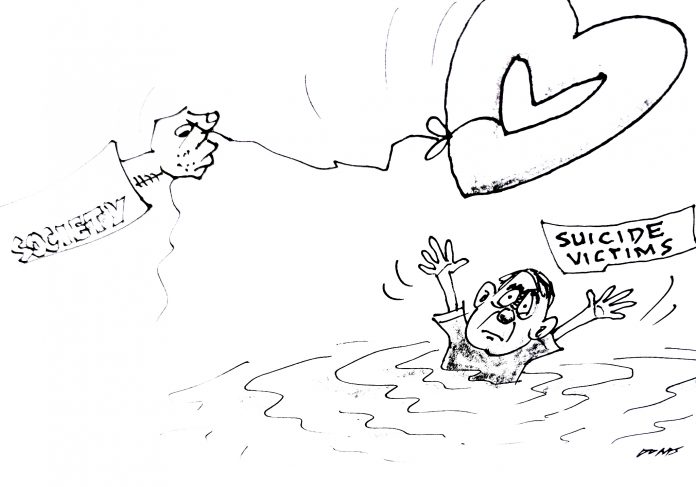
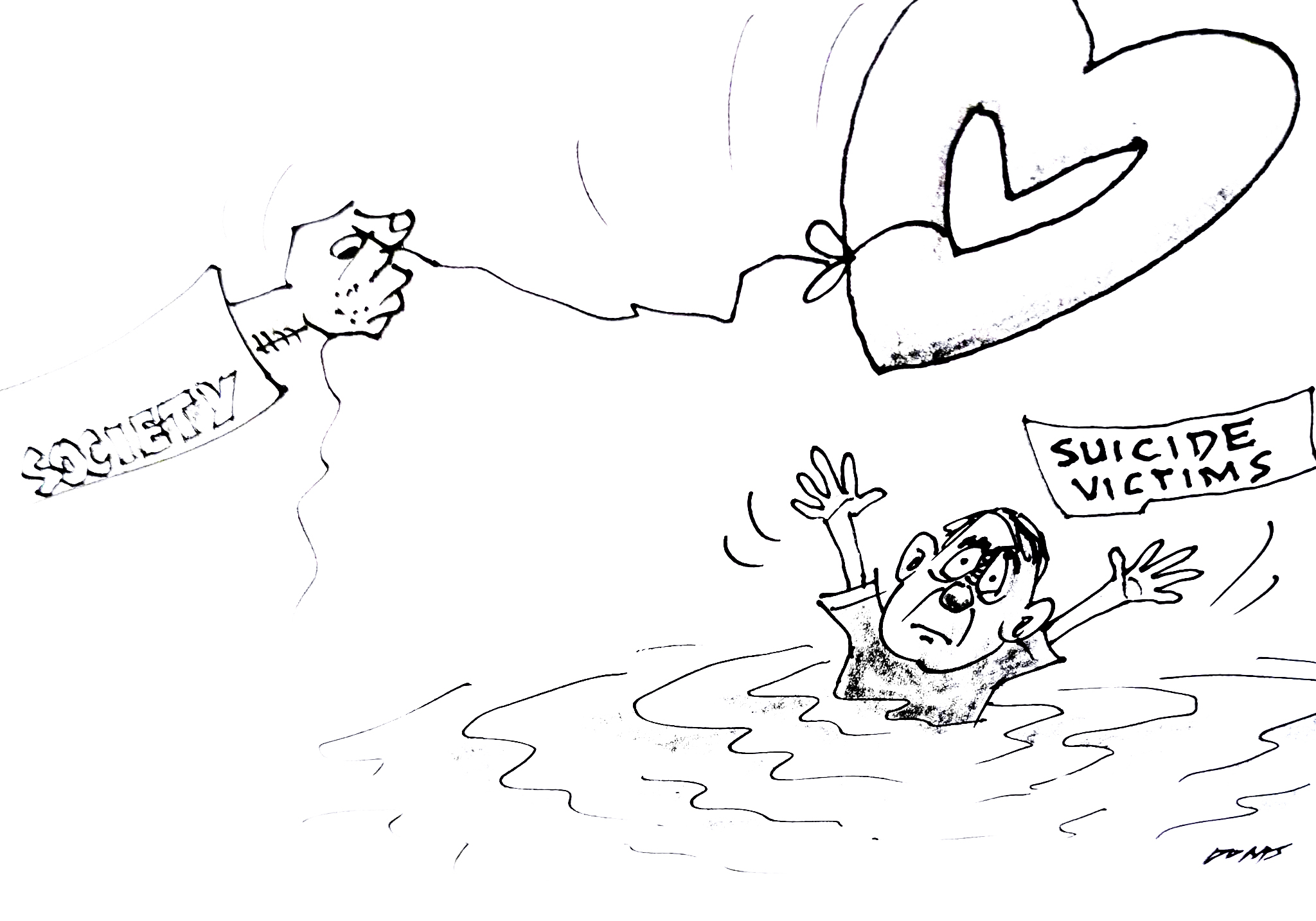
A tragedy to prevent

0

September is recognized as Suicide Prevention Month, a time dedicated to raising awareness about the urgent issue of suicide and promoting initiatives aimed at prevention. This month-long observance serves as a crucial opportunity to address the alarming rates of suicide that continue to plague our society. It is essential to not only comprehend the gravity of this topic but also actively contribute to its prevention. Understanding the underlying causes, risk factors, and preventive measures associated with suicide is crucial.

Suicide is rarely a result of a single cause but rather an intricate interplay of several factors such as mental health disorders (e.g., depression, anxiety), substance abuse, social isolation, and external stressors. We must recognize that pressures, including high expectations, competition, and workload, may exacerbate these risk factors. By acknowledging this reality, we can contribute to creating a supportive environment that prioritizes mental health and well-being.

Furthermore, we must be aware of the warning signs and risk factors associated with suicide, both in themselves and in others. Expressions of hopelessness, withdrawal from social interactions, sudden mood swings or changes in behavior, giving away possessions, or discussing death are all indicators that someone may be at risk. Recognizing these cues and responding promptly with empathy and support can make a significant difference in the life of someone struggling with suicidal thoughts.

Preventive measures, such as promoting mental health resources, establishing support networks, and fostering open dialogue, are paramount in addressing suicide prevention. We can actively engage in destigmatizing mental health concerns by participating in awareness campaigns, organizing workshops or seminars, and advocating for policies that prioritize mental well-being on our campuses. Additionally, incorporating mental health education into various academic disciplines can increase understanding and facilitate early intervention, further promoting a culture of prevention and support.

September’s designation as Suicide Prevention Month highlights the need for a comprehensive approach to combat this critical issue. By grasping the complex nature of suicide, recognizing warning signs, and actively implementing preventive measures, we can work towards creating a society that values mental health and strives to prevent suicide. Let us use this month and beyond to encourage open dialogue, raise awareness, and support initiatives that prevent tragedies and save lives.


Aiding the elderly

0
DOMS PAGLIAWAN

Not many people are privileged enough to reach old age; they die younger. Old age brings with it a myriad of physical, emotional, and social changes. This period in a person’s life is often associated with both challenges and opportunities, as individuals face the inevitable decline in their physical health and confront the realities of aging. Consequently, it is crucial for society to support and understand the unique experiences of older adults, particularly considering their wisdom and contributions to society.

As individuals reach old age, they often experience a decline in physical health and vitality. Age-related changes can manifest in various ways, such as decreased muscle mass, diminished sensory function, and an increased vulnerability to diseases. These physical transformations may limit a person’s mobility, independence, and overall quality of life.

Comprehending the impact of these changes is crucial in empathizing with older adults and advocating for the necessary healthcare and facilities to improve their well-being.

With old age comes a range of emotional challenges that can significantly impact an individual’s mental health. Older adults may face feelings of loneliness, grief, and depression due to the loss of loved ones, the decline in their own physical abilities, or the lack of social connections. It is crucial to understand and address these emotional challenges, as they can have a profound impact on an individual’s overall quality of life. It is essential to advocate for mental health resources tailored specifically for older adults, such as counseling services and social support networks.

Besides physical and emotional changes associated with aging, there are also profound social implications that older adults encounter. Many older adults face stereotypes and ageism, which can lead to discrimination and marginalization within society. It is necessary to recognize the tremendous value that older adults bring to our communities through their wisdom, knowledge, and experience. People have a unique responsibility to challenge ageist stereotypes and promote an inclusive society that values the contributions of older adults.

Old age also presents opportunities for personal growth, reflection, and the development of new interests and hobbies. As individuals retire from their careers, they may have newfound time to pursue their passions and explore new areas of knowledge. Society must acknowledge and facilitate these opportunities by providing access to lifelong learning programs, recreational activities, and community engagement initiatives. It is crucial to advocate for these resources, recognizing the diverse interests and capabilities of older adults and promoting a fulfilling life during their later years.

It is essential to consider the role of intergenerational connections when addressing the experiences of old age. By fostering positive interactions between older adults and younger generations, society can learn from the wisdom and experiences of older adults, while simultaneously addressing ageist attitudes. This collaboration can lead to innovative solutions, cross-generational understanding, and reciprocal support systems. We have a unique opportunity to bridge these generational gaps and create a more harmonious and inclusive society.

Old age is a complex period marked by physical, emotional, and social changes. It is crucial to comprehend and advocate for the unique needs and challenges faced by older adults. We can work towards a society that values and empowers older people. Old age should not be seen solely as a phase of decline but rather as a time for personal growth, enrichment, and continued contribution to society.

Child protection

0
AL ELLEMA
AL ELLEMA

Factotums supporting the present Marcos-Duterte administration roughshod the passage of the budget containing the anomalous intelligence fund that is too dull in the eyes of the truly intelligent people. The justification is too tough to accept especially in the face of the economic condition the country had been dragged by the present politicians masquerading as leaders. It is so disturbing due to the huge amount that would fund counter-insurgency programs in the guise of protecting school children from supposed insurgents that intrude into school campuses purportedly to recruit students into the insurgency movement.

People are well aware that counter-insurgency and anti-insurgency programs are the functions of the country’s armed forces and the national police. These agencies and instruments of the government are already taking a huge chunk of the national budget; Why else allocate a huge budget for the education department for it to depart from its primary function of educating the school children? Such act would cause duplication and chaos among the agencies tasked to protect the citizens from the purported insurgents living and operating in the countryside.

Like the failed experiments in the inclusion of sex education in the elementary curriculum, this anti-insurgency and counter-insurgency programs seems bound to the same direction and conclusion. The program is being sugarcoated to entice the gullible parents and the innocent school children into accepting and supporting the program. Despite all negative indications, the education department is bound to implement the program by hook or by crook.

The true and real opposition in both the house of representatives and the senate are doing their all to compel the education secretary to disclose the items comprising the entire intelligence fund. But one representative Stella Luz A. Quimbo of Marikina City’s Second District is taking the cudgels to parry all efforts demanding transparency and accountability from the education secretary.

There is only one thing that is certain, the budget for intelligence fund is bound to be spent elsewhere without transparency and accountability. By all indications, it is not for education.
comments to alellema@yahoo.com

Conversion needed to do God’s will

0
FR. ROY CIMAGALA
FR. ROY CIMAGALA

NOW that we in the month of October, let’s remind ourselves of the importance of the Holy Rosary. It’s a very helpful prayer that lets us go through the life of Christ, the pattern of our humanity, with Mary who is the best teacher and guide in knowing Christ whose life we should try to reflect in ours.

The month opens with the liturgical celebration of the 26th Sunday in Ordinary Time whose gospel reading talks about that parable of the two sons who were asked by their father to work in their vineyard. (cfr. Mt 21,28-32)

The first son at first refused his father’s request but later on changed his mind. The second said, yes, but actually did not go. Obviously, the first son did the father’s will, but only after some conversion. The second was just full of intention and words but failed in the action part.

The lesson that we should draw from this gospel parable is that we are always in need of conversion for us to do God’s will. We cannot deny that we can have a lot of what is called now as political or social correctness, but still fail to do God’s will, the real good for us.
We have to realize deeply that conversion is a continuing affair for all of us in this life. We can never say, if we have to follow by what our Christian faith tells us, that we are good enough as to need conversion no more.

We are all sinners, St. John said. And even the just man, as the Bible said, falls seven times in a day. (cfr. Proverbs 24,16)

Besides, it is this sense of continuing conversion that would really ensure us that whatever we do, whatever would happen to us, including our failures and defeats, would redound to what is truly good for the parties concerned and for everybody else in general.

That’s because conversion brings us and everything that we have done in life to a reconciliation with God, from whom we come and to whom we go.

In one of the post-resurrection appearances of Christ to his apostles, that time when it was said that Christ “opened their minds to understand the Scriptures,” our Lord told them clearly:

“Thus, it is written that the Christ would suffer and rise from the dead on the third day and that repentance, for the forgiveness of sins, would be preached in his name to all the nations, beginning from Jerusalem.” (Lk 24,46-47)

Yes, repentance for the forgiveness of sins has to be preached far and wide and constantly. These words show how much Christ is bent in saving us, in bringing us to our true dignity of a functioning child of God. This is his will for us. We just have to learn to correspond to that will, which is actually for our own true good.

The mark of true saints is precisely this hunger and thirst for repentance and conversion. Whatever good they did humbled them instead of leaving them proud. They knew who and what was behind all the accomplishments they made, and were more keenly aware of their inadequacies, their mistakes, faults, infidelities, etc.

It’s not that they led a miserable life of having a dark outlook in life and a negative attitude toward their own selves. They were a happy lot, whose joy sprang from their living and faithful union with God, their father, but aware of their total dependence on God.
Let’s always feel the need for conversion!

Mass Prom; the cause of our regressing education

0
CLEMELLE L. MONTALLANA,DM, CESE ASSOCIATE PROFESSOR III
CLEMELLE L. MONTALLANA,DM, CESE
ASSOCIATE PROFESSOR III

Alam ko, papasa naman ako!

When the student realized that he would be promoted to the next grade even if he did not possess the competency for the current grade level, he would not make a special effort to pass and master the competencies. The teacher is forced to let the kid pass if they know that failing a student who is very slow in most of the aptitudes will require more work from them and that they may have to spend the summer tutoring the students they kept. Our students are brought down by this cycle. There is an alarming learning poverty created by mass promotion of our learners.

Mass promotion is the practice of advancing students to the next grade level regardless of their academic performance or mastery of competencies. It is an unofficial but common policy that has been culturally and administratively ingrained in the Philippine education system, according to a report by the Philippine Business for Education (PBEd) 1. The report, which surveyed over 300 stakeholders nationwide, including teachers, school leaders, government officials, parents, students, and industry experts, revealed that mass promotion has negative impacts on the quality of learning and the development of values among students.

One of the ill effects of mass promotion is that it results in a failure to master fundamentals such as reading, writing, and numeracy. These skills are essential for students to progress to higher levels of learning and to cope with the demands of the 21st century. However, due to mass promotion, many students are unable to acquire these skills adequately and end up lagging behind their peers in other countries. For instance, in the 2018 Programme for International Student Assessment (PISA), which measures the reading, mathematics, and science literacy of 15-year-old students from 79 countries, the Philippines ranked last in reading and second to the last in mathematics and science 2. This dismal performance reflects the poor quality of education that many Filipino students receive due to mass promotion.

Another ill effect of mass promotion is that it causes unintended behavioral issues among students. Mass promotion undermines the value of hard work, resiliency, teamwork, and respect that are supposed to be instilled in students through education. Instead, it fosters a culture of complacency, mediocrity, cheating, and disrespect among students who know that they will pass anyway regardless of their efforts or conduct. According to PBEd executive director Justine Raagas, there are many anecdotes from teachers of students blatantly disregarding their work or copying answers or worse, just easily giving up and saying, ‘It’s okay. I’m going to pass anyway’ 1. These attitudes not only affect the academic performance of students but also their character formation and moral development.

In conclusion, mass promotion is a harmful practice that should be stopped in the Philippine basic education system. It lowers the quality of learning and damages the values of students. It also hinders the development of a competitive and innovative workforce that can contribute to the progress and prosperity of the country. Therefore, it is imperative that the Department of Education (DepEd) and other stakeholders implement measures to ensure that students are assessed based on their actual competencies and retained or not promoted to the next grade if it is not yet showing the attributes and the mastery of the competencies needed.

This may be what we need to address the ills of our education!

Kung hindi ako makabasa at hindi ko pa kabisado ang Math, baka hindi ako pumasa. Kaya pag bubutihin upang maipasa ko ito!

DA-ATI partners with AEACI-RDA on Agri extension

0
Dr. Paciente Cordero

The Philippines and South Korea have partnered to modernize agriculture extension system in the rural areas. Specifically, the Department of Agriculture, Agriculture Training Institute (DA-ATI) and the South Korean-based Asian Food and Agriculture Cooperation Initiative in Rural Development Administration (AFACI-RAD) are partners in to implement an improved Rural Agricultural Technology Extension System in cooperation with Phil. Extension Service Network until 2025.

Accordingly, all “RATES projects will utilize information and communication technologies (ICT), tools and solutions to address the need for digital inclusion among the marginalized sector in Philippine agriculture. The partners believe that ICTs are essential tools in boosting the collection, processing, and transmission of quality data and information to more farmers.”

Further, the ATI stated that in order “to meet the demands of the growing agricultural markets locally and abroad, the agriculture and fishery sector must be transformed into a technology-based , advanced, and competitive industries.”

ATI stated that RATES project will help professionalize the delivery of these services and empower AEWs and LSA cooperators to use digital tools and technologies, thereby indirectly benefitting farmers, fishers, and youth in the targeted communities.

MY COMMENT:

This is one example of a partnership meant to uplift the lowly farmers and fishers sector. If, indeed, one of the aims of the Maharlika Investment Fund, the government of PBBM should venture to invite, entice foreign investors to the Philippines as an investment haven, in agriculture and energy, specifically.
ooo000ooo
NEXT TOPIC : “Halal industry promotion, a commitment – PEZA”
SHARE S & T THOUGHTS through E-Mail: drpacjr@yahoo.com.

Recent Posts

DALMACIO C. GRAFIL
PUBLISHER

ALMA GRAFIL
EDITOR-IN-CHIEF

ROMEO CEBREROS
OFFICE IN-CHARGE

OFFICE
BRGY. SONGCO, BORONGAN CITY

CONTACT NUMBERS
(055) 261 – 3319 | 0955 251 1533 | 0917 771 0320 | 0915 897 7439 | 0921 511 0010

DALMACIO C. GRAFIL
PUBLISHER

RICKY J. BAUTISTA
EDITOR

ALMA GRAFIL
BUS. MANAGER

OFFICE
RIZAL AVENUE, CATBALOGAN
(INFRONT OF FIRE DEPARTMENT, NEAR CITY HALL)

CONTACT NUMBERS
0917 771 0320 | 0915 897 7439 | 0921 511 0010

EMAIL
lsdaily2@yahoo.com

WEBSITE
www.issuu.com/samarweeklyexpress