
TO be truly Christian, we should really have the very heart of Christ. We should have his attitude toward all possible conditions our life can find itself in, irrespective of whether these conditions are favorable to us or not.
This can mean that in spite of doing a lot of good, we can still be misunderstood, unappreciated, contradicted and rejected. And yet we should never succumb to hatred and condemning people. Like Christ we should be willing to offer our life even to those who do us evil, even offering forgiveness to them. We have to go that extent.
Like Christ, we should have the desire to save rather than to condemn those who are wrong morally and spiritually. Obviously, we can only have this kind of attitude when we truly identify ourselves with Christ. Absent this and relying solely on our human powers, we can only go so far.
In the readings of the Mass of the Fourth Sunday of Easter, Year B (cfr. Acts 4,8-12; 1 Jn 3,1-2; Jn 10,11-18) we are told about our tendency to rely only on our own powers, on our estimation of what is good, true and just. We forget what is said in the Responsorial Psalm of the Mass: “The stone rejected by the builders has become the cornerstone.” (Ps 118,22)
We need to see to it that our primordial duty as a person and as a child of God is to identify ourselves with Christ, who is the pattern of our humanity, the savior of our damaged humanity, the very “way, truth and life” that is proper to us. We need to carry out this duty in everything that we do and that can happen to us.
That is why it indispensable that we really know Christ. Not only that. We have to love him, following his teachings and example. Let’s keep in mind these words of Christ: “Whoever is not with me is against me. Whoever does not gather with me scatters.” (Lk 11,23) With these words of Christ, it’s very clear that we are supposed to be so united with Christ, so identified with him, that he and us can be considered simply as one.
We need to process this truth of our faith about ourselves very slowly, because it will obviously astound us to think that we are supposed to be one with Christ. Who, me, one with Christ? We most likely would be tempted to say, tell it to the Marines!
But that’s just the naked truth about us, whether we like it or not. We cannot be any other if we just bother also to know why it is so. An expression that is relevant to this matter is ‘alter Christus,’ another Christ. And it’s worthwhile to know what it is all about.
We are supposed to be ‘alter Christus,’ the goal and ideal that is meant for us, though we need also to do our part, free beings as we are, to achieve that status. God, our Creator and Father, wants us to be that way, though he does not impose it on us without our consent that should also be shown with deeds and not just with intentions or words.
We are supposed to be ‘alter Christus’ simply because, if we have been created in the image and likeness of God, and Christ is the Son of God who is the perfect image and likeness that God has of himself, then we can only conclude that we have to be like Christ who is the very essence of love that is meant for us.



Left behind
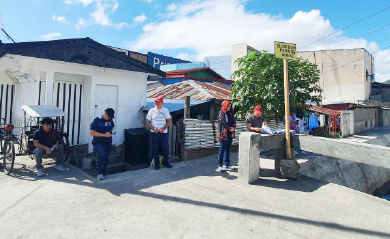
Although blessed with abundant talent and brilliance, our country continues to face a persistent challenge: the exodus of its skilled workforce to greener pastures abroad stemming from systemic issues that are deeply rooted in the country’s socio-economic landscape. The allure of higher salaries and better opportunities beckons Filipino professionals to foreign shores, leaving their homeland grappling with a loss of human capital and potential.
At the heart of this issue lies the stark disparity in remuneration between the Philippines and other countries. While Filipino workers possess commendable skills and expertise, their earnings pale in comparison to what they could command elsewhere. The glaring wage gap acts as a magnet, drawing talent away from domestic industries and towards more lucrative prospects overseas. Consequently, the nation not only loses valuable contributors but also struggles to retain its best and brightest.
Compounding this challenge is the stark reality of a saturated job market. Despite the abundance of skilled individuals, job vacancies remain scarce, leaving thousands of qualified applicants vying for a handful of positions. The imbalance perpetuates a cycle of frustration and disillusionment among job seekers, compelling many to seek opportunities beyond national borders where their talents are more valued and rewarded.
Moreover, the nepotistic practices prevalent in government hiring exacerbate the issue, perpetuating a culture where connections outweigh merit. This cronyism denies countless capable individuals the chance to contribute meaningfully to public service, relegating them to the sidelines as casual employees. Such systemic injustices not only undermine meritocracy but also drive talented individuals away from seeking employment opportunities within the country.
In the private sector, the situation is no less challenging. High demands for experience coupled with meager salaries and scarce benefits create a disheartening environment for Filipino workers. Despite their qualifications and capabilities, many find themselves trapped in a cycle of underemployment and unfulfilled potential. Faced with such grim prospects, it’s no wonder that Filipino professionals increasingly opt to pursue opportunities abroad where their skills are more appreciated and adequately compensated.
The government should undertake comprehensive reforms aimed at creating a conducive environment for talent retention and development. This includes initiatives to bridge the wage gap, enhance job creation, combat nepotism, and improve working conditions across both public and private sectors. Only through serious efforts to address these systemic issues can the Philippines hope to stem the tide of its brightest minds leaving in search of better prospects, and truly harness the full potential of its human capital for national progress and prosperity.