
30.3 C
Tacloban City
June 05, 2026 - Friday | 12:50 PM
Home Blog Page 67

Over 270 senior high school students land jobs in Eastern Visayas job fairs

0
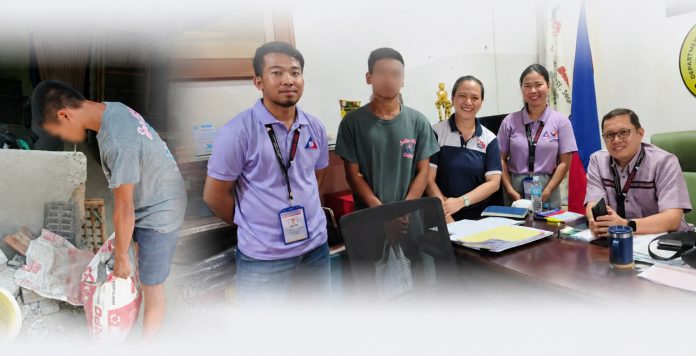
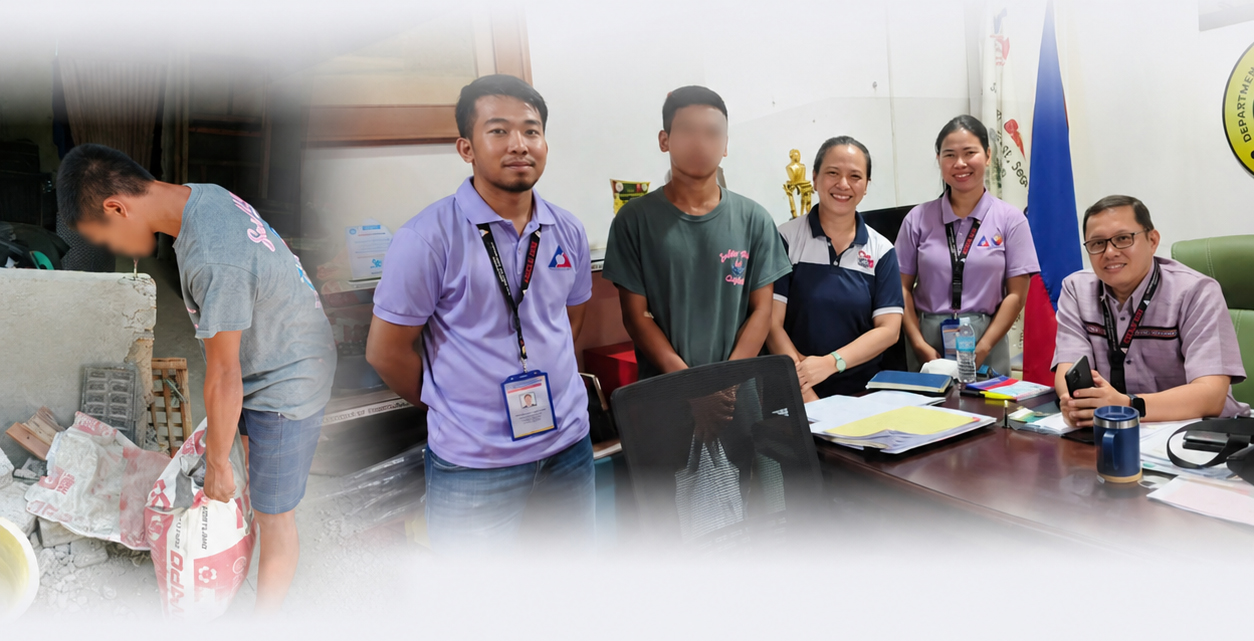
EMPLOYMENT FOR THE YOUTH. About 277 senior high school students from Baybay City and Hinunangan in Southern Leyte were hired in a job fair organized by the Depart-ment of Labor and Employment (DOLE) Regional Office 8 in partnership with the Department of Education (DepEd). (Photo Courtesy)

TACLOBAN CITY – A total of 277 senior high school students secured immediate employment during back-to-back Bagong Pilipinas Serbisyo Caravan job fairs held in Baybay City and Hinunangan, Southern Leyte, last week, highlighting expanding opportunities for young jobseekers in Eastern Visayas.

Organized by the Department of Labor and Employment (DOLE) Regional Office 8 in partnership with the Department of Education (DepEd), the job fairs targeted graduating SHS students, Alternative Learning System learners, and out-of-school youth, aiming to provide on-the-spot hiring and career guidance.

In Baybay City, all 257 participating jobseekers—mostly SHS students—were hired on the spot, achieving a 100-percent placement rate. Meanwhile, in Hinunangan, 20 out of 160 applicants secured jobs during the fair.

DOLE Regional Director Dax Villaruel said the initiative reflects the government’s commitment to bringing employment services closer to young Filipinos preparing to enter the workforce.

Among the newly hired was Ashley Dapiton, a Grade 12 tourism student from Baybay City Senior High School, who said the job fair allowed her to earn while saving for future education and gaining work experience.

The events also provided participants with career guidance and livelihood opportunities, aligning with the Bagong Pilipinas initiative to deliver inclusive government services, empower youth through employment, and develop their skills for long-term success.

(ROEL T. AMAZONA)

Fuel station in Tacloban halts operations amid supply concerns

0

TACLOBAN CITY—A gasoline station in this city temporarily shut down operations on Sunday, March 29, after running out of fuel supply, raising concerns amid ongoing global oil uncertainties.

The station, situated along one of the city’s busiest areas, announced the suspension through a public advisory but did not indicate when operations would resume.
“Our fuel supply has temporarily run out. We apologize for the inconvenience and appreciate your understanding,” the advisory read.

This marks the first reported case of a fuel station in Tacloban City ceasing operations due to supply issues, as the country continues to feel the impact of rising fuel prices and supply pressures linked to tensions in the Middle East.

In Eastern Samar, five gasoline stations were earlier reported to cease their operations amid the oil crisis.

Tacloban, the regional capital and economic hub of Eastern Visayas, has around 30 gasoline stations operated by both major oil companies and independent players.

As of the latest monitoring, gasoline prices in the city range from P93.50 to P96.50 per liter, while diesel prices range from P105 to P128.90 per liter.

Despite the incident, Mayor Alfred Romualdez earlier said that fuel supply in the city remains generally stable based on local monitoring efforts.

(JOEY A. GABIETA)

Call to unity

0

Global oil price hikes are once again pushing ordinary citizens to the brink, yet the government’s response remains slow and inadequate. This cannot continue; decisive, coordinated, and corruption-free action is urgently required.

Fuel prices affect nearly every aspect of daily life, from transportation to food production. When oil prices rise, the cost of goods and services inevitably follows, placing the heaviest burden on low- and middle-income households. Public transportation fares increase, electricity costs climb, and basic commodities become less affordable. These are not abstract economic shifts but real pressures that reduce families’ capacity to meet even their most basic needs. The government cannot afford to treat this as a routine fluctuation; it is a national concern that demands immediate intervention.

Concrete measures must be implemented without delay. Fuel subsidies targeted at public utility drivers, farmers, and fisherfolk can help stabilize essential sectors. Temporary reductions in fuel taxes, particularly excise taxes, should be seriously considered to provide immediate relief. At the same time, strict monitoring of oil companies and retailers must be enforced to prevent opportunistic pricing and profiteering. These steps are not new, but their consistent and disciplined implementation has often been lacking.

Equally important is the need for genuine coordination among government agencies. Economic managers, energy regulators, transport authorities, and social welfare departments must act in unison, guided by a clear and shared objective. Fragmented responses only weaken the overall effort and allow the problem to worsen. This is also the moment to set aside political maneuvering. Public office is a responsibility, not an opportunity for personal gain. Any hint of corruption or misuse of funds in the face of this crisis is not only immoral but a direct betrayal of the people.

In the longer term, the country must reduce its vulnerability to global oil shocks. Investments in renewable energy, improvement of public transportation systems, and support for local industries are essential to building resilience. However, these structural reforms will take time. What is needed now is firm, honest, and focused leadership—leadership that understands the urgency of the situation and responds with action, not excuses.

The government must act with seriousness and unity, placing the welfare of the people above all else. Immediate relief, strict enforcement, and long-term planning must move together. Anything less is a failure of duty at a time when the nation’s survival demands nothing short of full commitment.

A war that will prolong

0

The missiles and drones have already been exchanged between the two countries, with the United States intervening with unmistakable weight, yet still, no side is willing to back down. In my view, that is the strongest indicator that the war is not designed to reach an early conclusion, and the world will pay for it sooner than it can afford to.

I have lived through enough conflicts, read enough about them, learned enough from history books, and seen enough from the shadows they cast on ordinary people’s lives to recognize when a war is not just about the issues at hand, but about decades of unresolved issues, distrust, and unresolved conflicts. The conflict between Israel and Iran is not new; it did not begin this year, or last year, or the year before that. The issues between the two countries have been simmering for years, with proxy wars, clandestine operations, and fiery rhetoric. A conflict with that level of history will not magically disappear with a ceasefire; it will sink deeper, like an indelible stain that cannot be washed away.

I believe this conflict is particularly hard to resolve because it is not isolated. Iran is not fighting alone, nor is Israel. There are armed groups throughout the region that are aligned with Iran, from Lebanon to Iraq to Yemen, who can spark the conflict at will, creating not just one, but multiple fronts. It is like trying to put out a fire that keeps rekindling in different places throughout the house. Even if you manage to put out one fire, another can erupt just as quickly, keeping the conflict alive.

Then there is the unmistakable presence of the United States, whose involvement changes the scale of everything. When the United States commits its military resources, it is rarely half-hearted. But it also cannot afford to commit fully to war without consequences at home and abroad. This is a strange middle ground—too involved to disengage and yet too cautious to commit fully. And in this strange middle ground, war seems to stretch on interminably, drawn out by calculation and the constant weighing of risks.

I also cannot ignore the role of domestic politics in this equation. All three nations have politicians whose circumstances force them to compromise on issues they cannot resolve on their own terms. In Israel, security is an existential issue; in Iran, resistance is an issue of national pride and survival; in the United States, global credibility is on the line at all times. When politicians feel boxed in by their own narratives, they stop looking for a way out and dig in harder. War in this context is not about victory but about survival.

And yet, in all this turmoil, the global economy quietly takes the brunt of it all—like a body absorbing blow after blow. Oil prices fluctuate precariously in response to every escalation in the Middle East, a region that remains central to global energy security. Shipping routes become tense, insurance costs climb, and markets become nervous and uncertain. I feel this even from where I am; I feel it in the rising cost of oil and goods in general, and in that nagging sense of unease every time I check the news and think to myself: what’s going to spike next?

There is also the rhythm of war, which is dangerous and extends suffering without ever providing closure. Precision strikes, cyberattacks, and targeted assassinations are not the sorts of things that decisively end wars. They keep the war going at a level that is just enough to keep the conflict from completely collapsing, but at a level that is also enough to keep peace from ever arriving. It is like watching a storm that never fully breaks or ever fully passes, leaving all of us stuck in a long, uneasy downpour.

If there are ever agreements, I don’t think they will be in the grand declarations or the decisive battles. I think it will be in the small decisions not to escalate, in the secret meetings that never make the front page, and in the leaders’ decisions to hold back even when they are called upon to move forward. It is not the way that anyone wants the war to end, but it might just be the only way that the rest of us are not forced to carry the burden of a war that was never ours in the first place.

Working daily on our fidelity

0

WE should never take for granted this duty to work daily on our fidelity. We cannot presume that just because we were fervent when we professed to be faithful to some commitment we made, we can hack it simply by going along what is expected of us. We need to do more than that. And definitely, we need, first of all, to always ask for God’s grace since fidelity is not simply a matter of human effort. It depends on God’s grace.
Remember that episode where St. Peter told Christ he was willing to die for him in order to follow him? (cfr. Jn 13,37) Christ responded in no unclear terms: “Will you lay down your life for me? Amen, amen I say to you, the cock shall not crow, till you deny me three times.” (Jn 13,38) And so it happened as foretold.

We need to realize that the key to fidelity is the love that is nothing less than a living participation of God’s love for all of us. It’s the love that will always make us young, new and refreshed, in spite of the passing of years. It is self-renewing and creative, and never runs out of initiatives to look and try new ways of expressing that love in deeds.

It’s the love that is not afraid of problems, challenges, trials, failures, mistakes, difficulties, suffering, etc. It does not surrender to them even if death overtakes it. It regards them as opportunities and occasions to grow more in love, to grow more in trust in God’s loving providence where everything works for the good as long as we cooperate with him. It’s a love that will always fill us with peace and joy whatever the situation.

We have to understand that this kind of love can only be had if we try our best to be with God, to identify ourselves with him through Christ in the Holy Spirit. This kind of love can only be had if we pray always, if we constantly look for Christ, find him, serve him and imitate him, making him direct and shape our daily life.

This kind of love can only be had if we have recourse to the sacraments, especially the Holy Eucharist where we have Christ offering himself as the bread of life. In that way, our love acquires a supernatural power that goes infinitely beyond our natural powers. With him, what we cannot do or solve are all taken care of.

Yes, we have to do our part, and we, in fact, should give our all. But we do it always with Christ. With him we would not be afraid where our love and our life will take us. He takes care of everything. What he simply expects from us is to trust him and to try our best to cooperate with him. We therefore would always have hope. And we would always find meaning in everything we experience in life.

Let us see to it then that we are with Christ always. He is real and alive, and not just a figment of our desire to believe. We do not make him up in our mind. More than that, he is full of love for us, full of solicitude toward us. He always has us in his mind and heart. And he is actually actively guiding us at every moment. There is no moment when he is indifferent to us. If we are lost, he, like the Good Shepherd, will take the pains to look for us and rescue us.

We have to learn to discern his presence and his constant interventions in our life. That is why, we need to develop certain practices of piety so that we also can properly and actively correspond to his constant guidance over us.


The cornerstone of trust: Corporate governance, transparency, and accountability

0

In today’s complex and interconnected business landscape, the concepts of transparency and accountability have risen to the forefront, becoming indispensable pillars upon which trust and sustainable growth are built. At the heart of these principles lies corporate governance, the system of rules, practices, and processes by which a company is directed and controlled. Effective corporate governance serves as the compass guiding organizations toward ethical conduct, responsible decision-making, and ultimately, long-term value creation.

The Essence of Corporate Governance

Corporate governance refers to the system of rules, practices, and processes by which a corporation is directed and controlled. It fundamentally concerns the relationships and accountability structures among a company’s senior management, its board of directors, its shareholders, and its broader stakeholder community. It defines the distribution of rights and responsibilities, ensuring that the board is accountable to the shareholders, while management is accountable to the board. This framework is designed to prevent conflicts of interest, promote fairness, and safeguard the interests of all parties involved.

Transparency: Illuminating the Path

Transparency, a key tenet of corporate governance, entails the open and honest disclosure of information relevant to a company’s performance, financial health, and ethical conduct. By providing stakeholders with access to timely and accurate data, transparency enables informed decision-making, fosters trust, and reduces the potential for fraud and mismanagement.

Examples of transparent practices include:

• Financial Reporting: Regular and detailed financial statements, prepared in accordance with established accounting standards, provide insights into a company’s revenue, expenses, assets, and liabilities.

• Disclosure of Material Information: Companies are obligated to disclose any information that could materially affect their stock price or investment decisions, such as significant contracts, mergers, or regulatory changes.

• Executive Compensation: Transparent disclosure of executive salaries, bonuses, and other benefits ensures that compensation packages are aligned with performance and shareholder interests.

• Environmental and Social Impact: Increasingly, companies are disclosing information about their environmental footprint, social initiatives, and ethical sourcing practices, demonstrating a commitment to sustainability and corporate social responsibility.

Accountability: Taking Ownership

Accountability complements transparency by ensuring that individuals and entities are held responsible for their actions and decisions. In the context of corporate governance, accountability means that directors and managers are answerable to shareholders and other stakeholders for the performance of the company and the consequences of their choices.

Key mechanisms for promoting accountability include:

• Independent Board of Directors: A board composed of independent directors, free from conflicts of interest, is essential for overseeing management and ensuring that decisions are made in the best interests of the company.

• Audit Committees: These committees, typically composed of independent directors, are responsible for overseeing the company’s financial reporting process and ensuring the integrity of its financial statements.

• Shareholder Rights: Empowering shareholders with the right to vote on key decisions, such as the election of directors and executive compensation, strengthens accountability and encourages responsible corporate behavior.

• Whistleblower Protection: Establishing channels for employees and other stakeholders to report suspected wrongdoing without fear of retaliation promotes ethical conduct and helps to uncover potential problems.

The Benefits of Strong Corporate Governance

The benefits of robust corporate governance, transparency, and accountability extend far beyond mere compliance with regulations. Companies that embrace these principles are more likely to:

• Attract Investment: Investors are increasingly seeking out companies with strong governance practices, viewing them as less risky and more likely to deliver sustainable returns.

• Enhance Reputation: A reputation for transparency and ethical conduct can enhance a company’s brand image, attract customers, and build trust with stakeholders.

• Improve Performance: Effective corporate governance can lead to better decision-making, improved operational efficiency, and enhanced financial performance.

• Reduce Risk: By promoting transparency and accountability, companies can identify and mitigate potential risks, such as fraud, corruption, and environmental damage.

In an era of heightened scrutiny and increasing stakeholder expectations, corporate governance, transparency, and accountability are no longer optional extras but essential ingredients for success. By embracing these principles, companies can build trust, attract investment, enhance performance, and create long-term value for all stakeholders. As businesses navigate the complexities of the 21st century, a commitment to ethical conduct and responsible decision-making will be the compass guiding them toward a sustainable and prosperous future.
————–
If you have any questions or would like to share your thoughts on the column, feel free to send an email to jca.bblueprint@gmail.com. Looking forward to connecting with you!

Recent Posts

DALMACIO C. GRAFIL
PUBLISHER

ALMA GRAFIL
EDITOR-IN-CHIEF

ROMEO CEBREROS
OFFICE IN-CHARGE

OFFICE
BRGY. SONGCO, BORONGAN CITY

CONTACT NUMBERS
(055) 261 – 3319 | 0955 251 1533 | 0917 771 0320 | 0915 897 7439 | 0921 511 0010

DALMACIO C. GRAFIL
PUBLISHER

RICKY J. BAUTISTA
EDITOR

ALMA GRAFIL
BUS. MANAGER

OFFICE
RIZAL AVENUE, CATBALOGAN
(INFRONT OF FIRE DEPARTMENT, NEAR CITY HALL)

CONTACT NUMBERS
0917 771 0320 | 0915 897 7439 | 0921 511 0010

EMAIL
lsdaily2@yahoo.com

WEBSITE
www.issuu.com/samarweeklyexpress