25.4 C
Tacloban City
October 12, 2026 - Monday | 2:34 AM
Home Blog Page 68

DSWD turns over expanded daycare center in Leyte village

0

TACLOBAN CITY – The Department of Social Welfare and Development (DSWD) has completed and turned over an expanded daycare center in Barangay Lower Hiraan, Carigara, Leyte, providing young learners with a safer and more conducive environment for early childhood education.

The P869,623 facility was built through the Kalahi-CIDSS Philippine Multi-sectoral Nutrition Project (PMNP) using the Community-Driven Development (CDD) approach, with residents taking an active role in implementing the project.

The new daycare center was formally handed over during a ceremony attended by DSWD officials, Carigara Mayor Eduardo Ong Jr., barangay officials, community volunteers, and residents.

Mayor Ong thanked DSWD, Kalahi-CIDSS personnel, volunteers, and local officials for making the project possible, while urging the community to properly maintain the facility so future generations can continue to benefit from it.

DSWD said the project is part of its continuing efforts to improve access to quality social infrastructure and strengthen community-driven development initiatives across Eastern Visayas.

(ROEL T. AMAZONA)

106 Catarman senior citizens receive P10,000 cash incentives under Expanded Centenarians Act

0
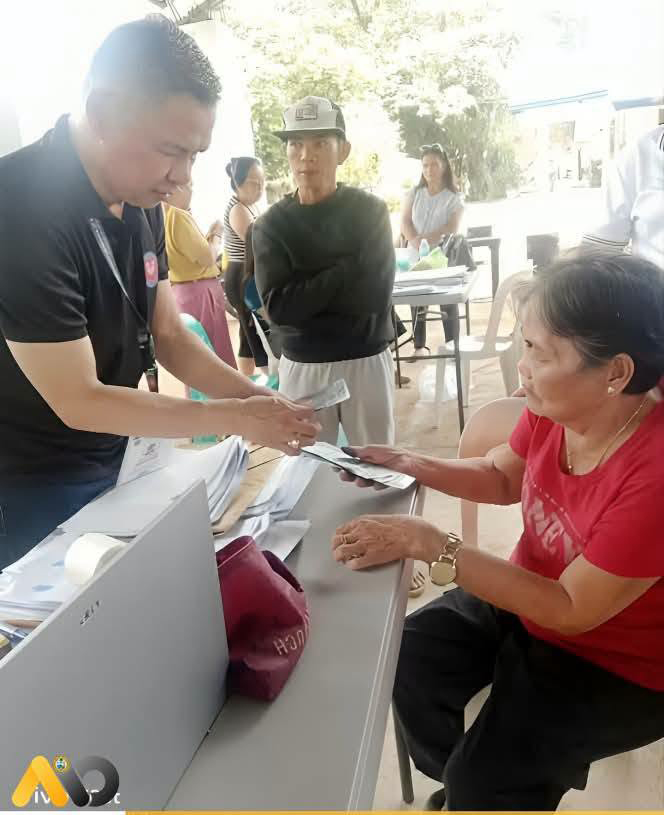
AID FOR THE SENIORS. Senior citizens in Catarman, Northern Samar receive their P10,000 cash incentives under the Expanded Centenarians Act during a payout at the Catarman Freedom Park on July 29. A total of 106 octogenarians and nonagenarians benefited from the national government’s program recognizing elderly Filipinos for their longevity and contributions to society. (MIO,CATARMAN,NORTHERN SAMAR)
AID FOR THE SENIORS. Senior citizens in Catarman, Northern Samar receive their P10,000 cash incentives under the Expanded Centenarians Act during a payout at the Catarman Freedom Park on July 29. A total of 106 octogenarians and nonagenarians benefited from the national government’s program recognizing elderly Filipinos for their longevity and contributions to society.
(MIO,CATARMAN,NORTHERN SAMAR)

TACLOBAN CITY – More than a hundred elderly residents of Catarman, Northern Samar received P10,000 each in cash incentives from the national government on July 29 under the Expanded Centenarians Act, recognizing their longevity and contributions to society.
A total of 106 octogenarians and nonagenarians received the incentives during a payout at the Catarman Freedom Park, facilitated by the National Commission of Senior Citizens (NCSC) with assistance from the Office for Senior Citizens Affairs (OSCA) and the Municipal Social Welfare and Development Office (MSWDO).

The cash grants were provided under Republic Act No. 11982, or the Expanded Centenarians Act, which grants financial incentives to qualified Filipino senior citizens upon reaching milestone ages.

Catarman Mayor Dianne Rosales reaffirmed the local government’s commitment to supporting programs that promote the welfare and well-being of senior citizens.
The NCSC said the initiative is part of the government’s continuing efforts to honor elderly Filipinos and provide them with financial assistance through social protection programs.

(ROEL T. AMAZONA)

12 Eastern Visayans honored for excellence, service in inaugural regional awards

0
Recipients of the inaugural Outstanding Eastern Visayans Awards pose with officials after being recognized for their exceptional contributions in public service, education, health, science, media, culture, entrepreneurship, environmental protection, youth leadership, and philanthropy during the awarding ceremony in Tacloban City on July 31. Also shown in the photo are Rep. Jude Acidre of Tingog party-list and Karina Rosa Tiopes, DOT -8 former director. (DOT-EASTERN VISAYAS FACEBOOK)

TACLOBAN CITY – Twelve individuals from Eastern Visayas were honored for their outstanding achievements and contributions to their respective fields during the first-ever Outstanding Eastern Visayans Awards (OEVA) held on July 31, recognizing excellence in public service, education, health, science, media, culture, entrepreneurship, environmental protection, youth leadership, and philanthropy.

The awards, organized by the Department of Tourism in Eastern Visayas (DOT-8) in partnership with Tingog party-list, recognize individuals whose work has created a lasting impact on their communities and the region.

Among this year’s awardees were Stephen Lagarde (arts and cultural heritage), Janet Alexis De los Santos (education and research), Gilbert Trinchera (entrepreneurship and innovation), Margarita dela Cruz (environmental protection and sustainability), Aileen Riel-Espina (health and medicine), Michael Jude Casaljay (media and communication), Norman Sabdao (public service and governance), Ea Kristine Clarisse Tulin-Escuet (science and engineering), Aron Sedrick Caminong (youth leadership and community development), and Aldrin Norio (faith, religion, and philanthropy).

Special awards were presented to Eliseo III Lucero-Prisno as Eastern Visayan Regional Champion and Lydia Escober dela Rosa for the Outstanding Legacy of Excellence Award.
Boy Scout Chris Lorenz Fabian also received special recognition for his heroism during the San Jose National High School shooting incident.

DOT-8 Officer-in-Charge Regional Director Rina Apostol said the awards celebrate Eastern Visayans whose resilience, innovation, and dedication continue to bring honor to the region and inspire future generations.

(ROEL T. AMAZONA)

Allegations to mind

0

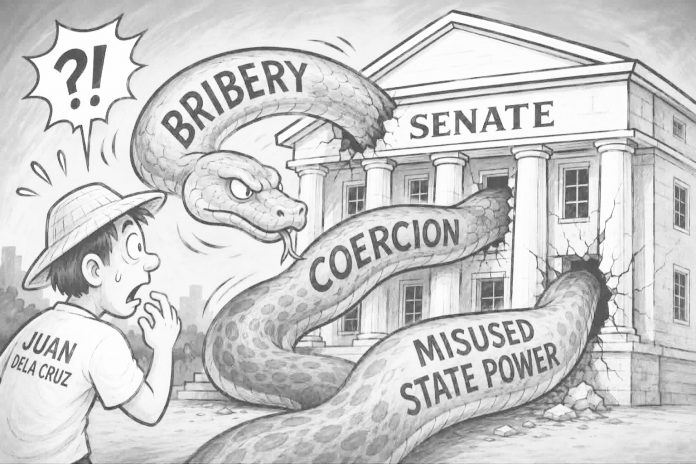
The controversy surrounding the Senate’s handling of the impeachment proceedings has raised serious questions about the integrity of the political process. Allegations that political support is being gathered through improper means deserve careful public scrutiny rather than blind acceptance or outright dismissal. If any vote is secured through coercion instead of conscience, the credibility of both the proceedings and the institution suffers.

An impeachment trial is supposed to be governed by the Constitution, evidence, and the independent judgment of every senator. Public concern naturally grows whenever allegations emerge that political alliances are being strengthened not by persuasion but through promises of favors, pressure, or other improper inducements. Such claims require thorough investigation because any decision reached through unlawful influence would cast doubt on the legitimacy of the final outcome. The nation deserves confidence that every vote reflects a senator’s honest assessment of the evidence rather than outside pressure.
Equally troubling are allegations that legal processes are being used as political tools against individuals who refuse to cooperate with a particular agenda. If criminal investigations or court proceedings are initiated or manipulated to compel political support, the rule of law is weakened. The justice system exists to determine guilt or innocence based on facts and applicable law, not to influence legislative outcomes. Courts and prosecutors must remain independent of political contests, and any credible allegation of abuse of legal authority should be examined impartially.

The public also expects equal treatment under the law regardless of political affiliation. Any perception that political opponents are selectively targeted while allies receive favorable treatment damages confidence in democratic institutions. The Senate, as one of the country’s highest constitutional bodies, carries the responsibility of demonstrating fairness, independence, and respect for due process. Every senator should be free to vote according to the Constitution, the evidence presented, and personal conviction, without intimidation, inducement, or fear of retaliation.

The country cannot afford impeachment proceedings that leave citizens questioning whether justice or political advantage determined the outcome. Allegations of bribery, coercion, or misuse of state power should be investigated thoroughly, fairly, and according to law, with accountability wherever credible evidence supports wrongdoing. The integrity of constitutional institutions depends not only on the final verdict but also on ensuring that the process leading to that verdict is beyond reproach.

Weaponizing poverty

0

The latest poverty figures are released, yet election caravans continue to roar across the country with enormous budgets and dazzling spectacles. That contrast alone says more than a thousand campaign speeches ever could. To my mind, the greatest enemy of Filipino prosperity is not the Filipino people but the kind of leadership that allows poverty to survive from one administration to the next.

I often think of the observation attributed to Singapore’s founding leader, Lee Kuan Yew, that a nation’s progress ultimately depends on the quality of its leadership. Whether one agrees with every aspect of his governance or not, Singapore’s transformation from a struggling port into one of the world’s strongest economies did not happen by accident. It happened because leadership chose productivity over patronage, long-term planning over short-term popularity, and institutions over personalities. Looking at the Philippines, the uncomfortable question is hard to ignore: if nations usually rise or fall according to the quality of leadership they produce, what does the persistence of widespread poverty say about ours?

One practice has long bothered me. Election campaigns in the Philippines are notoriously expensive, and major political campaigns often receive substantial financial backing from wealthy donors and business interests. Campaign finance itself is not illegal, but it becomes deeply troubling whenever financial support creates expectations of favorable treatment after the election. The public may never see the conversations behind closed doors. Yet, people naturally ask whether campaign debts are later repaid through regulatory favors, government contracts, or policies that benefit a few at the expense of many. Even the appearance of such arrangements weakens confidence that public office exists solely for the public good.

Ordinary Filipinos feel the consequences in places where economics becomes painfully personal. Electricity, water, transportation, food, telecommunications, housing, medicine, and countless daily necessities consume a growing share of household income. Prices rise for many reasons, including global markets, supply disruptions, production costs, and domestic policies. Governments cannot control every increase, but they are expected to enforce competition laws, regulate monopolistic behavior where appropriate, and protect consumers from abusive practices. Leadership is measured not by speeches condemning hardship but by the willingness to confront interests powerful enough to influence public policy.

Another pattern troubles me even more because it reaches into the very heart of democracy. Social assistance programs are necessary for families facing genuine hardship, and they have an important place in any compassionate society. But I become uneasy when poverty itself appears to become politically convenient. A nation should never confuse temporary relief with permanent progress. People deserve opportunities to earn stable incomes through decent jobs, quality education, accessible healthcare, functioning infrastructure, and an economy that rewards effort instead of political loyalty. Assistance should be a bridge toward independence, not a waiting room without an exit.

That is why I sometimes think of poverty as a tree that keeps producing fruit because no one wants to remove its roots. Every election season, the branches are trimmed with promises, slogans, jingles, and carefully rehearsed gestures. Yet after the campaign noise fades, the roots remain firmly planted beneath the soil. The saddest part is not merely that poverty continues; it is that many have grown accustomed to seeing it as normal. A society that begins to treat chronic deprivation as an ordinary feature of national life has accepted far too little from those entrusted to govern it.

None of this means that every public servant is dishonest or every entrepreneur is driven by greed. The Philippines has many dedicated officials, ethical business leaders, hardworking civil servants, and citizens who genuinely want the country to succeed. They deserve recognition because they prove that integrity is not impossible. My frustration is directed toward systems that reward patronage over performance, dependence over empowerment, and political survival over national development. As long as those incentives remain unchanged, even good people will struggle to produce lasting reforms.

I believe that the Filipino people are capable of building a far more prosperous nation than the one they have inherited. What is needed is not another cycle of dramatic promises but leadership that earns public trust through competence, transparency, accountability, and the courage to place the national interest above political convenience. Poverty should never become a permanent campaign strategy or an endless business model. The day public office is measured less by the next election, and more by the next generation is the day the country will finally begin to break the cycle that has held back so many capable Filipinos for far too long.

Working on our transformation

0

THE Christian vocation is fundamentally a call to transformation. Faith is not merely about accepting certain truths or observing religious practices. It is about gradually becoming the person God created us to be.

Created in his image and likeness, we are invited to share in his own divine life through Christ. This does not erase the distinction between Creator and creature, but it does elevate human life to a participation in God’s life by grace.

This transformation begins with God’s initiative. It is not primarily the result of human effort but of divine grace. God constantly draws each person toward himself, providing the strength needed to grow in holiness.

Since human nature has been weakened by sin, this journey also depends upon God’s mercy, which continually restores us whenever we fall. The Christian’s responsibility is therefore one of generous cooperation, receiving God’s grace and allowing it to shape daily decisions and actions.

An essential aspect of this process is the gradual assimilation of Christ’s teachings and example. This certainly requires knowing the Gospel, studying it, and reflecting on its meaning.

Yet understanding alone is insufficient. The truths of faith are meant to become principles that guide every aspect of life. Christian maturity is measured not simply by what one knows but by the degree to which one’s thoughts, intentions, words, and actions increasingly reflect those of Christ.

Such interior assimilation naturally seeks expression in daily living. The Gospel is not meant to remain an abstract ideal but to become embodied in ordinary human experience.
Every dimension of the person—including emotions, desires, instincts, and relationships—is gradually purified and directed toward what is good. Rather than being governed solely by impulses, social pressures, or passing emotions, the Christian learns to respond according to the light of faith and the example of Christ.

This does not imply rejecting or suppressing our human nature. Instead, grace perfects nature by enabling it to reach its fullest purpose. Human faculties remain genuinely human, but they become increasingly ordered toward love of God and neighbor.

The intellect seeks truth with greater clarity, the will grows stronger in choosing the good, and the emotions gradually learn to support rather than hinder virtuous living. In this way, every aspect of life can become integrated into one’s relationship with God.

Because this transformation unfolds within the limits of human nature, it is necessarily gradual. Growth in holiness ordinarily requires patience, perseverance, and repeated effort. It involves confronting personal weaknesses, correcting mistakes, and resisting the many influences that draw one away from God.

Progress is seldom linear. There are moments of advancement as well as periods of struggle. Throughout this journey, however, God remains faithful, continually offering the grace needed to persevere.

Recognizing this divine initiative helps maintain a balanced perspective. While the Christian is called to wholehearted effort, confidence ultimately rests not in personal ability but in God’s unfailing assistance. Every genuine step toward holiness is already supported by his grace, making perseverance possible even amid difficulties.

This lifelong task also calls for the development of a perspective shaped by faith. Christians are invited to evaluate events, relationships, successes, and trials not merely according to natural reasoning but in the light of God’s providence. Such a perspective gradually forms a contemplative outlook, one that learns to recognize God’s presence and action in the ordinary circumstances of daily life.

The journey is undoubtedly demanding, but it corresponds to humanity’s deepest calling. Through steady cooperation with grace, patient perseverance, and continual conversion, the Christian is gradually transformed into a clearer reflection of Christ. That lifelong process is not only God’s gift but also the path to authentic human fulfillment.

Recent Posts

DALMACIO C. GRAFIL
PUBLISHER

ALMA GRAFIL
EDITOR-IN-CHIEF

ROMEO CEBREROS
OFFICE IN-CHARGE

OFFICE
BRGY. SONGCO, BORONGAN CITY

CONTACT NUMBERS
(055) 261 – 3319 | 0955 251 1533 | 0917 771 0320 | 0915 897 7439 | 0921 511 0010

DALMACIO C. GRAFIL
PUBLISHER

RICKY J. BAUTISTA
EDITOR

ALMA GRAFIL
BUS. MANAGER

OFFICE
RIZAL AVENUE, CATBALOGAN
(INFRONT OF FIRE DEPARTMENT, NEAR CITY HALL)

CONTACT NUMBERS
0917 771 0320 | 0915 897 7439 | 0921 511 0010

EMAIL
lsdaily2@yahoo.com

WEBSITE
www.issuu.com/samarweeklyexpress