ORMOC CITY — Police have arrested a 27-year-old man for allegedly killing his two-year-old stepson in Barangay Catmon, Naval, Biliran, after investigators found evidence indicating the child had been physically assaulted inside their home.
The suspect, identified only by the alias “Rey,” was taken into custody following an investigation by the Women and Children Protection Desk (WCPD) and the General Investigation Section of the Naval Municipal Police Station, according to the Biliran Police Provincial Office (BPPO).
The incident came to light at around 10:30 p.m. on Aug. 1 when the child was found unconscious near their house. He was rushed to the Biliran Provincial Hospital but was declared dead on arrival.
Responding police officers observed a severe injury at the back of the child’s head, prompting authorities to request the Biliran Provincial Forensic Unit to process the scene and conduct a forensic examination.
Police said the investigation identified the victim’s stepfather as the primary suspect after the child’s four-year-old sibling told investigators that the suspect allegedly punched the victim twice before pushing him to the ground.
Investigators also learned that the suspect allegedly became enraged because the child would not stop crying.
Based on the evidence gathered, police established probable cause and arrested the suspect. He was informed of his constitutional rights under the Miranda Doctrine and is now under the custody of the Naval Municipal Police Station while documentation is being completed.
Authorities are preparing to file a murder complaint against the suspect through inquest proceedings.
Biliran Provincial Director Col. Alex F. Delos Santos condemned the incident, saying violence against children has no place in society.
“Every Filipino child has the right to live safely and free from any form of violence. We will conduct a thorough, fair, and impartial investigation to ensure that anyone who violates the law will be held accountable,” Delos Santos said.
The Biliran Police Provincial Office said it remains committed to protecting children, pursuing justice for victims, and ensuring that those responsible for crimes are prosecuted in accordance with the law.
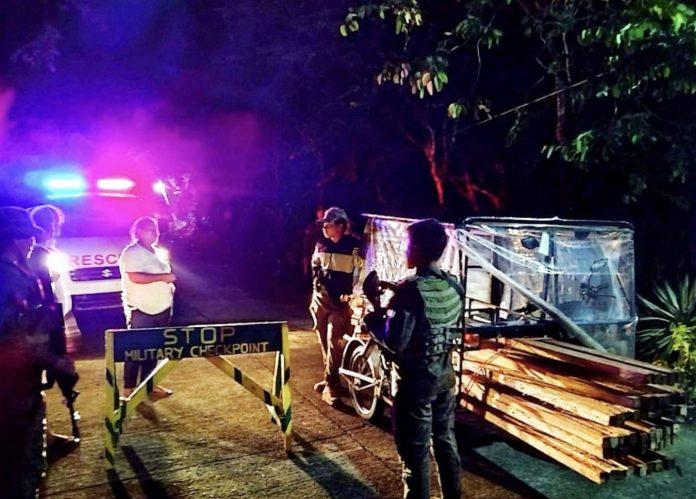
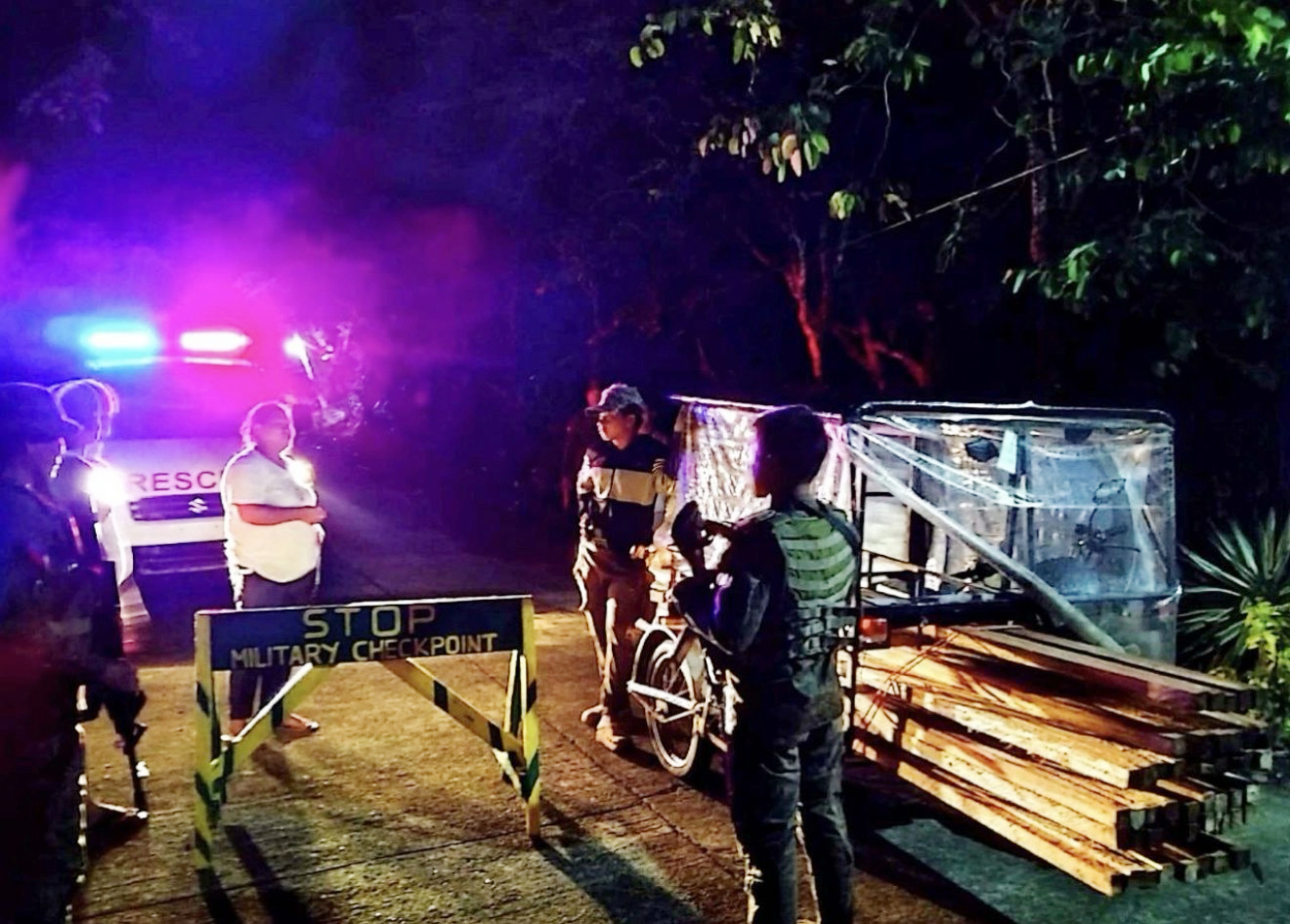
ILLEGAL LOGGING. Joint operatives from the Philippine Army, Jaro Municipal Police Station, and Barangay Villa Conzoilo inspect about 150 board feet of illegally cut Lawaan lumber confiscated during an anti-illegal logging operation in Barangay Villa Conzoilo, Jaro, Leyte. An 18-year-old suspect was arrested and taken to the Jaro Municipal Police Station for the filing of appropriate charges.
ILLEGAL LOGGING. Joint operatives from the Philippine Army, Jaro Municipal Police Station, and Barangay Villa Conzoilo inspect about 150 board feet of illegally cut Lawaan lumber confiscated during an anti-illegal logging operation in Barangay Villa Conzoilo, Jaro, Leyte. An 18-year-old suspect was arrested and taken to the Jaro Municipal Police Station for the filing of appropriate charges.
TACLOBAN CITY – Government authorities confiscated about 150 board feet of illegally cut Lawaan lumber and arrested an 18-year-old suspect during a joint anti-illegal logging operation in Barangay Villa Conzoilo, Jaro, Leyte.
The August 4, Wednesday, operation was conducted by the 2nd Platoon, 3rd Leyte Citizen Armed Force Geographical Unit Active Auxiliary (CAA) Company under the Task Group Defender of the 93rd Infantry Battalion, 8th Infantry Division, Philippine Army.
The team, led by TSg. Glenn Bramida, worked in coordination with Barangay Villa Conzoilo officials headed by Punong Barangay Myrna Aborita, barangay tanods, and personnel of the Jaro Municipal Police Station led by PSSg. Mark Meridor.
Authorities arrested Niño Trenchera, 18, a resident of Barangay Daro, Jaro, during the operation after he was allegedly found in possession of the illegally cut Lawaan lumber.
The confiscated forest products and the suspect were brought to the Jaro Municipal Police Station for proper documentation, filing of appropriate charges, and further investigation.
Illegal logging remains a major environmental concern in Leyte and other parts of Eastern Visayas, prompting the military, police, the Department of Environment and Natural Resources (DENR), and local government units to intensify enforcement operations to protect the region’s remaining forest resources and curb the illegal exploitation of timber.
Former House Speaker Martin Romualdez attends a public event amid developments in the so-called “Maleta Boys” controversy. Four of the 18 individuals who earlier alleged they delivered suitcases containing cash to President Ferdinand R. Marcos Jr., Romualdez, and other personalities have withdrawn their sworn statements, claiming the allegations were false and made in exchange for promised financial assistance.
(Photo courtesy of the Office of Rep. Martin Romualdez)
Former House Speaker Martin Romualdez attends a public event amid developments in the so-called “Maleta Boys” controversy. Four of the 18 individuals who earlier alleged they delivered suitcases containing cash to President Ferdinand R. Marcos Jr., Romualdez, and other personalities have withdrawn their sworn statements, claiming the allegations were false and made in exchange for promised financial assistance. (Photo courtesy of the Office of Rep. Martin Romualdez)
TACLOBAN CITY – Four of the 18 individuals who earlier claimed they delivered suitcases allegedly containing cash to President Ferdinand Marcos Jr., former House Speaker and Leyte Rep. Martin Romualdez, and other personalities have recanted their sworn statements, saying the allegations were fabricated in exchange for promises of financial assistance.
The four, who are among the group dubbed the “Maleta Boys,” executed new affidavits withdrawing their earlier claims that they transported suitcases allegedly containing cash to President Marcos, Romualdez, and other government officials.
In their recantation affidavits, the four said their previous statements were false and were made after they were allegedly promised money and financial support for themselves and their families.
They said they decided to retract their allegations because they wanted to tell the truth and move on with their lives.
The four also requested that their identities be withheld for security reasons.
They further claimed they were made to sign prepared affidavits that were later submitted to the Office of the Ombudsman and were warned that they could face several criminal cases if they refused. These allegations have not been independently verified.
The controversy began earlier this year when several individuals identifying themselves as former bodyguards and associates of businessman and former Ako Bicol party-list Representative Zaldy Co accused him of directing them to transport suitcases allegedly containing cash for delivery to several personalities, including President Marcos Jr. and former House Speaker Romualdez who represents Leyte’s first congressional district.
The allegations emerged amid political tensions surrounding claims of irregularities in government flood control projects.
Malacañang, Romualdez, and Co have consistently denied the accusations, describing them as baseless and politically motivated.
As of Friday, August 7, the Office of the Ombudsman had not issued any statement on whether the recantation affidavits would have any effect on any pending complaints or proceedings arising from the earlier allegations.
ORMOC CITY – A construction worker was killed after he was electrocuted while working at a building under construction in Barangay Cogon here on Thursday afternoon, authorities said.
The victim, identified only by his alias “Miki,” was a married resident of Upper Poblacion, Pilar, Camotes Island, and was employed by a construction services firm.
Police said the incident happened at around 5:40 p.m. on Aug. 6, prompting personnel of the Ormoc City Police Station 1 (OCPS1) to respond to the scene.
Initial investigation showed that the victim was plastering a wall when the steel finishing tool he was using accidentally came into contact with a live electrical wire.
The electric shock caused the worker to fall from the scaffolding where he was working.
He was rushed to a hospital in Ormoc City but was pronounced dead by the attending physician.
His remains were later transferred to a funeral home pending release to his family.
Police are continuing their investigation to determine the circumstances surrounding the incident.
CRUISE TOURISM PROSPECT. Basey, Samar Mayor Luz Ponferrada says the municipality is preparing for its possible inclusion in Eastern Visayas’ growing cruise tourism circuit following a site assessment by officials of the Department of Tourism and cruise industry representatives. The move is expected to boost the local economy while promoting Basey’s world-renowned banig weaving tradition and ecotourism attractions to international visitors.
(DEPARTMENT OF TOURISM-EASTERN VISAYAS)
CRUISE TOURISM PROSPECT. Basey, Samar Mayor Luz Ponferrada says the municipality is preparing for its possible inclusion in Eastern Visayas’ growing cruise tourism circuit following a site assessment by officials of the Department of Tourism and cruise industry representatives. The move is expected to boost the local economy while promoting Basey’s world-renowned banig weaving tradition and ecotourism attractions to international visitors. (DEPARTMENT OF TOURISM-EASTERN VISAYAS)
TACLOBAN CITY – The municipality of Basey in Samar is preparing for a possible entry into Eastern Visayas’ expanding cruise tourism circuit after government and cruise industry representatives assessed its top attractions for potential inclusion in international cruise itineraries beginning in 2027.
Basey Mayor Luz Ponferrada said the local government is ready to undertake the necessary preparations should the town be selected as one of the region’s cruise destinations.
“Definitely, pag-aandaman namun ini,” Ponferrada said, referring to the recent site inspection conducted by representatives of the Department of Tourism (DOT) Regional Office 8, TravelPeople Ltd. Inc., and Wallem Shipping Philippines Inc.
The assessment is part of preparations for the possible inclusion of Basey in international cruise ship routes between 2027 and 2028.
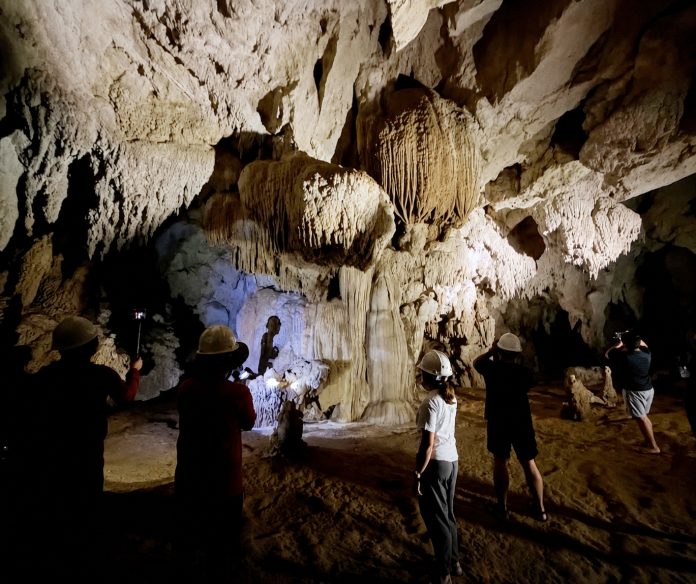
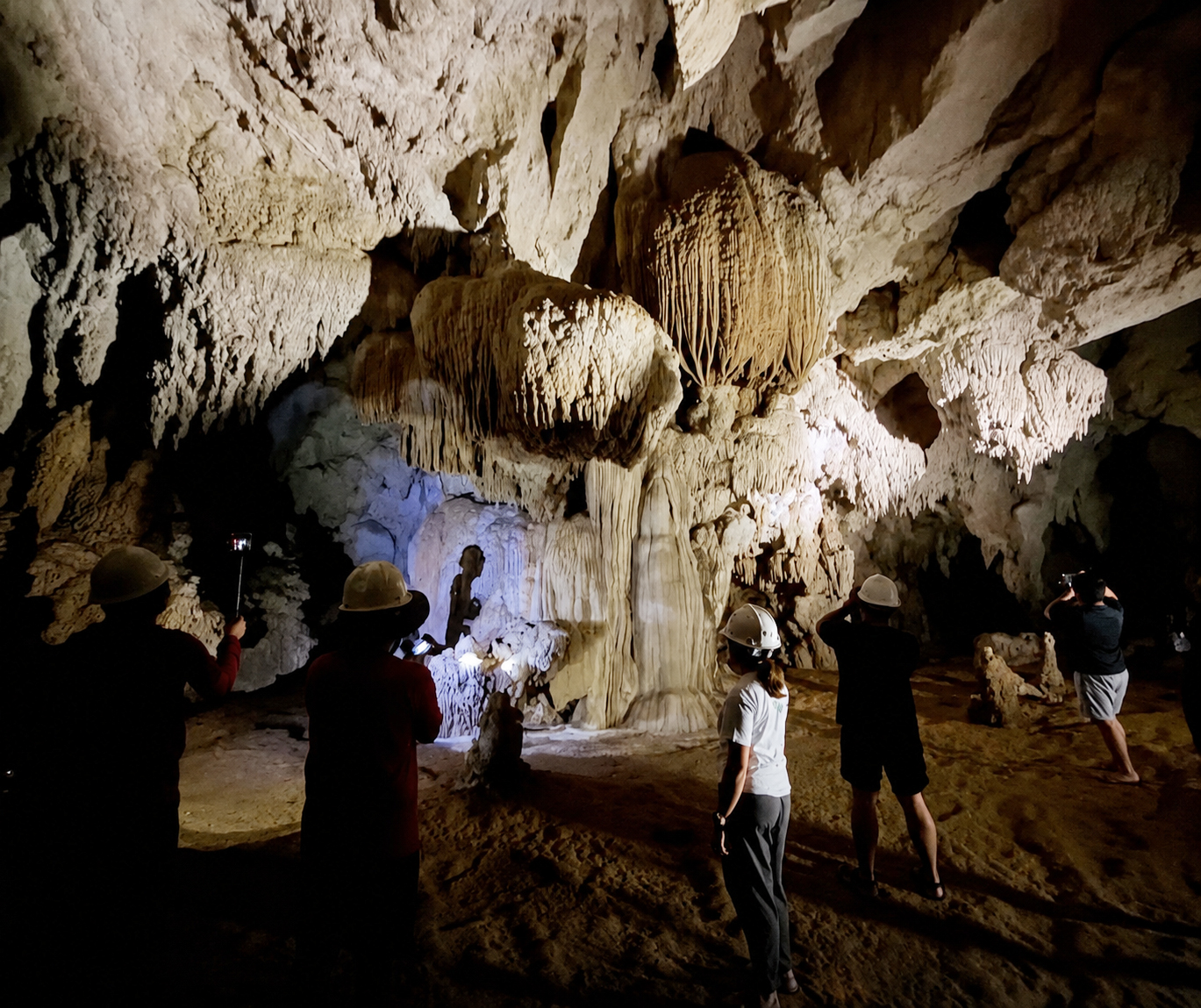
Among the sites inspected was the Sohoton Cave and Natural Bridge Park, an 841-hectare ecotourism destination managed by the Sohoton Cave Services Cooperative. The attraction is known for its towering limestone cliffs, cathedral-like caves, and a massive natural stone bridge linking two mountain ridges.
The inspection team evaluated the site’s tourism appeal, accessibility, visitor facilities, and its readiness to accommodate international cruise passengers.
Ponferrada said becoming part of the region’s cruise tourism circuit would provide a major economic boost for Basey while giving wider exposure to the town’s rich cultural heritage, particularly its centuries-old banig (woven mat) industry.
“Daku ini nga bulig ha amun bungto, kay kun dumagsa ini nga mga international tourists durudaku ini nga income ha amun bungto, and mas makikilala pa kami,” she said.
She added that increased tourist arrivals would create livelihood opportunities for local residents while promoting Basey’s internationally recognized handwoven mats and other locally made products to foreign visitors.
Eastern Visayas has been aggressively promoting cruise tourism as a new growth sector, with several destinations in the region already included in international expedition cruise itineraries.
Samar province joined the region’s cruise tourism destinations in 2025 following the visit of the Heritage Adventurer, an expedition vessel operated by New Zealand-based Heritage Expeditions. During the port call, passengers visited the Paranas Ecotrail, joined birdwatching activities, and toured the Arboretum ni Papa Donoy in Paranas, Samar.
Provincial and tourism officials are optimistic that adding Basey to future cruise itineraries will further strengthen Samar’s position as an emerging ecotourism and cultural tourism destination in Eastern Visayas.
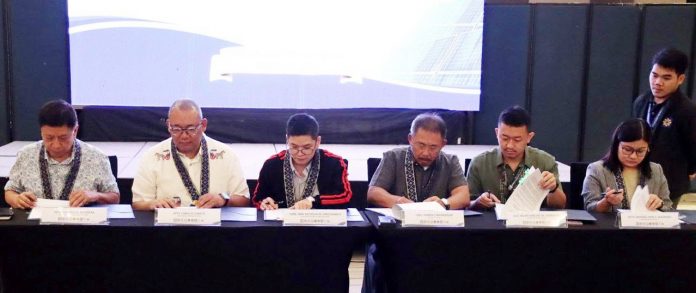
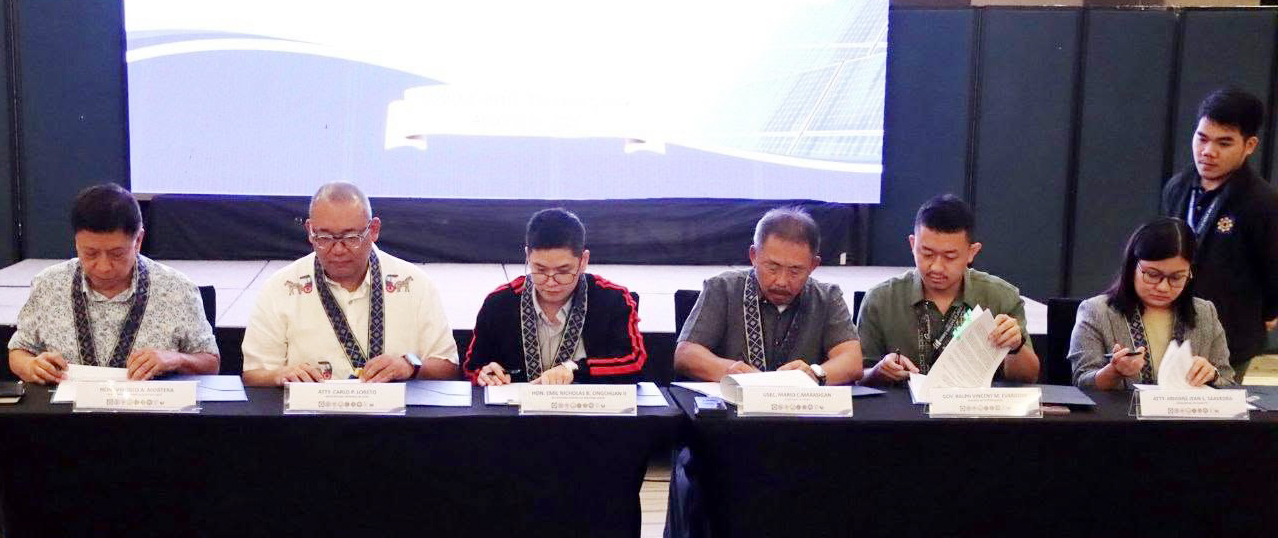
SOLAR PARTNERSHIP. Eastern Samar, represented by Governor Ralph Vincent Evardone(2nd from right), was among the local government which entered a memorandum of agreement with the Department of Energy for the Solar Solutions for Government: Energy Efficiency and Renewable Energy in Public Buildings (SSG-ERPB) Program at the Summit Hotel in Tacloban City on Wednesday, August 5. The partnership aims to accelerate the installation of solar power systems and energy-efficient technologies in government buildings across Eastern Visayas.(EASTERN SAMAR PROVINCIAL INFORMATION OFFICE)
SOLAR PARTNERSHIP. Eastern Samar, represented by Governor Ralph Vincent Evardone(2nd from right), was among the local government which entered a memorandum of agreement with the Department of Energy for the Solar Solutions for Government: Energy Efficiency and Renewable Energy in Public Buildings (SSG-ERPB) Program at the Summit Hotel in Tacloban City on Wednesday, August 5. The partnership aims to accelerate the installation of solar power systems and energy-efficient technologies in government buildings across Eastern Visayas.(EASTERN SAMAR PROVINCIAL INFORMATION OFFICE)
TACLOBAN CITY – The Department of Energy (DOE) on Wednesday, August 5, partnered with five local government units in Eastern Visayas to accelerate the use of solar power and energy-efficient technologies in government buildings, a move aimed at cutting electricity costs, improving energy resilience, and promoting sustainable governance.
The partnership was formalized through the signing of a memorandum of agreement (MOA) under the Solar Solutions for Government: Energy Efficiency and Renewable Energy in Public Buildings (SSG-ERPB) Program at the Summit Hotel here.
DOE Undersecretary Mario Marasigan led the signing ceremony with representatives of the provincial governments of Leyte, Southern Leyte, Eastern Samar, and Northern Samar, as well as the Tacloban City government.
The SSG-ERPB Program supports the national government’s efforts to expand the use of renewable energy and improve energy efficiency in the public sector by integrating solar photovoltaic (PV) systems and energy-saving technologies in government facilities.
The initiative is expected to reduce electricity consumption, lower operating costs, and strengthen the capacity of government offices to continue delivering essential services during emergencies. It also supports the Government Energy Management Program, which seeks to achieve at least a 10-percent reduction in energy consumption across government agencies.
“By integrating photovoltaic and energy-efficient technology in government buildings, we will not only reduce operating costs but also ensure that our government offices remain operational and capable of serving people, especially in emergency and challenging times,” Marasigan said.
He added that the initiative goes beyond installing solar panels, saying it also promotes energy security, fiscal responsibility, and climate resilience among local governments.
“The signing of the MOA is a call to action. It reflects the shared commitment of the Department of Energy and our local government partners to translate policies into projects that deliver lasting benefits to our communities,” Marasigan said.
Under the agreement, the DOE will provide technical assistance in designing and deploying solar PV systems and energy-efficient equipment tailored to the needs of participating local governments. The department will also conduct orientation and capacity-building activities for local officials and technical personnel.
Eastern Samar Governor Ralph Vincent “RV” Evardone welcomed the partnership, describing it as a significant step toward expanding renewable energy initiatives in the province.
“With this initiative and the technical assistance that the DOE is providing us in promoting renewable energy in our areas, this is a big help to us, and this is a step toward a greener future,” Evardone said.
Leyte Board Member Carlo Loreto said the provincial government fully supports the program, noting that Leyte has already taken significant strides in renewable energy adoption.
He cited the Leyte Provincial Government Complex in Palo, which operates on a P70-million hybrid solar power system inaugurated in June 2024. The facility supplies about 70 to 80 percent of the capitol’s electricity requirements, making it the country’s first off-grid provincial capitol.
Northern Samar Board Member Emil Nicholas Ongchuan II said the initiative complements the province’s commitment to sustainability and resilient public services.
“As we continue to face rising energy demand, we recognize the need to embrace smarter, cleaner, and more efficient energy solutions that strengthen government services,” he said.
Ongchuan stressed that shifting to renewable energy has become “a responsibility rather than an option,” saying investments in cleaner energy contribute to stronger communities, environmental protection, and improved quality of life.
Also present during the signing were Southern Leyte Board Member Virgilio Montera and Tacloban City Legal Officer Atty. Arriane Jean Saavedra, who represented their respective local governments.
The agreement is expected to strengthen collaboration between the DOE and participating local governments in implementing solar photovoltaic and energy-efficiency projects, supporting the country’s clean energy transition and climate resilience goals.