ORMOC CITY– Police arrested two most wanted persons in separate operations in Ormoc City and Palompon, Leyte, on Sept. 8, 2026, including a city-level suspect wanted for three counts of lascivious conduct and a provincial-level suspect facing rape charges.
Arrested in Ormoc City at about 2:45 p.m. was John Mark Dichosa, alias “Macmac,” 26, single, unemployed and a resident of Sitio Banlas, Barangay Masarayao, Kananga, Leyte.
Dichosa, ranked No. 6 among Ormoc City’s most wanted persons, was arrested in Purok 4, Barangay Cagbuhangin by operatives of the Ormoc City Mobile Force Company, Ormoc City Police Station 2 and the City Intelligence Unit.
Police said the arrest was carried out based on a warrant issued on Sept. 7 for three counts of lascivious conduct under Section 5(B) of Republic Act 7610, or the Special Protection of Children Against Abuse, Exploitation and Discrimination Act. Each case carries a recommended bail of P180,000.
Dichosa was brought to OCPS2 for proper disposition.
In a separate operation at about 3:30 p.m., police arrested Ramel Mendoza,35, single, a photographer and resident of Barangay San Pedro, Palompon.
Mendoza, ranked No. 3 among the province’s most wanted persons, was arrested in Barangay San Pedro by the Criminal Investigation and Detection Group Northern Leyte, Northern Leyte Provincial Field Unit and Palompon Municipal Police Station.
He was arrested by virtue of a warrant issued on Sept. 1 in connection with charges of rape and statutory rape. Police said the cases carry no recommended bail.
Mendoza was brought to the Palompon police station for proper disposition.
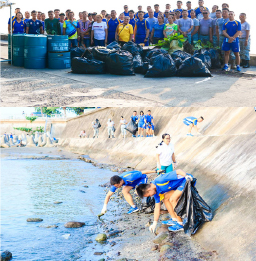
TACLOBAN CITY-On September 4, 2026, the Tactical Operations Group 8 (TOG 8) led by its Group Commander conducted a coastal clean-up activity along Magsaysay Boulevard, Barangay 25, this city, in collaboration with TOG Reserve 8 and barangay Officials.
Through the collective efforts of involved personnel, waste and debris were removed from the shoreline, contributing to a cleaner coastal environment while promoting proper waste management and environmental awareness within the community.
The initiative highlighted the importance of collective action in protecting the environment and strengthening partnerships with local stakeholders and the community. It also demonstrated TOG 8’s continuing commitment to environmental stewardship, civic responsibility, and meaningful community engagement.
The activity formed part of the pre-anniversary activities leading up to TOG 8’s 24th Founding Anniversary, underscoring the Unit’s commitment to mission accomplishment, environmental protection, and service to the communities of Eastern Visayas.(PR)
CATARMAN, Northern Samar — About 100 residents identified with cataracts undergo free eye surgery as part of a four-day medical mission aimed at bringing specialized eye care closer to communities in Northern Samar.
The eye surgical mission, spearheaded by the Northern Samar provincial government, was held at the Northern Samar Provincial Hospital (NSPH), following a visual screening conducted Sept. 1 at the Capitol Gym in Catarman.
Lennette Lapara, Provincial Health Office Inclusive Eye Health Program coordinator, said around 200 residents underwent visual acuity tests and screening for various eye problems on the first day of the activity.
Of those screened, about 100 cataract patients were identified for free surgical procedures at the NSPH. Other participants were provided with prescription eyeglasses based on the results of their eye examinations.
The initiative is a joint undertaking of the Bobon-Catarman-Lope de Vega (BobCat LoVe) Inter-local Health Zone and the provincial government through the Provincial Health Office and NSPH.
It is also supported by CBM Global, Eye Hear Foundation, Resources for the Blind Inc., the National Committee on Sight Preservation through its iStrength Project, and the Eastern Visayas Medical Center (EVMC).
During a courtesy visit by the partner groups to the provincial government, Vice Gov. Clarence Dato, representing Gov. Harris Ongchuan, expressed appreciation to the organizations and medical teams involved in the mission.
Among those recognized were the EVMC Ophthalmology team led by Medical Center Chief Dr. Joseph Michael Jaro, Resources for the Blind Executive Director Amelia Torrente, local optometrist Dr. Jennifer Ladeño-Dante, and other members of the participating organizations.
The provincial government said the initiative seeks to improve access to eye care services for Nortehanons, particularly those who may have difficulty obtaining specialized eye treatment.
The mission provides a range of services, from eye screening and diagnosis to treatment and surgery, allowing residents to receive essential eye care without having to travel outside the province.
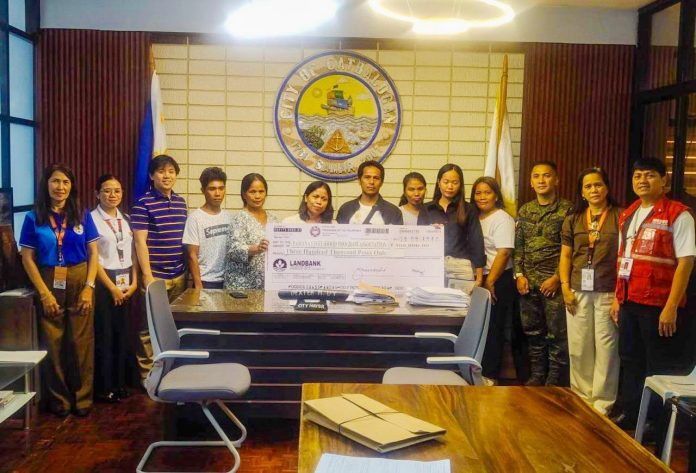
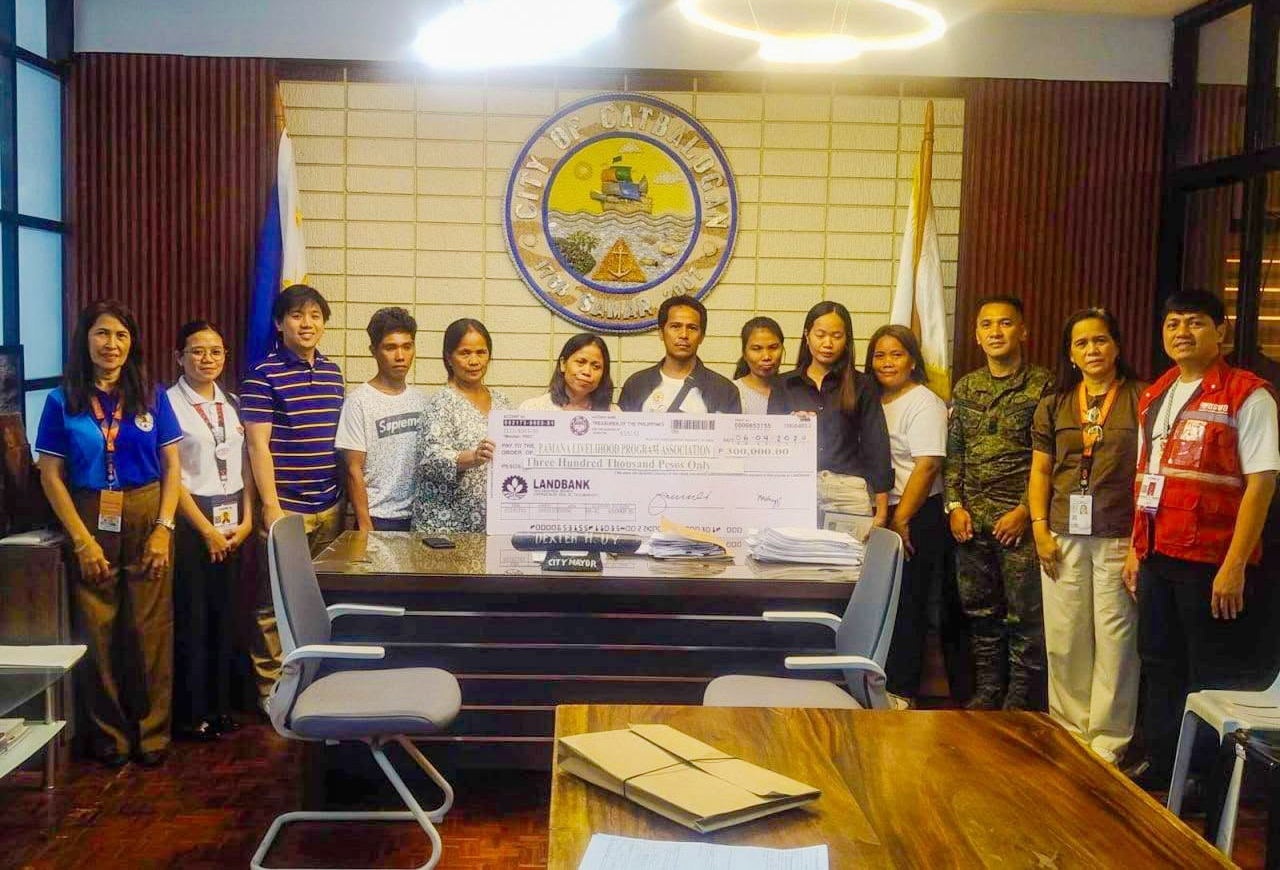
LIVELIHOOD SUPPORT. Farmers’ and irrigators’ associations from Motiong, Jiabong and Catbalogan City receive livelihood assistance under the Payapa at Masaganang Pamayanan (Pamana) program through the Office of the Presidential Adviser on Peace, Reconciliation and Unity, DSWD Field Office 8, local government units and the Philippine Army’s 3rd Infantry Battalion. The assistance aims to strengthen community enterprises, increase household income and promote self-reliance in geographically isolated communities.(3rd IB Facebook)
LIVELIHOOD SUPPORT. Farmers’ and irrigators’ associations from Motiong, Jiabong and Catbalogan City receive livelihood assistance under the Payapa at Masaganang Pamayanan (Pamana) program through the Office of the Presidential Adviser on Peace, Reconciliation and Unity, DSWD Field Office 8, local government units and the Philippine Army’s 3rd Infantry Battalion. The assistance aims to strengthen community enterprises, increase household income and promote self-reliance in geographically isolated communities.(3rd IB Facebook)
TACLOBAN CITY — Seven farmers’ and irrigators’ associations in Samar province have received livelihood assistance under the government’s Payapa at Masaganang Pamayanan (Pamana) program to help boost their income and strengthen community-based enterprises.
The assistance was distributed to people’s organizations from Motiong, Jiabong and Catbalogan City through the joint efforts of the Office of the Presidential Adviser on Peace, Reconciliation and Unity (OPAPRU), Department of Social Welfare and Development (DSWD) Field Office 8, local government units and the Philippine Army’s 3rd Infantry Battalion.
The beneficiary groups are the Nagbac Integrated Pamana Farmers Association, Cristina Farmers Pamana Association, Bugho Farmers Pamana Association, Pusongan Pamana Farmers Association, Calapi Irrigators Pamana Association, Cagusipan Farmers Pamana Association and Cagutian Farmers Pamana Association.
The organizations, which were established and developed in geographically isolated and disadvantaged areas (GIDAs), are expected to use the assistance to establish or expand livelihood enterprises based on the needs and available resources in their respective communities.
The Philippine Army said the program seeks to strengthen community-based livelihoods, increase household income and improve the economic well-being of beneficiaries.
As part of the assistance, members of the farmers’ and irrigators’ groups also underwent financial literacy training facilitated by DSWD project development officers.
The training covered budgeting, financial management, proper handling of organizational funds and sustainable enterprise development to help beneficiaries manage the assistance effectively and sustain their livelihood activities.
The 3rd Infantry Battalion said the initiative demonstrates how socioeconomic interventions can complement peace and security efforts by addressing livelihood concerns and helping communities become more resilient and self-reliant.
The Pamana program is among the government’s peace-building initiatives that support communities affected by conflict and other socioeconomic challenges, particularly those in geographically isolated and disadvantaged areas.
The Army said it will continue working with LGUs, national government agencies and people’s organizations to promote inclusive development and support sustainable peace in Samar.
TACLOBAN CITY– A ranking New People’s Army (NPA) leader was killed in a brief clash with government troops Tuesday afternoon in the hinterlands of Barangay Caridad, Baybay City, Leyte, the military reported.
The 8th Infantry Division(ID), which is based in Catbalogan City, Samar, said the encounter occurred on Sept. 8 after soldiers received information from a resident about the presence of armed men allegedly collecting money and food from communities in the area.
Troops from the 802nd Infantry Brigade(IB) proceeded to the area to verify the report, resulting in a firefight that lasted about five minutes, according to the military.
Killed was Erwin Murillo Maceda, alias “Romnick,” who was identified by the Army as the vice team leader of the NPA’s Island Committee Levox under the Eastern Visayas Regional Party Committee.
An M16 rifle was also recovered from the encounter site, the 8th ID said.
Brig. Gen. Pompeyo Jason Almagro, commander of the 802nd IB, said Maceda and his group had allegedly been involved in extortion, threats against residents and business owners, and attacks on government security installations in Leyte.
“The people of Leyte have endured years of fear, intimidation, and disruption caused by armed groups. We will not allow these conditions to return to communities that have worked hard to achieve peace,” Almagro said in a statement released on Wednesday.
The military said the encounter followed reports of armed NPA members attempting to regain their presence in communities where government authorities have declared stable peace and security conditions.
The Army also credited residents’ cooperation and timely reporting for enabling government forces to respond to the reported presence of armed men.
“The cooperation of our communities is critical. Their timely reporting allows government forces to respond before threats can escalate,” Almagro said.
The 8th ID renewed its call for remaining NPA members to abandon armed struggle and surrender, saying government programs are available to assist former rebels who return to civilian life.
The military said it would continue operations in areas where armed groups are reported to be operating while encouraging NPA members to return peacefully to their families and communities.
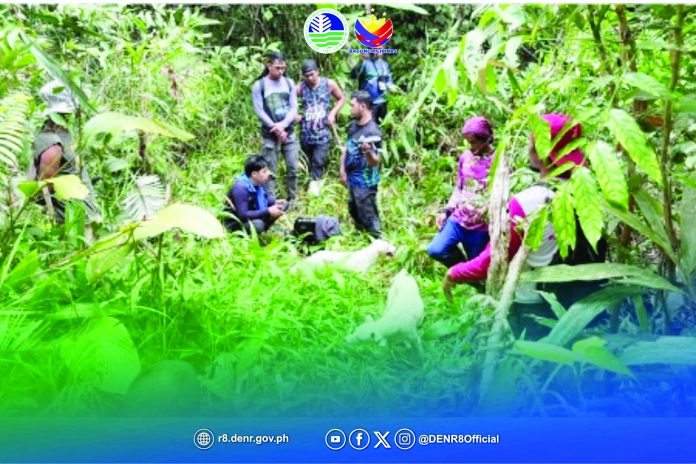
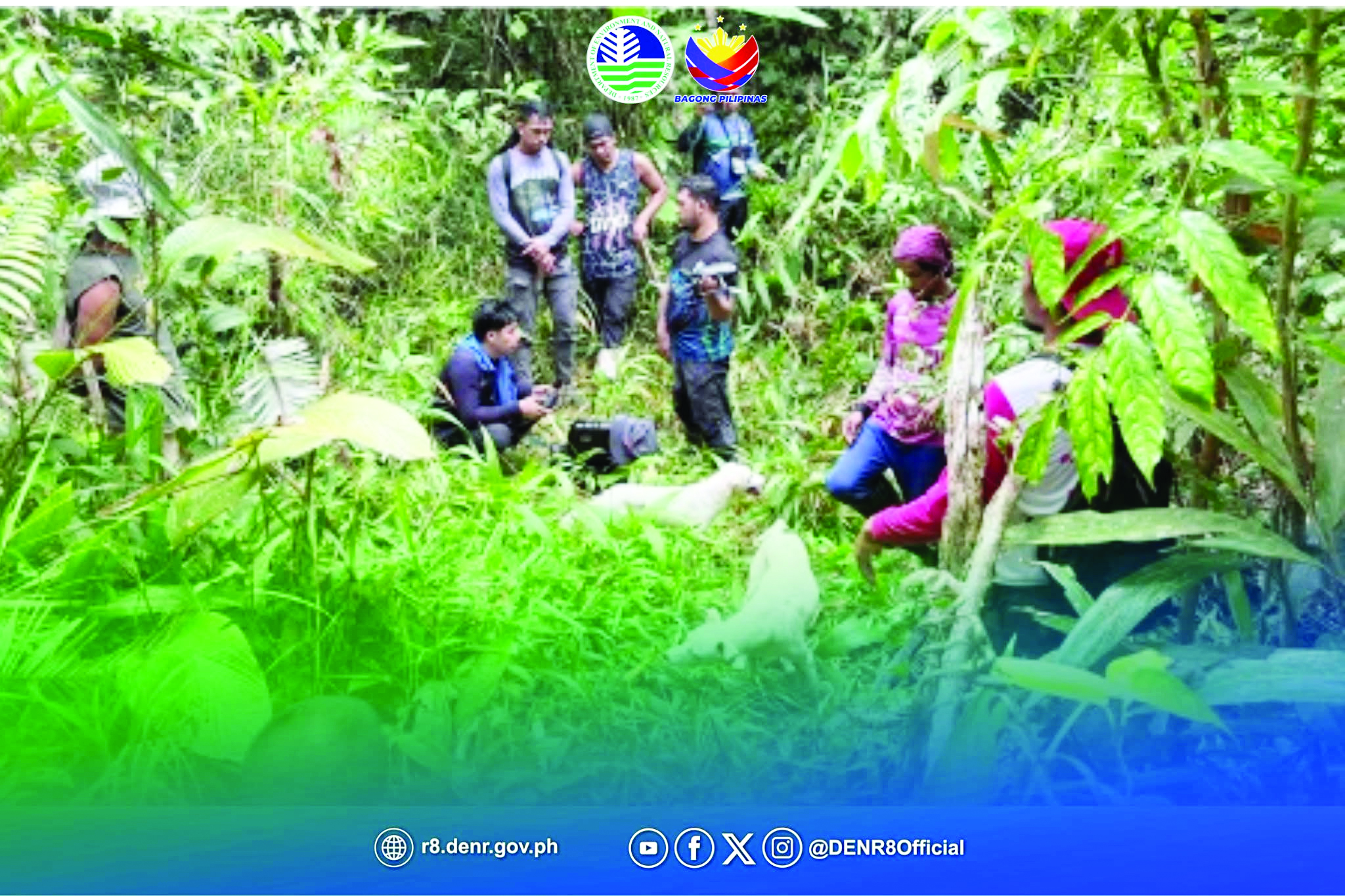
FOREST PARTNERS. Representatives of the Department of Environment and Natural Resources, Energy Development Corporation and the Visares and Sto. Niño Farmers Association join hands for a 60-hectare reforestation project in Barangay Visares, Capoocan, Leyte, where 37,500 indigenous tree seedlings will be planted beginning December. The three-year initiative aims to restore the Palaypay watershed and Kahamtikan river system while providing livelihood opportunities to local farmers.(DENR-8)
FOREST PARTNERS. Representatives of the Department of Environment and Natural Resources, Energy Development Corporation and the Visares and Sto. Niño Farmers Association join hands for a 60-hectare reforestation project in Barangay Visares, Capoocan, Leyte, where 37,500 indigenous tree seedlings will be planted beginning December. The three-year initiative aims to restore the Palaypay watershed and Kahamtikan river system while providing livelihood opportunities to local farmers.(DENR-8)
TACLOBAN CITY — Sixty hectares of land in Capoocan, Leyte will be restored as forest beginning December as farmers, government environmental officials and a renewable-energy company join forces to revive a watershed and strengthen protection of the area’s biodiversity.
The three-year reforestation project in Barangay Visares will involve the planting of 37,500 indigenous tree seedlings, turning an area within the Palaypay watershed and Kahamtikan river system into a developing forest under the “Forest for Life: 5 Million Trees by 2028” program.
The Department of Environment and Natural Resources (DENR), Energy Development Corporation (EDC) and the Visares and Sto. Niño Farmers Association (VisFA) are partnering in the project, which also aims to provide livelihood opportunities to members of the local community.
Tree planting is scheduled to begin in December during the rainy season, when soil moisture and rainfall are expected to improve seedling survival and establishment.
Among the species to be planted are yakal, nato, manaybanay and hindang, all indigenous trees suited to the area. The partners are targeting at least an 85 percent seedling survival rate throughout the project.
Unlike a one-time tree-planting activity, the initiative will include three years of maintenance, protection and monitoring to ensure that the seedlings develop into a viable forest.
VisFA members will serve as the primary community partners, providing labor for planting and maintenance while conducting regular patrols and monitoring the reforested areas. The project is expected to provide employment and income opportunities to about 45 farmers.
The DENR will provide technical and regulatory assistance, including site assessment and delineation, as well as monitoring of the project’s progress and environmental impact.
EDC, which operates geothermal facilities in the area, will provide financial and logistical support for seedling production, planting, maintenance, protection and environmental information activities.
The location of the project gives the reforestation effort importance beyond increasing tree cover. The Palaypay watershed and Kahamtikan river system help support the ecological health of surrounding communities, while a healthier forest can improve the landscape’s ability to retain water, reduce soil erosion and runoff, and limit sedimentation in waterways.
Restored forest areas can also provide habitats for wildlife and other native species while absorbing carbon from the atmosphere, contributing to broader efforts to address climate change.
“This partnership demonstrates how renewable-energy development and environmental conservation can work together,” DENR 8 Assistant Regional Director Dario Suarez said in a statement. “By restoring these 60 hectares, we are protecting biodiversity and watersheds while supporting communities and the sustainability of clean-energy operations.”
A technical working group composed of representatives from DENR, EDC, VisFA and the local government of Capoocan will oversee the project to coordinate its implementation and ensure its long-term sustainability.
Suarez said the involvement of VisFA is crucial because the farmers will be responsible not only for planting the trees but also for helping protect and maintain them after the initial planting.
The project reflects a broader shift toward community-based forest restoration, where local residents become active partners in protecting restored areas. Such approaches can help address one of the biggest challenges in reforestation—ensuring that newly planted trees survive and are maintained long enough to become established forests.