TACLOBAN CITY — Building on the gains of a successful first phase, the provincial government of Eastern Samar and development partners Korea International Cooperation Agency (KOICA) and World Vision Philippines have launched the second phase of a maternal and child health program aimed at improving healthcare services for mothers, newborns, and children in some of the province’s most underserved communities.
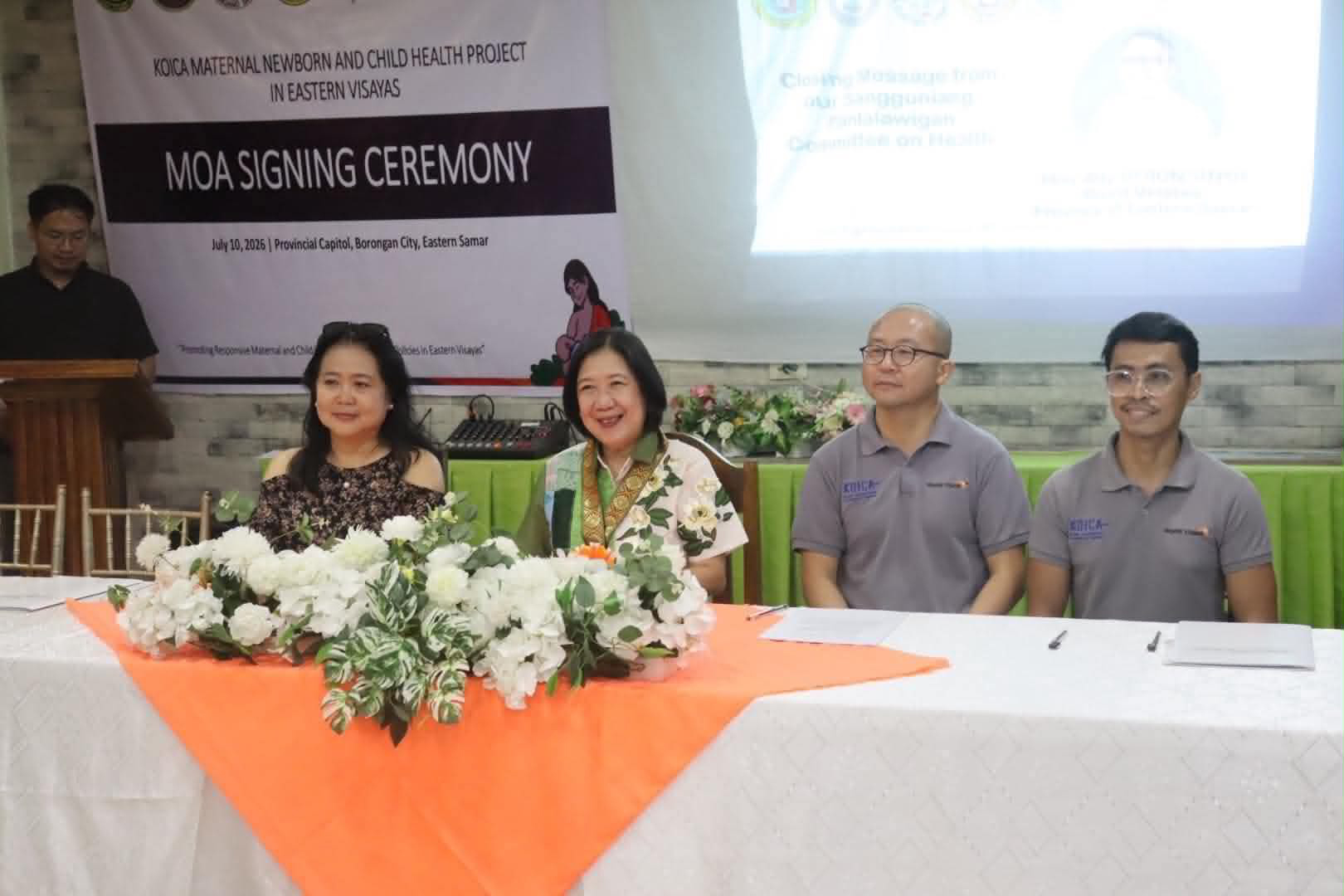
The partnership was formalized through the signing of a memorandum of agreement (MOA) in Borongan City on July 10, marking the start of Phase 2 of the World Vision-KOICA Maternal, Newborn, and Child Health (MNCH) Project, which will run until 2030.
The new five-year phase will focus on strengthening local healthcare systems in the municipalities of Jipapad, Maslog, and Giporlos—areas where access to quality maternal and child healthcare remains a challenge because of their geographical location and limited health resources.
The MNCH Project seeks to reduce maternal and infant deaths by improving prenatal, childbirth, postnatal, and child healthcare services. It also aims to strengthen referral systems, enhance the skills of healthcare workers, improve health facilities, and increase community awareness to ensure mothers and children receive timely and quality medical care.
Speaking during the signing ceremony, World Vision-KOICA MNCH Project Manager Romil Jeffrey Juson said the agreement signifies more than the continuation of a development project.
“Today marks a profound milestone in our collective journey. As we gather to sign this memorandum of agreement, we are not just signing a document; we are renewing our promise to the families, mothers, and children of Eastern Samar,” Juson said.
He noted that although the first phase officially concluded in 2025, the commitment of the provincial government and its partners to improve healthcare remains steadfast.
“A project may have a timeline, but our commitment to human lives and well-being has no expiration date,” he said.
Juson said the second phase will shift its focus toward ensuring that the systems established during the first phase become sustainable, particularly by strengthening the province’s healthcare referral network.
“By strengthening this network, we bridge gaps, streamline services, and build a localized healthcare ecosystem that can withstand future challenges independently,” he said.
He added that the partnership ultimately seeks to support the government’s Universal Health Care (UHC) program by ensuring that every mother has access to safe childbirth services and every child receives quality healthcare.
Project Director Jihwan Jeon underscored South Korea’s continuing commitment to improving maternal and child health outcomes in Eastern Samar.
“To the provincial government and the municipal governments, we deeply appreciate your support for accepting this program,” Jeon said.
He said the launch of the second phase reflects the positive results achieved during the initial implementation of the project.
“So, now we are officially advancing into Phase 2 of the project. We will proudly partner with the provincial government of Eastern Samar and work alongside the municipal governments of Giporlos, Jipapad, and Maslog,” he said.
Jeon also expressed optimism that close collaboration with local government units, the Department of Health, and other stakeholders would ensure the success of the project through 2030.
Representing Governor Ralph Vincent Evardone, Vice Governor Maria Caridad Sison-Goteesan thanked KOICA and World Vision for their continued investment in the province’s healthcare sector, particularly in reaching vulnerable and underserved communities.
She said the partnership reflects the provincial government’s commitment to inclusive healthcare.
“We have long been ranked among the country’s poorest provinces, but with the continued support of KOICA and World Vision, we are confident that we can reach those who have remained underserved and provide them with the healthcare they deserve,” Goteesan said.
She added that the provincial government remains committed to ensuring that no Estehanon is left behind in accessing quality healthcare services.
Since its implementation, the World Vision-KOICA MNCH Project has helped improve maternal and child healthcare in Eastern Samar through health worker training, capacity building, community-based health programs, and the strengthening of referral systems among rural health units and hospitals.
Officials said the second phase aims to institutionalize these gains and build a more resilient and self-reliant healthcare system that will continue benefiting mothers and children long after the project ends.
(JOEY A. GABIETA)