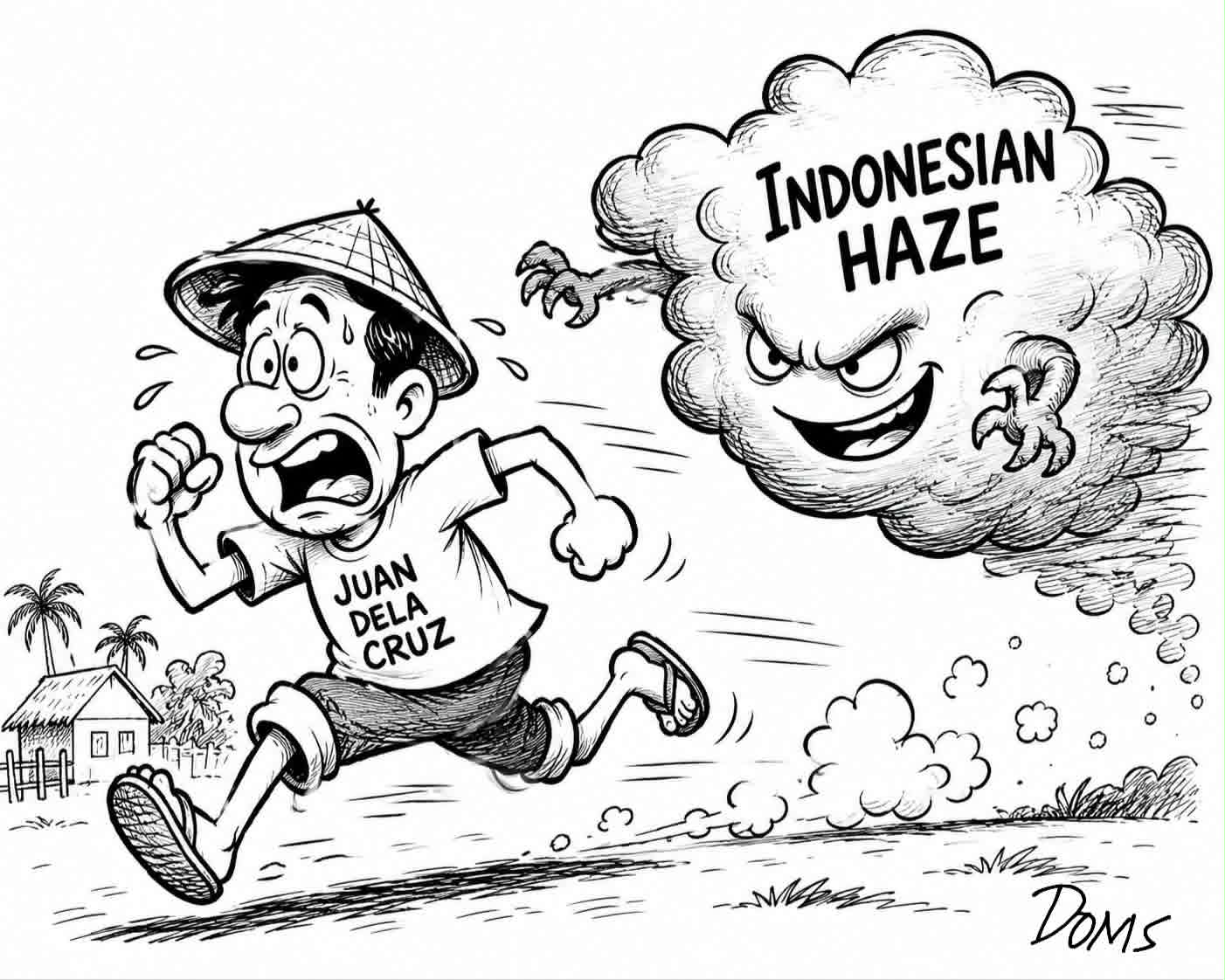
Smoke from the forest fires in Kalimantan, Indonesia, has reached parts of the Philippines. This transboundary haze poses a serious threat to public health and public safety. Government agencies and citizens must treat the danger with urgency, discipline, and caution.
The haze is not merely an unpleasant veil in the sky. It may contain fine particles that can enter the lungs and worsen asthma, heart disease, and other respiratory conditions. Children, older people, pregnant women, outdoor workers, and those with existing illnesses face greater danger. The Department of Environment and Natural Resources–Environmental Management Bureau has reported that haze observed in parts of the country may be associated with smoke carried by prevailing winds from the Kalimantan fires.
Warnings must be supported by reliable, up-to-date air-quality information. National and local authorities should continuously measure particulate pollution, identify affected communities, and issue clear instructions on outdoor activities, school operations, work arrangements, and mask use. Hospitals and health centers must also prepare for possible increases in breathing problems, while schools should protect learners from unnecessary exposure.
Citizens likewise have a duty to act responsibly. Staying indoors when pollution levels are dangerous, closing doors and windows, avoiding strenuous outdoor activity, and wearing a well-fitted protective mask when going outside are sensible precautions. Motorists must slow down when visibility is poor, while anyone suffering from difficulty breathing, chest pain, severe coughing, or dizziness should seek medical attention without delay.
This crisis also demands firm regional action because polluted air does not recognize national boundaries. Indonesia must suppress the fires, prosecute those responsible for illegal burning, and prevent destructive land-clearing practices from producing another cycle of regional suffering. Philippine authorities, meanwhile, must provide verified advisories rather than leaving citizens dependent on scattered social media reports. Public vigilance is necessary, but decisive government action and sustained cooperation among Southeast Asian nations