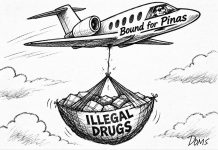
Diri man madadara an kwarta, bisan usa ka baul pa!
When political leaders and government officials forget that they too are mortal, they become vulnerable to greed, arrogance, and corruption. The pursuit of wealth at the expense of public welfare is rooted in the mistaken belief that money and power can provide lasting fulfillment.
Throughout history, nations have risen and fallen under the leadership of men and women entrusted with public power. Many begin their careers with noble intentions, swearing to serve the people and protect the public good.
Yet, as years pass, some political leaders and government officials become consumed by the pursuit of wealth, influence, and personal advantage. They forget a simple but profound truth: human life is temporary. No amount of money, power, or prestige can prevent death. When leaders lose sight of this reality, corruption flourishes and the public suffers.
The ancient philosophers often reminded rulers to remember their mortality. The Latin phrase memento mori, meaning “remember that you must die,” served as a warning against arrogance and greed. A leader who remembers the certainty of death is more likely to govern with humility and wisdom. By contrast, a leader who believes power is permanent may begin to see public office not as a sacred responsibility but as an opportunity for personal enrichment.
Corruption often grows from the illusion that wealth can provide lasting security and significance. Government officials who divert public funds, accept bribes, or abuse authority frequently act as though the accumulation of money is the highest achievement in life. They construct mansions, acquire luxury vehicles, and maintain extravagant lifestyles while ordinary citizens struggle with poverty, unemployment, and inadequate public services. Yet history repeatedly demonstrates that wealth cannot accompany a person beyond the grave. The riches accumulated through dishonest means eventually become meaningless when confronted by the inevitability of death.
The irony is that many corrupt officials possess sufficient education and experience to understand this truth. They know that human beings are mortal. They have attended funerals, witnessed the passing of political allies, and observed powerful leaders lose everything through scandal or imprisonment. Nevertheless, some continue to engage in corruption because greed clouds moral judgment. The desire for more wealth becomes stronger than the voice of conscience. In such circumstances, public service transforms into self-service.
The consequences extend far beyond the individual. Every peso, dollar, or public resource stolen through corruption represents a lost opportunity for societal development. Corrupt practices can deprive children of education, delay the construction of roads and hospitals, weaken disaster response systems, and deepen social inequality. The suffering experienced by citizens becomes the hidden cost of a leader’s greed. Money intended to improve lives instead finances private luxury and personal ambition.
Religious traditions also offer powerful warnings against placing excessive value on material wealth. In the Bible, Jesus asks, “What shall it profit a man if he gains the whole world but loses his own soul?” This question strikes at the heart of political corruption. Leaders may succeed in amassing fortunes, but if such wealth is gained through dishonesty and exploitation, the moral cost may be far greater than the financial reward. Scripture repeatedly teaches that earthly treasures are temporary, while character, integrity, and righteousness possess enduring value.they accumulated, but by what they contributed to society.
In the end, corruption is not merely a legal violation; it is a failure of moral perspective. It occurs when leaders place temporary wealth above permanent values and personal interests above public welfare. The certainty of death should remind every official that money is not everything. Power fades, wealth changes hands, and titles are eventually forgotten. What remains is one’s reputation, the impact of one’s actions on others, and the judgment of history. Therefore, the wisest leaders are those who govern with integrity, remembering that while riches are temporary, the consequences of their choices may endure for generations.