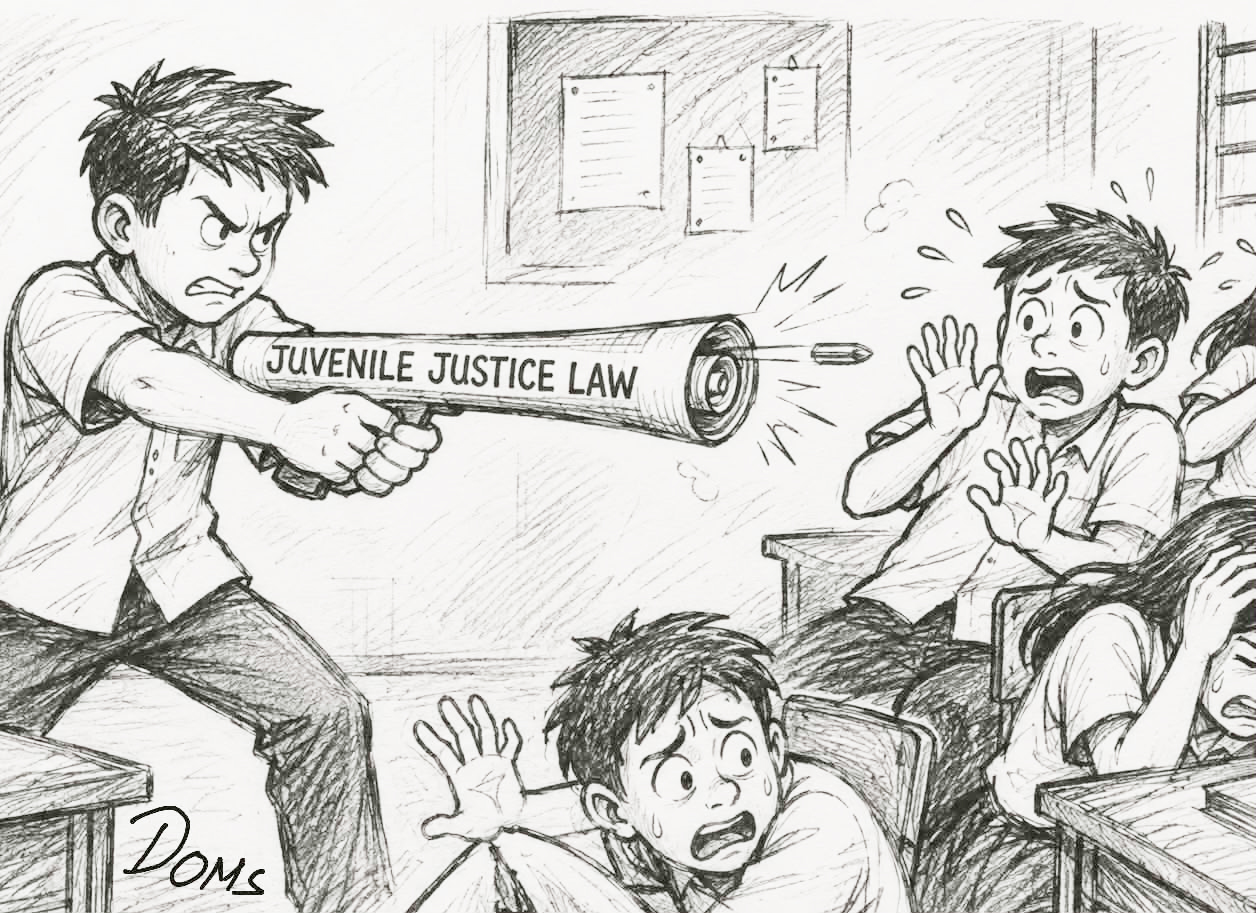
School shooting incidents involving minors as suspects are becoming a disturbing concern that authorities and educators cannot afford to dismiss. The fact that some suspects are reportedly students with good academic standing makes the problem even more unsettling. Whatever forces are driving such violence, schools must respond with stricter security measures, stronger prevention, and greater attention to warning signs.
Our tendency is to look immediately for one explanation: violent online games, bullying, exposure to violent material, family problems, peer pressure, or psychological distress. These possibilities deserve investigation, but none should be declared the cause without evidence. Even more serious claims—such as the involvement of an international organization recruiting student shooters or a satanic cult manipulating young people—must never be treated as fact unless investigators uncover credible proof. Speculation can create panic, falsely accuse innocent people, and distract authorities from the actual causes. Every incident must therefore be thoroughly investigated, including the suspect’s online activity, social relationships, access to weapons, school experiences, communications, and behavioral changes before the attack.
What should alarm the public further is that academic performance alone cannot be treated as proof that a student is emotionally stable or incapable of violence. A student may earn high grades while carrying anger, humiliation, resentment, fear, or other problems that teachers and parents do not see. Schools have traditionally watched students closely when their grades collapse, attendance becomes irregular, or discipline problems appear. That is no longer enough. Teachers, guidance personnel, parents, and classmates must also be taught to recognize threatening statements, fascination with previous attacks, violent plans, drastic behavioral changes, weapon-related posts, and direct or indirect threats. These signs should be assessed seriously rather than dismissed as jokes, adolescent drama, or harmless online behavior.
Security must also cease being treated as a ceremonial requirement. Schools need controlled entry points, reliable identification procedures, trained guards, functioning cameras where appropriate, visitor screening, emergency communication systems, clear lockdown procedures, and regular drills suited to armed threats. Access to firearms by minors must likewise receive close scrutiny because even the most troubled student cannot carry out a shooting without obtaining a weapon. Parents who keep firearms have a grave responsibility to secure them properly, while law-enforcement agencies must investigate how weapons used in school violence reach young hands. At the same time, security should be combined with confidential reporting systems, accessible guidance services, anti-bullying enforcement, threat-assessment procedures, and immediate intervention when credible danger is detected.
Schools are supposed to be places where children learn, not places where students and teachers wonder whether someone carrying a weapon will enter the next classroom. Government agencies, school administrators, law enforcers, parents, technology platforms, and communities must therefore treat every school shooting as both a criminal case and a warning from which concrete lessons must be learned. Investigate the causes without sensationalism, establish the facts without feeding conspiracy theories, restrict minors’ access to weapons, strengthen mental-health and guidance support, and enforce security measures before another tragedy occurs. Waiting for more children to die before acting decisively would not merely be negligence; it would be an unforgivable failure to protect those whom schools are duty-bound to keep safe.