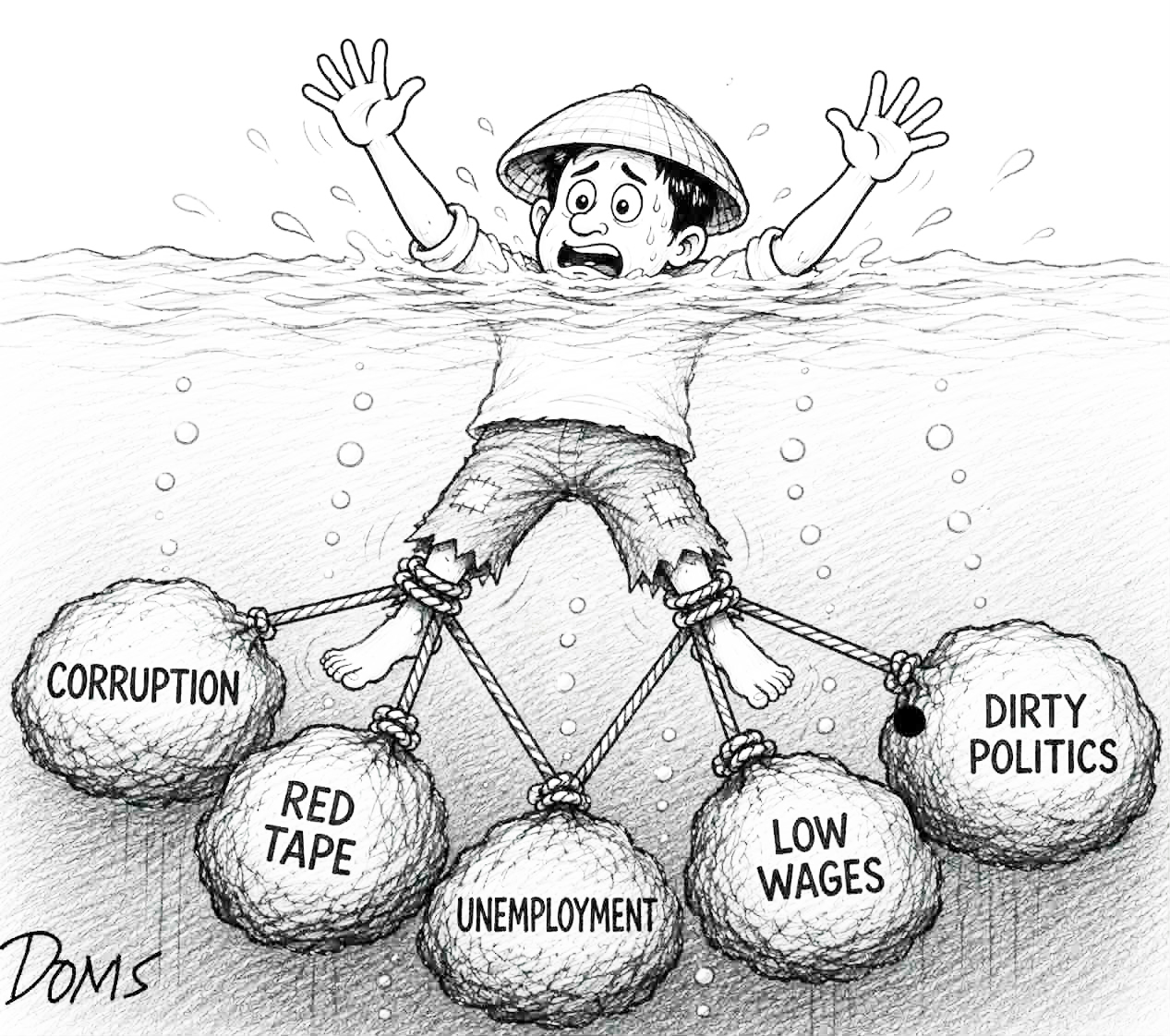
From the looks of it, the country is being weakened by corruption, red tape, and elite capture, and that is a serious national failure. Economic growth that does not improve ordinary lives is not real progress. A country cannot keep calling itself on the path to development while basic public systems remain inefficient, uneven, and open to abuse.
Corruption does more than steal money. It distorts public spending, slows services, discourages investment, and rewards connections over competence, which is why ordinary people end up facing delays, inconsistent rules, and costly workarounds. Reports on the Philippines note that corruption is tied to political dynasties and weak accountability, allowing power to stay concentrated while public funds are misused and essential services suffer.
The complaint about GDP growth is also valid in a narrower sense: headline growth can rise even as wages remain low and the cost of living keeps climbing. Recent reporting has described Philippine growth as exclusionary, with household spending weak, employment under pressure, and development gains concentrated among those already at the top. That is why many citizens see the economy not as shared advancement but as a system that works unevenly for those with access and influence.
Red tape and fixer culture are not minor annoyances; they are symptoms of a broken administrative culture. When business permits, licenses, and identity documents are made harder than they should be, people with money or connections can buy speed while everyone else waits, suffers, or gives up. That kind of system undermines the government and tells honest citizens that rules are flexible only for the privileged.
The answer is not resignation but correction. The country needs stricter anti-corruption enforcement, simpler procedures, real digital transparency, and a political order that stops protecting dynasties and patronage networks. If the Philippines is to avoid deeper decline, public office must stop serving private gain and start serving the public with discipline, fairness, and accountability.