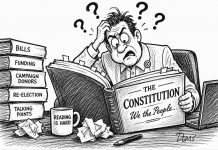
Leading is a sacred trust.
Whether in government, business, education, or community service, leaders are expected to promote the welfare of those they serve. Yet history and scripture alike reveal a recurring truth: power can either inspire virtue or corrupt character. While some leaders have fallen into disgrace because of greed and abuse of authority, others have found redemption by embracing humility, accountability, and genuine service.
The Bible provides powerful examples of both the rise and fall of leaders. One of the most notable is King Saul, Israel’s first king. Saul began his reign as a humble and promising leader chosen by God. However, power gradually led him to pride, disobedience, and jealousy. Instead of focusing on God’s will and the welfare of his people, Saul became consumed by preserving his position. His downfall illustrates how a leader can lose legitimacy when personal ambition overtakes moral responsibility.
Similarly, King David, although remembered as a great king, experienced a serious fall from grace when he committed adultery with Bathsheba and arranged the death of her husband, Uriah. Unlike Saul, however, David acknowledged his wrongdoing when confronted by the prophet Nathan. He expressed sincere repentance and sought forgiveness. Although he suffered consequences for his actions, his story demonstrates that genuine reform and moral recovery are possible when leaders admit their failures and seek to change.
Another Biblical example is King Solomon, renowned for his wisdom and prosperity. Despite his remarkable achievements, Solomon gradually allowed wealth, privilege, and worldly influences to distract him from his principles. His story warns that even the wisest leaders can lose their way when success breeds complacency and moral compromise.
These Biblical narratives find parallels in modern political life. In the Philippines, several leaders rose to prominence with great public support but later faced controversies that tarnished their reputations. The administration of President Joseph Estrada, for instance, began with significant popularity among ordinary Filipinos. However, allegations of corruption eventually led to his ouster through the EDSA II movement. His experience illustrates how public trust, once lost, can be difficult to regain.
The Philippine experience also offers examples of leaders who sought reform and redemption. While not all public figures completely transformed their image, some leaders who faced criticism or controversy later pursued programmes and actions aimed at rebuilding public trust. Such efforts remind us that leadership is not defined solely by one’s mistakes but also by one’s willingness to learn from them and work toward positive change.
The common lesson from both scripture and history is that leadership is sustained not by power alone but by integrity. Many promising leaders begin their careers with noble aspirations. Yet when they become consumed by wealth, political survival, or personal ambition, they often experience a fall from grace. Their downfall is rarely sudden. Instead, it is the result of small ethical compromises that gradually undermine their character and credibility.
A truly transformed leader recognises these dangers. Such a leader practises transparency, accepts accountability, listens to criticism, and prioritises the needs of the people. Rather than seeking personal glory, they embrace the role of servant-leader, understanding that authority is a responsibility rather than a privilege.