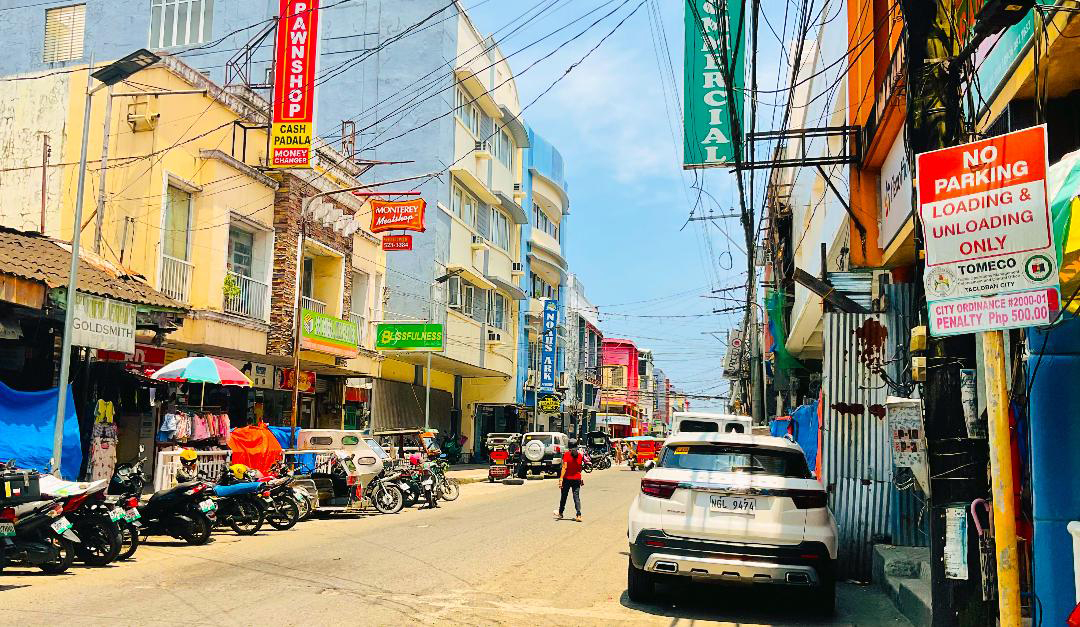
TACLOBAN CITY — In a bid to address worsening traffic congestion and the unregulated use of roadside spaces in the city’s central business district, the Sangguniang Panlungsod has begun deliberations on a proposed pay parking ordinance, now on its first reading as of April 16, 2026.
The proposed “Pay Parking Ordinance of Tacloban City” seeks to introduce an organized parking system aimed at easing road obstructions, improving traffic flow, and enhancing safety along major thoroughfares frequently affected by parked vehicles, especially during peak hours.
City officials said the measure responds to the growing number of vehicles occupying public roads without a structured parking framework, which has contributed to daily congestion and reduced mobility in key commercial areas.
Once approved, designated pay parking zones will include Gomez Street, Zamora Street, Juan Luna Street, and Quezon Boulevard, as well as major public areas such as the Tacloban City Hall grounds, the fish port area, and the city bus terminal. Parking hours are set from 7:00 a.m. to 5:00 p.m., seven days a week.
The ordinance proposes varying parking fees based on vehicle type.
Motorcycles will be charged P20 for the first three hours and P10 for each succeeding hour, while light vehicles such as cars, jeepneys, and pickups will be charged P50 for the first three hours and P20 per additional hour. Higher rates will apply to larger vehicles.
The Traffic Operation Management Enforcement and Control Office (Tomeco) will oversee implementation, including the designation of parking bays, deployment of attendants, and enforcement of regulations. Penalties for violations include wheel clamping, towing, and fines of up to P5,000.
City officials said revenues generated from the pay parking system will be allocated to key programs, including education scholarships, health services, environmental initiatives, and traffic management improvements, framing the proposal as both a regulatory measure and a potential source of local development funding.
(RICARDO TODIO, JR,LNU Student Intern)