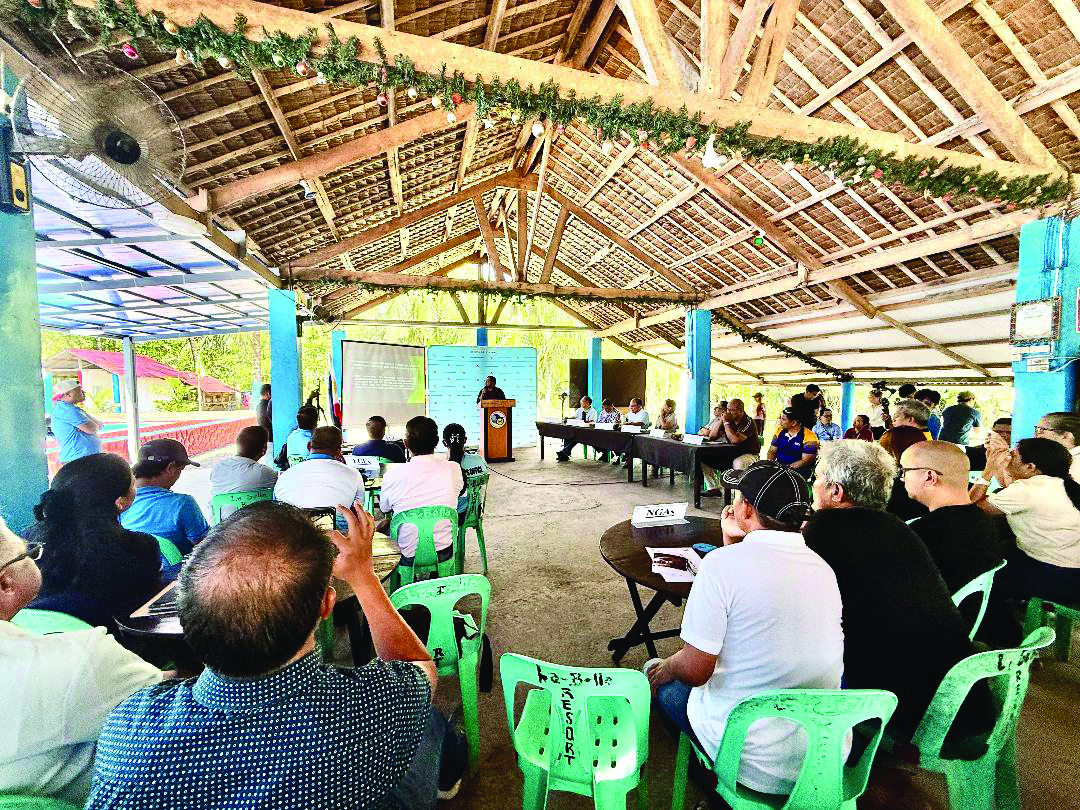
MACARTHUR, Leyte– Government regulators, local officials, and community groups convened in a multi-sectoral dialogue led by the Mines and Geosciences Bureau (MGB) to tackle growing concerns over black sand mining operations in this town on April 29 as calls intensify for stricter oversight and environmental protection.
The meeting, organized by MGB Regional Office 8, brought together representatives from the Department of Environment and Natural Resources (DENR), local government units of MacArthur and nearby Javier, mining firm Strongbuilt Mining Development Corporation, residents, and civil society organizations.
Discussions centered on key issues raised by affected communities, including potential environmental damage, disruptions to livelihoods, and the reported use of a suction dredger in mining activities.
Residents and advocacy groups voiced opposition to the dredging equipment, citing risks such as coastal erosion, harm to marine ecosystems, and possible long-term impacts on fisheries.
Some participants also questioned whether the equipment’s use complies with existing permits and environmental regulations, calling for clearer documentation and stricter monitoring.
Local officials acknowledged the economic benefits of mining, particularly in terms of local revenues, but stressed the need to ensure that such activities do not compromise environmental sustainability or community safety.
The MGB assured stakeholders that all concerns raised would undergo thorough evaluation, reiterating its mandate to regulate mining operations and enforce compliance with environmental standards.
The dialogue comes amid heightened scrutiny of black sand mining activities across Eastern Visayas, especially in coastal towns like MacArthur, where communities have increasingly raised concerns over environmental risks.
Critics, including Jesus Cabias, chairperson of the group Unahin Natin ang Diyos (UNLAD), have long warned about the potential consequences of black sand extraction. These include shoreline degradation, saltwater intrusion, and the displacement of coastal residents.
Cabias and other advocates have also called for greater transparency in mining agreements and more inclusive decision-making processes involving local communities, reflecting broader concerns about governance and accountability in the sector.
The April 29 dialogue marks an initial step toward addressing these issues, though stakeholders emphasized the need for continued consultations and concrete measures to resolve ongoing concerns.
Authorities have yet to announce specific agreements or policy changes following the meeting, with further discussions expected in the coming weeks.
(LIZBETH ANN A.ABELLA)