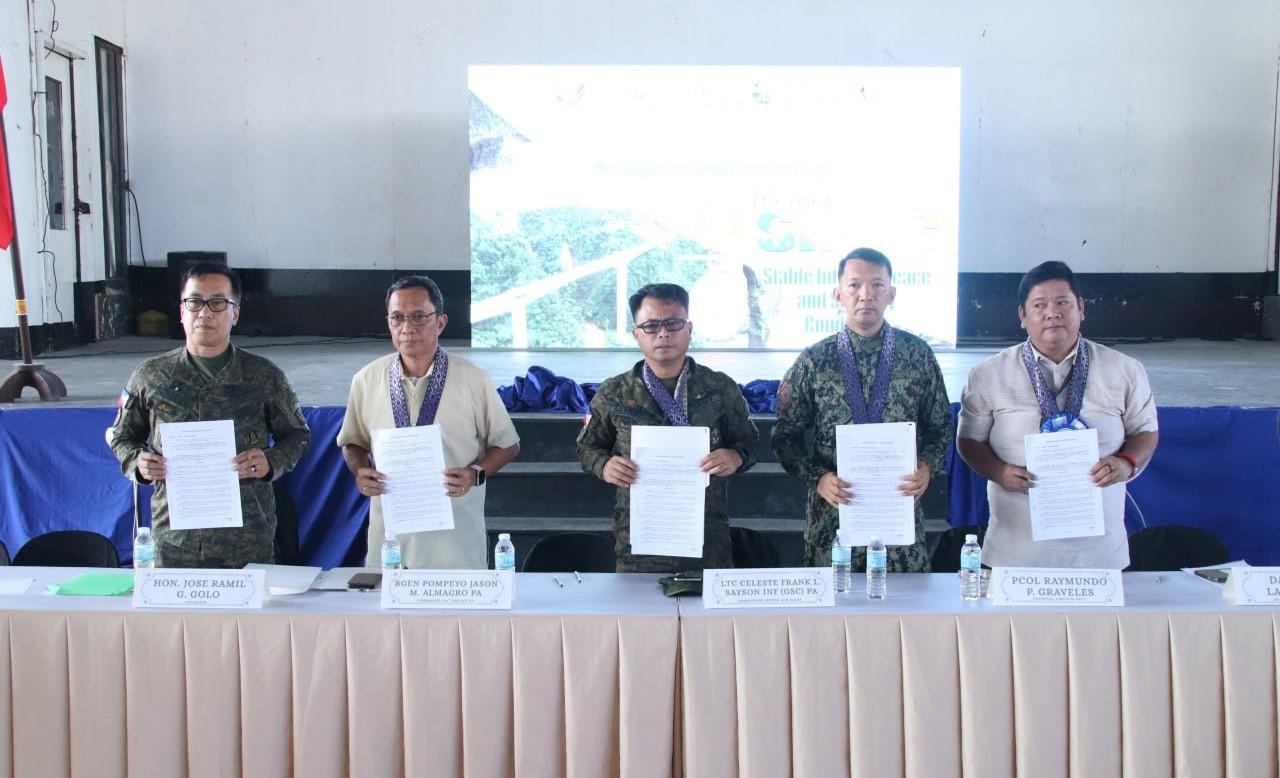
TACLOBAN CITY— The Philippine Army’s 8th Infantry Division (8ID) has formally declared the towns of Sogod in Southern Leyte and Calbiga in Samar under a Stable Internal Peace and Security Condition (SIPSC), marking what authorities described as a significant step toward sustained peace and development in Eastern Visayas.
The declaration signifies that both municipalities are now considered free from active insurgency influence, following years of security operations and community-based peace efforts led by government forces, local officials, and residents.
In a statement, the 8ID said the milestone reflects strong collaboration among stakeholders in maintaining peace and advancing local development initiatives.
In Sogod, Vice Mayor Jose Ramil Golo said the declaration strengthens the municipality’s long-term development plans, including its aspiration for cityhood.
“This development positions us to attract more investors and strengthens our bid toward becoming a city,” Golo said, adding that the town’s improved peace situation serves as a foundation for economic growth.
The Sangguniang Bayan of Sogod also passed a resolution affirming the municipality’s transition to a peaceful and secure environment.
Department of the Interior and Local Government (DILG) Southern Leyte Provincial Director Danilo Laguitan said the improved security climate is expected to boost investor confidence, while stressing the need to sustain peace through governance and development programs.
“Good governance remains the strongest antidote to insurgency,” Laguitan said.
In Calbiga, Mayor Red Nacario expressed gratitude to the provincial government of Samar and partner agencies for their continued support in addressing long-standing security concerns, particularly in upland barangays.
He said government interventions played a key role in improving access to basic services and restoring stability in previously affected areas.
Authorities said the SIPSC declaration highlights progress in the region’s peace efforts but emphasized that sustaining gains will require continued cooperation among local governments, security forces, and communities.
(ROEL T. AMAZONA, RONALD O. REYES)