Traumatized but resilient
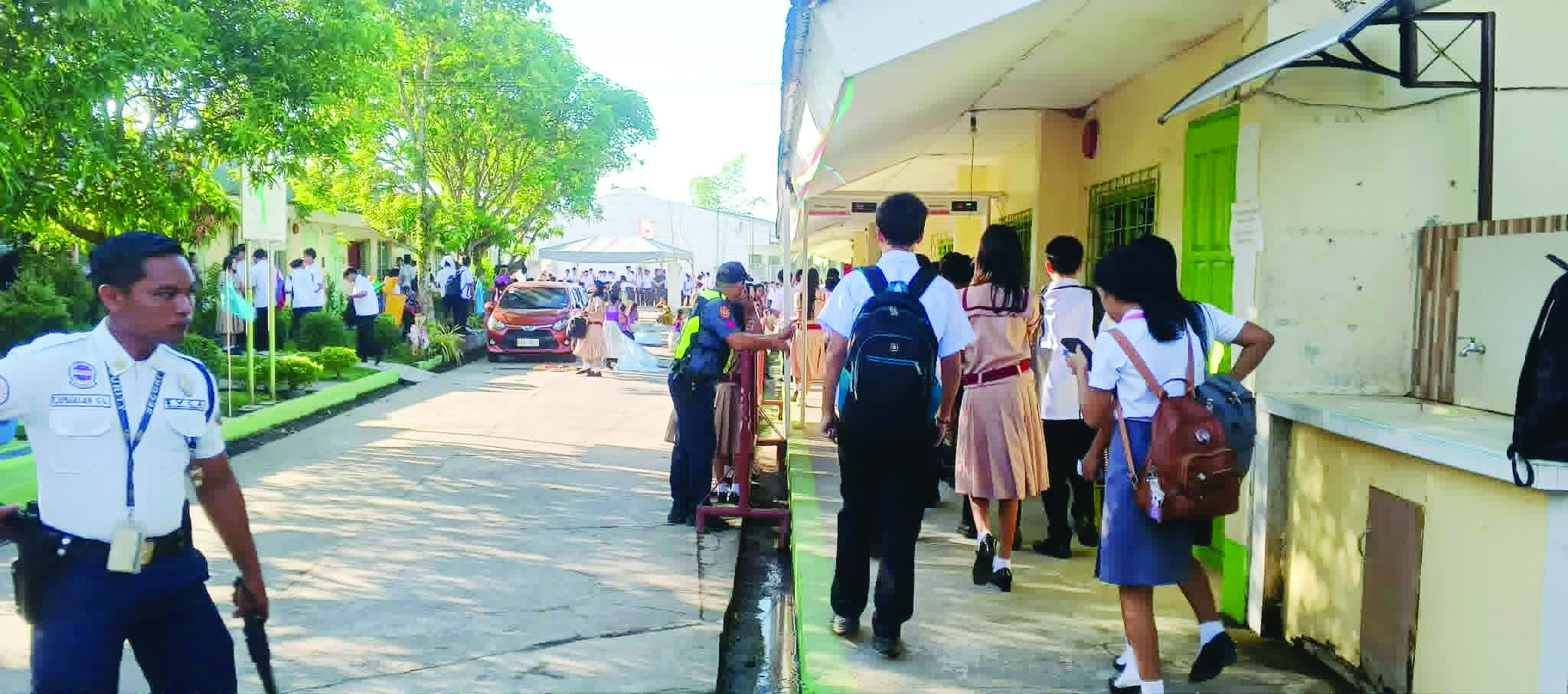
TACLOBAN CITY — Students of San Jose National High School (SJNHS) returned to their campus on Monday, July 6, for the first time since the June 22 mass shooting that killed three students and injured 20 others, with school officials setting aside regular lessons in favor of psychosocial activities aimed at helping students heal from the tragedy.
Instead of academic instruction, the day’s activities focused on counseling sessions, group interactions, and other psychosocial interventions designed to help students and teachers gradually recover from what has been described as one of the deadliest school shootings in the Philippines in recent years.
Returning students were welcomed by a band and bugle corps from a neighboring school, while performers hired by the Tacloban City government entertained students in an effort to ease anxiety and create a more positive atmosphere on campus.
We do not want our students to stay away from school. We want them to gradually return to normal,” said Nilo Eder, information officer of the Tacloban City Schools Division.“That is why the Schools Division decided to resume face-to-face classes. But this does not mean teachers will immediately begin regular lessons. It would not be good for students to be given academic lessons right away after what they have gone through,” he said.
Eder said there is still no timetable for the full resumption of regular classroom instruction, stressing that the emotional well-being of students and school personnel remains the division’s top priority.
As part of efforts to help students move forward, the two classrooms where the three victims were fatally shot will no longer be used for classes.
“We have enough classrooms here,” Eder said, explaining that the rooms previously assigned to Grades 9 and 10 students would instead be converted into storage rooms or offices.
The June 22 attack shocked the country after two students, aged 14 and 15, allegedly opened fire just over an hour the classes started on that day, killing three fellow students and injuring 20 others.
The two minors are now under the custody of a rehabilitation center managed by the Department of Social Welfare and Development (DSWD) with the 15-year-old facing charges of three counts of murder, three counts of frustrated murder, and multiple counts of serious physical injuries.
Despite lingering fear, some parents decided to keep their children stay at SJNHS after seeing the enhanced security measures implemented by the school and local government.
Jovelyn Capable, whose daughter is in Grade 8, admitted that she remains worried about her child’s safety.
“My daughter wanted to transfer to another school after the incident, but I explained to her that transferring now could cause her to fall behind in her studies. I only hope the security measures being implemented by the school will be sustained,” she said.
Capable added that her daughter suffered anxiety and had difficulty sleeping in the days following the attack.
A Grade 12 student, who requested anonymity, said returning to school was emotionally difficult.
“Our classroom building is far from where the shooting happened, but we still heard the gunshots and the screams. We were all traumatized by what happened,” the student said.
Security was significantly tighter as students returned to campus.
All students, teachers, and school personnel were required to pass through walk-through metal detectors before entering the school grounds.
Security guards, assisted by Philippine National Police personnel, inspected bags and personal belongings, while at least 16 newly installed closed-circuit television (CCTV) cameras now monitor various parts of the campus.
Parents, guardians, and members of the media were not allowed inside the school during the reopening.
SJNHS, one of Tacloban City’s largest public high schools with more than 1,600 students, has also revised several school routines to minimize security risks.
Beginning next week, flag ceremonies will no longer be conducted in the school grounds. Instead, they will be held inside individual classrooms to avoid large gatherings and allow classes to begin immediately afterward.
Eder said the same practice would be adopted in all 60 public elementary and secondary schools under the Tacloban City Schools Division.
He also disclosed that 14 schools in the city have already been provided with walk-through metal detectors through donations from private sector partners, with similar security protocols now being enforced across the division.
Eder assured parents that the heightened security measures would remain in place even after classes normalize.
Meanwhile, he said all 15 students who had been hospitalized following the shooting, including three who were admitted to intensive care units, have already been discharged.
“They are now recuperating, and their recovery remains our priority,” Eder said.
JOEY A. GABIETA, ROEL T. AMAZONA