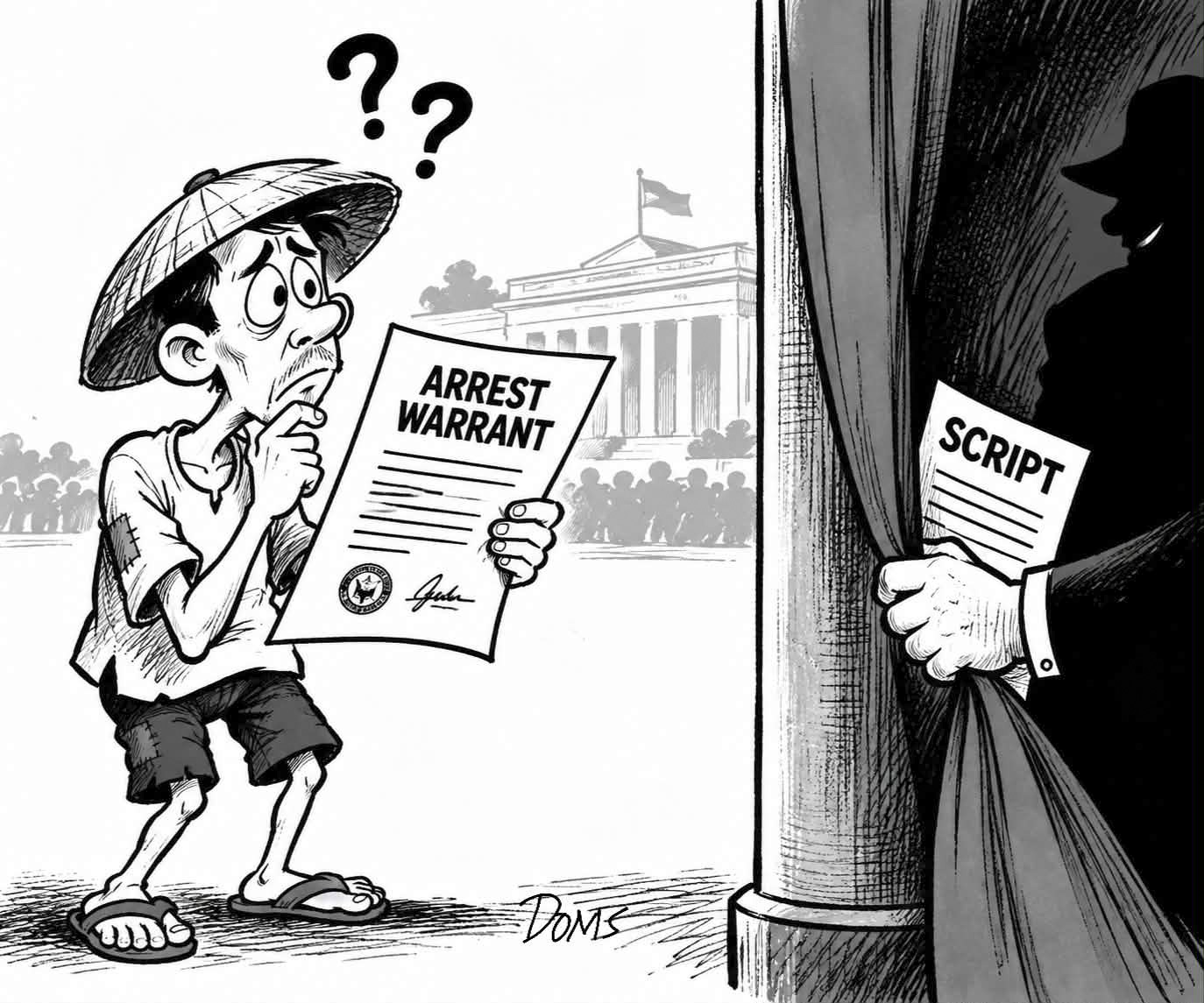
The recent arrest of former House Speaker Martin Romualdez does not silence public suspicion that the government is merely staging a show of accountability, with the larger campaign aimed at destroying Vice President Sara Duterte and preventing her from seeking the presidency in 2028. Such doubts are serious and can be answered only by equal justice, credible evidence, and proceedings free from political control.
Romualdez was arrested after the Sandiganbayan issued a warrant in connection with a plunder case involving alleged kickbacks from flood-control projects. An arrest, however, is neither proof of guilt nor proof that the entire justice system has suddenly become independent. The government must demonstrate that the case will be pursued fully, that all alleged participants will be investigated, and that political relationships will neither protect the accused nor determine who will be prosecuted. Otherwise, the arrest may be viewed as a calculated sacrifice meant to give legitimacy to a broader political operation.
The suspicion surrounding Sara Duterte arises from the severe political consequences of the cases against her. A conviction in an impeachment trial could remove her from office and disqualify her from holding public office, effectively eliminating a major presidential contender before the 2028 election. That consequence does not by itself prove persecution, but it demands the highest degree of fairness. When legal proceedings can decide who may or may not appear on the ballot, weak evidence, selective prosecution, rushed hearings, and partisan voting become attacks not only against an individual but also against the electorate’s right to choose.
Romualdez and Duterte must therefore be judged according to the same basic rule: accusations must be proven through admissible evidence before impartial institutions. Romualdez should answer the plunder charge without protection from his family ties or former political power, while Duterte should face only charges supported by facts rather than hostility, speculation, or electoral calculation. The country cannot accept a system in which one prominent official is arrested to create the appearance of impartiality while another is subjected to every available legal weapon. Neither political popularity nor political rivalry should determine guilt.
The proper answer is not blind loyalty to Romualdez or Duterte, but relentless scrutiny of the institutions handling their cases. The Sandiganbayan, the Ombudsman, Congress, and the courts must disclose evidence, observe due process, and allow the public to examine whether their actions comply with the law rather than political orders. Romualdez’s prosecution must be carried through to its lawful conclusion, and every proceeding against Duterte must meet the same strict standard. Justice must punish proven corruption, but it must never be used as an administrative device to choose the country’s next president.