
23.2 C
Tacloban City
March 27, 2026 - Friday | 3:04 AM
Home Blog Page 981

21 ladies to vie for Miss Universe PH-Leyte

0

TACLOBAN CITY –Candidates for the Miss Universe Philippines – Leyte were formally announced during the sashing ceremony held Saturday (Sept.9) at the Robinsons North Tacloban.

The sashing was headed by accredited partners of the Miss Universe Philippines in Leyte province headed by Clarito Logronio who was assisted by the tourism consultant of the provincial government, former Palo Mayor Frances Ann Petilla.

The candidates are Ma Crizeth Cazar of Abuyog;Crista Jewel Quiambao of Alangalang; Marianne Neil Insigne of Barugo; Rio Ann Ronato of Baybay City;Czarmy Alcober of Burauen; Stephanie Grace Regalado of Calubian; and Paula Bianca Oledan of Carigara.
Also on the official list of candidates are Gabrille Glenn Caidic of Dulag; Abba Gardanella Tizon of Jaro; Misty Myles Zaragoza of Kananga; Angel Rose Tambal of La Paz; Nesylvie Dupal of Mahaplag; Flordalinr Donayre of Matag-ob, and Mari Cleofr Acodesin of Ormoc City.

Completing the 21 official candidates of Miss Universe Philippines Leyte are Fhayrei Vianne Valeriano of San Miguel; April Anne Villones of Sta. Fe; Jamby Belegrio of Tacloban City; Trisha Gabrielle Moreto of Tanauan; Joanna Andrea Advincula of Tolosa; Dorothy Florence Caballero of Tunga; and Elgie Pobadora of Villaba.

Winning candidate for the inaugural Miss Universe Philippines – Leyte is going to be the official representative of the province to the national search where she will have the chance to represent the country in the Miss Universe pageant.

Preliminary events of the official candidates will start this October 1 in Baybay City for the cultural costume, swimsuit, and evening gown competitions on October 2.
(ROEL T. AMAZONA)
Coastal defense along Bantayan Bay is nearly finished

0

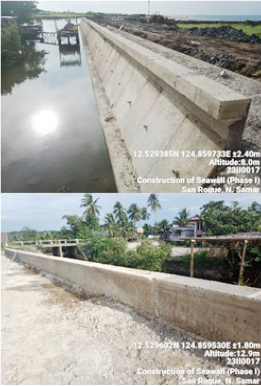
NSSDEO, Brgy. Burabud, Laoang, N. Samar– The residents and passersby along Bantayan Bay, San Roque, Northern Samar, will be safeguarded by the on-going construction of a 320.00 meters seawall against potential sea-level surge.

This project was implemented by the Department of Public Works and Highways – Northern Samar Second District Engineering Office (DPWH-NSSDEO), led by OIC District Engineer Charlito S. Carlobos and OIC Assistant District Engineer Atty. Arthur Eric L. Sabong, funded under General Appropriations Act (GAA) of 2023 with an appropriation of P52.25 million.
Furthermore, CDU Construction undertakes the construction work with Contract ID 23II0017 and has contract amount of P 5,0411,055.55.

As of July 31, 2023, it had an actual accomplishment status of 81.05% and a positive slippage result of 54.65%. The project used RC Piles to increase the bearing capacity and to reduce settlement at the site, which are weak compressible soils. Hence, this project may be accomplished earlier than its planned date of completion.

To ensure the quality standard coastal protection project, the DPWH-NSSDEO management assigned, Project Engineer Filoteo T. Delorino to supervise along with Project Inspector Engr. Ma. Luzyl P. Castillo and Resident Engineer Florando Emilio O. Moscare while Engr. Justino E. Serafin, Jr., for the materials quality assurance of the project.

The impact of this project is to provide protection from soil erosion and damage to roads brought on by continuous heavy rains. Since the area has the potential for promoting local tourism, the completion of the seawall project would benefit the town, as well as the province’s economy.(ZYRA JOY J. CHING, PIO STAFF)

Increasing anew

0

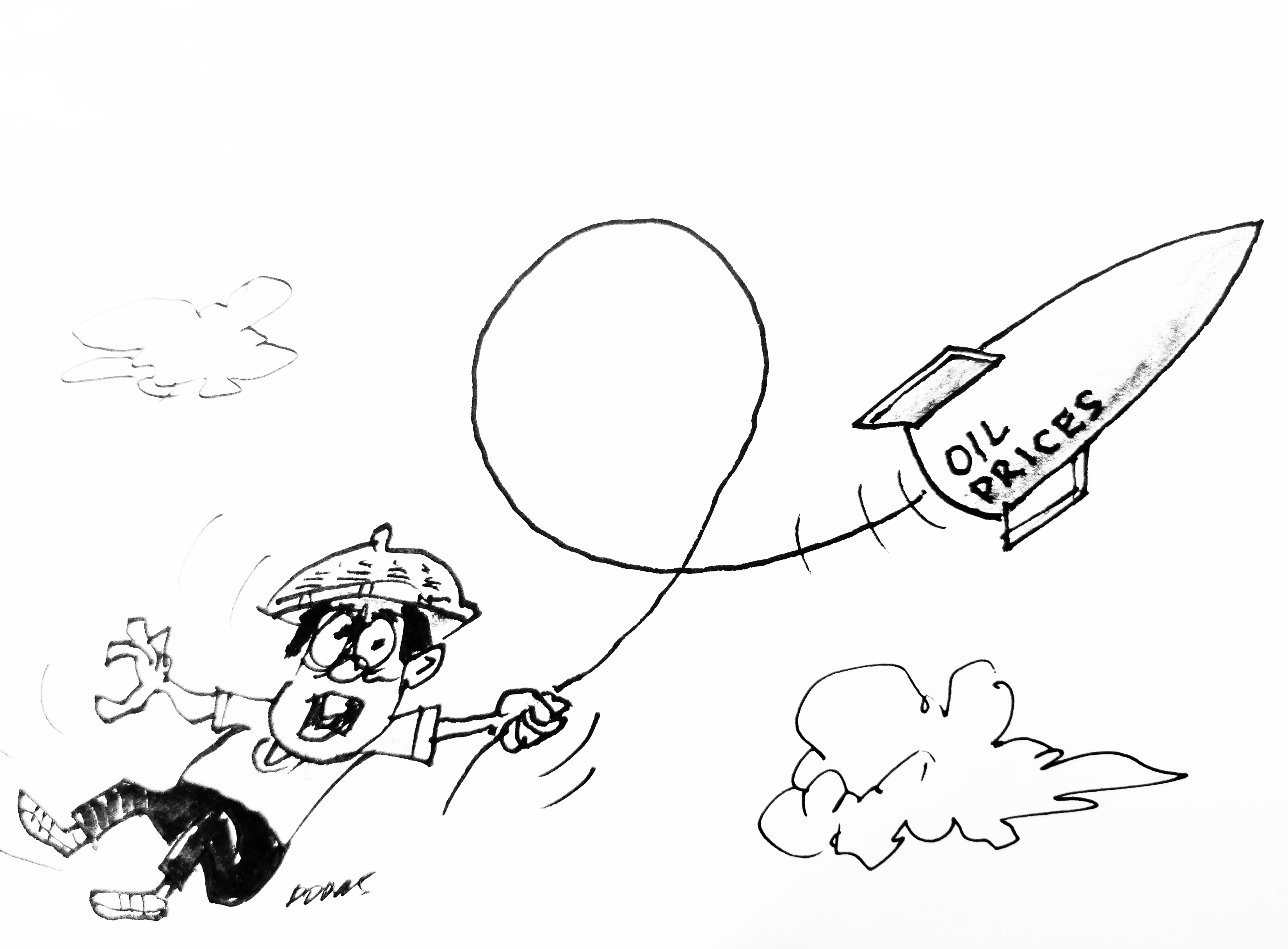
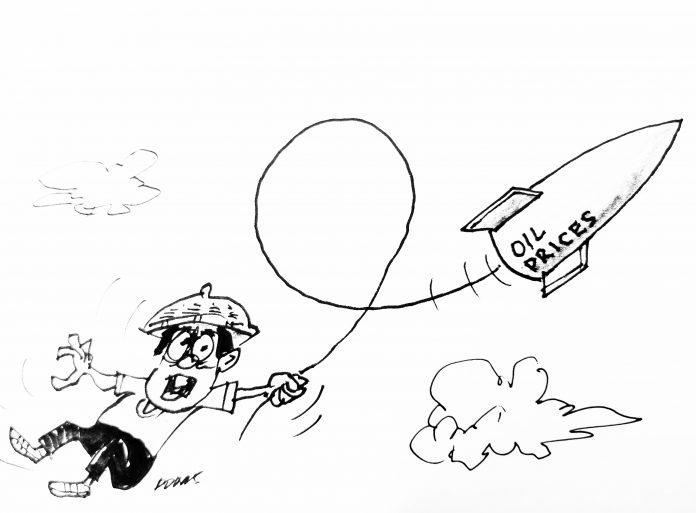
Like any other developing nation heavily reliant on imported oil, our country is constantly affected by fluctuations in global oil prices. The recent surge in oil prices has become a pressing concern for the Philippine economy, impacting various sectors and the overall cost of living.

The recent oil price increases in the Philippines can be primarily attributed to global macroeconomic factors. Rising tensions in the Middle East, particularly in major oil-producing countries such as Saudi Arabia and Iran, have disrupted oil supply chains and spurred fears of oil shortages. Additionally, the ongoing COVID-19 pandemic has significantly impacted global energy demand, leading to market volatility due to reduced economic activity and travel restrictions. These factors have heightened uncertainties in the global oil market, consequently driving up oil prices around the world, including the Philippines.

The implications of increasing oil prices in the Philippines are multifaceted. First and foremost, a surge in oil prices directly affects consumer spending and the overall cost of living. As oil prices soar, transportation costs rise, squeezing disposable income and adversely affecting the purchasing power of Filipinos. Furthermore, the entire supply chain, including logistics and distribution, incurs higher expenses, eventually trickling down to consumers through elevated prices of goods and services. This inflationary pressure compounds the challenges faced by the Filipino populace, exacerbating poverty and hindering economic growth.

The government must adopt a multi-faceted approach. Enhancing energy conservation and efficiency is paramount, as it reduces the dependence on oil imports and mitigates the impact of price fluctuations. Moreover, investing in alternative energy sources, such as renewable energy, can provide a more sustainable and long-term solution to the country’s energy needs. Additionally, efficient and transparent fuel pricing mechanisms should be implemented, aiming to provide appropriate safeguards for both consumers and oil companies, ensuring fair and competitive pricing.

In conclusion, the recent oil price increases in the Philippines are a consequence of global macroeconomic factors and have far-reaching effects on the economy and the overall cost of living. But by promoting energy conservation, diversifying energy sources, and implementing transparent pricing mechanisms, the Philippines can navigate the challenges posed by oil price increases, ensuring a more resilient and sustainable energy sector.

Pampering illnesses

0
DOMS PAGLIAWAN

The management of bodily illnesses often reflects a myopic approach towards health, with individuals prioritizing immediate relief and comfort rather than addressing the underlying causes. Pampering bodily illnesses, a prevalent yet misguided approach, demonstrates a lack of foresight and a failure to comprehend the complexities of holistic wellness.

The act of pampering bodily illnesses involves giving precedence to the temporary alleviation of symptoms rather than eliminating the root causes. This approach not only fails to consider the negative consequences but also dismisses the potential long-term effects of neglected health issues. By forgoing comprehensive treatment and opting for mere symptom relief, individuals perpetuate a cycle of dependency on short-term solutions that may exacerbate the initial ailment.

One of the major pitfalls of pampering bodily illnesses is that it engenders a recurring pattern of dependence on treatments that solely focus on transient relief. By embracing this mentality, individuals inadvertently allow illnesses to persist, while neglecting the pursuit of thorough and sustainable remedies. Consequently, this vicious cycle perpetuates chronic health problems, diminishing overall wellness and hampering the path to recovery.

Pampering bodily illnesses often stems from the prevalent belief that the alleviation of symptoms equates to a cure. However, this erroneously narrow perspective overlooks the crucial aspect of preemptive intervention. By merely managing symptoms, individuals forfeit the opportunity to address the underlying causes of their illnesses and prevent future complications, perpetuating a state of unending illness management.

This can inadvertently lead to the neglect of essential healthcare practices and preventative measures. This neglect may extend to routines like regular exercise, a nutrient-rich diet, routine check-ups, and early detection of potential health concerns. Failure to actively engage in holistic wellness practices often exacerbates the impact of bodily illnesses and restrains individuals from achieving sustainable health and well-being.

To overcome the fallacy of pampering illnesses, a shift towards a proactive approach to bodily health is essential. With a proactive mindset, individuals can embrace comprehensive strategies, including preventative measures and addressing the root causes of ailments, rather than seeking temporary relief. Proactive engagement empowers individuals to actively work towards sustainable health, breaking free from the cycle of illness pampering.

The foolishness of pampering bodily illnesses lies in its failure to acknowledge the interconnectedness of physical well-being and long-term health. By focusing solely on the temporary alleviation of symptoms, individuals overlook the importance of addressing underlying causes, potentially derailing their journey toward lasting wellness.

Acknowledging the dangers of this approach, it becomes crucial to shift towards proactive measures and a comprehensive view of health, which encompasses preventive care, early intervention, and holistic wellness practices. In this country of ours where people are mostly avoiding costly hospitalizations, individuals should break free from the vicious cycle of illness pampering and achieve a state of improved overall health and well-being.

DBM has P21.5 Billion in calamity fund

0
Dr. Paciente Cordero

The Department of Budget and Management (DBM), speaking on behalf of the government, has assured the Filipino people that P21.5 billion is available as stand-by calamity fund. The fund can be used for various disaster relief operations for the current year (2023).

The DBM announced that only P1.68 billion has been released from the calamity fund better known as the national disaster and reduction and management fund (NDRRMF) from January to April 2023. Following the post -conflict needs assessment in Marawi City showed that for April 2023, the entire allocation was released to the Department of National Defense (DND) – thus P21.5 billion plus the P2.8 billion carry over from the 2022 budget, stand as the remaining calamity fund available for the current year.

It must be recalled that in 2022, a total of P18 billion in calamity fund were dispensed through other government agencies for disaster response purposes.

NDRRMF (calamity fund) funds are mostly used to cover the construction and rehabilitation of various infrastructure affected by natural disasters like typhoons and other man-made and/or other natural calamities. Also, the same funds are also used to replenish government agencies’ quick response funds (QRFs) as stated in the Law covering the NDRRMF operations. In some instances, the same funds are being used to provide relief to affected Filipinos, including distressed OFWs.

MY COMMENT:
Personally, I would support moves to increase the amount of appropriation for the NDRRMF or calamity funds, considering the regularity and volume of natural, mostly destructive calamities visiting the country such as typhoons.

NEXT TOPIC : “US firms interested in small/micro nuclear reactors for Phils.”
SHARE S & T THOUGHTS through E-mail: drpacjr@yahoo.com.

Vocation is for all

0
FR. ROY CIMAGALA
FR. ROY CIMAGALA

INDEED, everyone has a vocation! The idea of a vocation is not meant only for a few who may feel that they are called to the priesthood or to a consecrated religious life. It is not meant for those who may be generally regarded as inclined to do some missionary work.
We are reminded of this truth of our faith in that gospel episode where Christ, after a night of prayer, chose 12 persons to be his apostles. (cfr. Lk 6,12-19) Ever wondered why Christ chose his apostles practically randomly? He, for example, would just pass by Matthew in his tax collector’s table and say, “Come, follow me,” without as much checking on Matthew’s background.

Same with brothers Peter and Andrew, and James and John. Christ would just call them, and without asking any question they simply left their nets, for they were fishermen, and followed Christ.

In the end, he would also call Judas Iscariot who would later betray him. Christ, being God, would have known that Judas would turn him in. But that did not deter him. He called Judas to be one of his 12 apostles just the same.

The only reason I can find for this behavior of Christ is that he has the right to call anyone and everyone to follow him. And that’s simply because, as God, he has that right since all of us come from him and belong to him. As redeemer, he calls everyone to follow him.
Everyone has a vocation simply because God calls all of us to be holy, to be like him who created us in his image and likeness. Everyone is called to holiness. The call to holiness is universal!

That’s what a vocation is—it is a calling from God who puts us here on earth to be tested, to see if what God wants us to be is also what we would like ourselves to be. Thus, everyone should be aroused to develop a sense of vocation as early as possible, and pursue it with the strongest sense of commitment, since our vocation is the most basic commitment we ought to have.

We have to realize that our vocation is meant to cover all our life, in all its aspects, and not just some parts of our life. Our vocation gives meaning to our whole life, and projects us to our proper destiny.

Nothing is excluded from it, since God’s presence and interventions in our life are constant and abiding, and not just from time to time, nor from case to case. It covers our whole life, from beginning to end.

A person without a sense of vocation is actually an anomaly. He may be described as a freeloader who ignores a basic truth about himself and enjoys or suffers the many things in life without knowing what these things are really meant for.

Obviously, each one has to find out the specific vocation meant for him. Our common vocation lends itself to various specific vocations with their own spirituality and charism, supported by their corresponding way of life or culture. Each one of us should just study and see which one he is more suited.

There’s, of course, a vocation to the priesthood and the religious life. But for most of the people, their vocation is to remain in the secular world as lay faithful who use all the events and circumstances of his life as a way to live out his vocation. They, of course, would need a supporting plan of life that can sustain their sense of vocation.

Recent Posts

DALMACIO C. GRAFIL
PUBLISHER

ALMA GRAFIL
EDITOR-IN-CHIEF

ROMEO CEBREROS
OFFICE IN-CHARGE

OFFICE
BRGY. SONGCO, BORONGAN CITY

CONTACT NUMBERS
(055) 261 – 3319 | 0955 251 1533 | 0917 771 0320 | 0915 897 7439 | 0921 511 0010

DALMACIO C. GRAFIL
PUBLISHER

RICKY J. BAUTISTA
EDITOR

ALMA GRAFIL
BUS. MANAGER

OFFICE
RIZAL AVENUE, CATBALOGAN
(INFRONT OF FIRE DEPARTMENT, NEAR CITY HALL)

CONTACT NUMBERS
0917 771 0320 | 0915 897 7439 | 0921 511 0010

EMAIL
lsdaily2@yahoo.com

WEBSITE
www.issuu.com/samarweeklyexpress