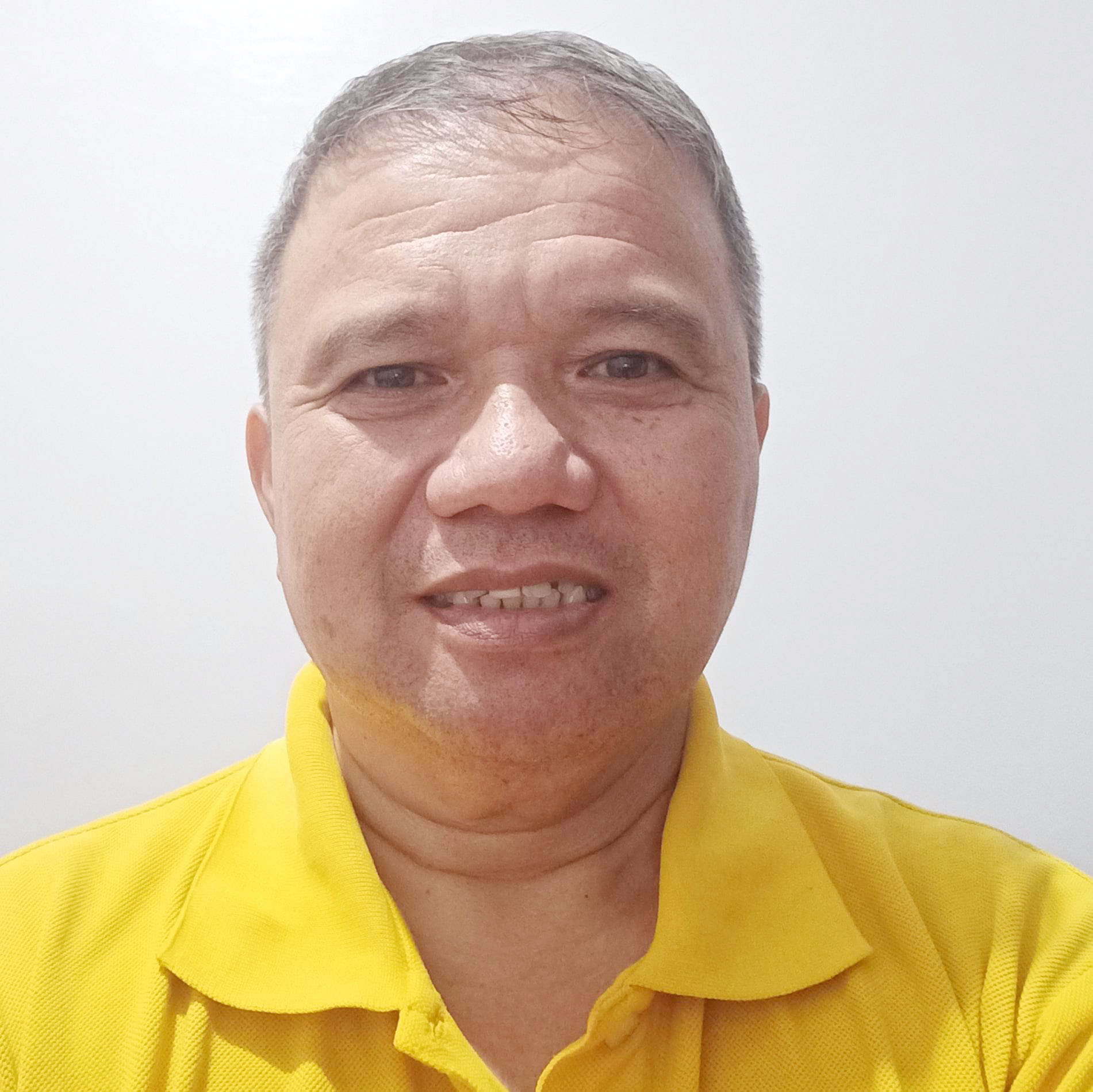
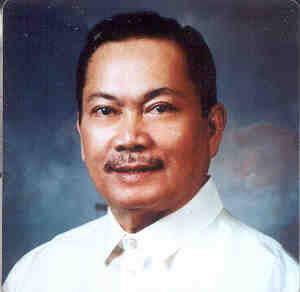
ORMOC CITY– Police in Ormoc City continue their probe on the killing of a village councilor as a reward of P150,000 was offered for those who can help identify the gunman.
Francisco Villa, 53, who seeking a reelection in Monday’s barangay and Sangguniang Kabataan (BSK) elections in their village of Biliboy was gunned down by the assassin.
The police said that Villa was at the diversion road staff house of the said barangay talking with two persons when the gunman with a cap appeared and suddenly shot the victim.
The suspect then casually left on foot.
Villa died on the spot. The responding city rescue unit arrived but the victim had no vital signs already.
Police personnel of the city’s police station 1 immediately conducted a hot pursuit operation and alerted all city patrollers including the adjacent towns to possibly arrest the suspect. (ELVIE ROMAN ROA)
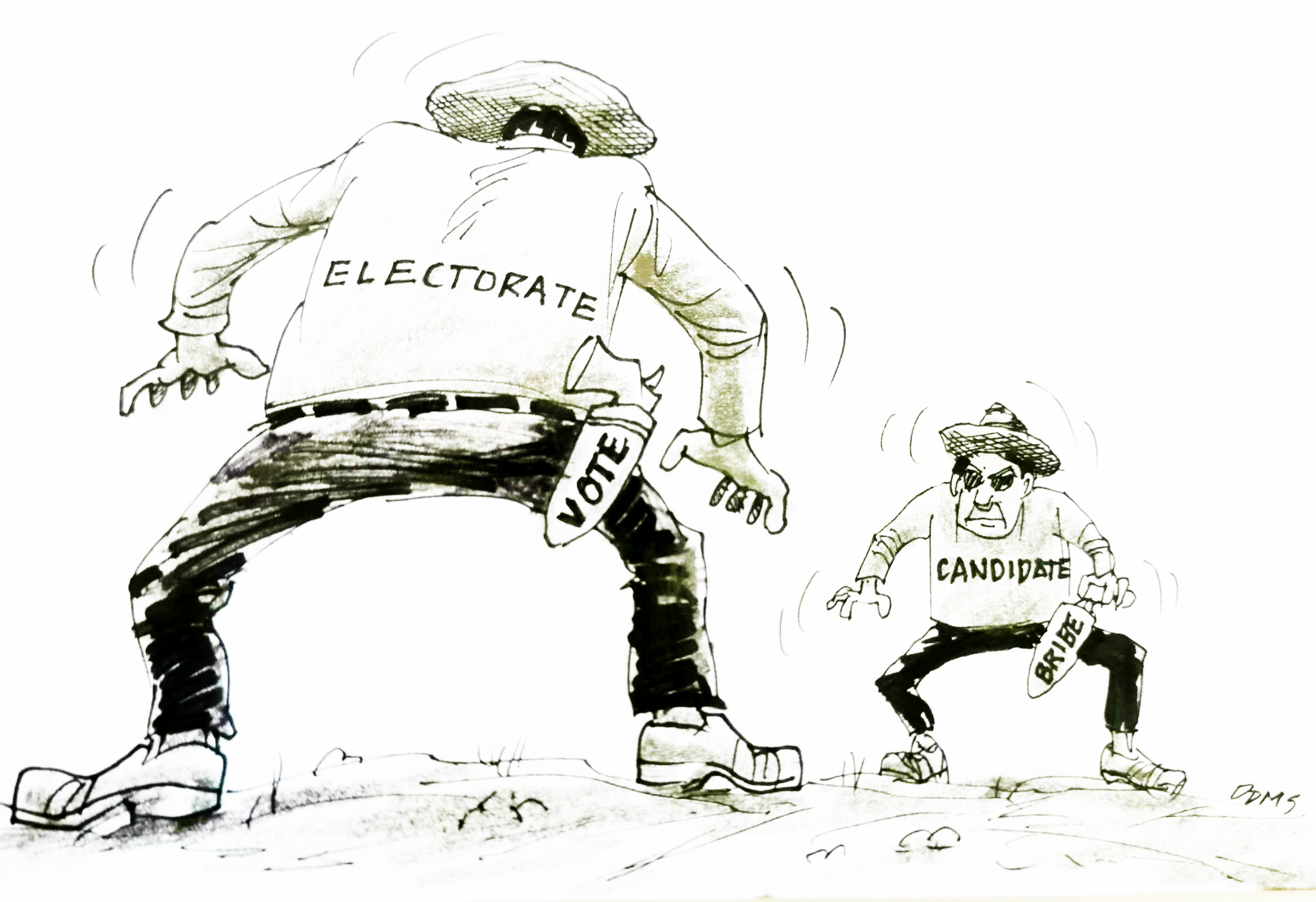
As the nationwide Barangay and SK elections draw near, the integrity of the electoral system is being challenged as candidates seemingly cannot do away with vote-buying activities. While the intent to win over voters is inherent in any democratic process, this unethical practice undermines the essence of fair elections. What are the reasons behind these phenomena and the complex web of motivations that drive candidates to engage in such practices?
One of the primary factors contributing to the prevalence of vote-buying among candidates is the non-transparent campaign financing system. Political campaigns demand substantial funding, especially in competitive races, leading many candidates to use illicit means to secure the necessary resources. With the pressure to raise significant amounts of money in a limited time, some candidates turn to vote-buying as a quick-fix solution to win over undecided voters. This monetary exchange, however, undermines the integrity of the electoral process and erodes trust among citizens.
Furthermore, the perception that vote-buying yields electoral success can contribute to its perpetuation. Candidates who witness their opponents gaining electoral support through these unscrupulous practices might be tempted to follow suit to level the playing field. This unhealthy competition often leads to a downward spiral, normalizing vote-buying and diminishing the importance of genuine policy discussion and debate. The pursuit of political power becomes primarily based on financial strength, diverting attention from the real issues that should guide voters’ decision-making.
Another significant factor behind the persistence of vote-buying practices relates to the socio-economic conditions prevalent in many communities. In regions plagued by poverty and limited access to basic social services, the allure of receiving immediate benefits in exchange for a vote is hard to resist for economically vulnerable citizens. Candidates capitalize on these circumstances by exploiting the vulnerabilities of voters, perpetuating a cycle of dependency that hampers social and economic development. These systemic challenges demand comprehensive efforts to tackle the root causes of vote-buying and uplift disadvantaged communities.
Unfortunately, vote-buying among candidates prior to elections seriously threatens the democratic process. To restore the integrity of elections, robust legislation, strong enforcement mechanisms, and continued civic education campaigns are paramount. Addressing underlying socio-economic disparities and ensuring equitable access to basic necessities are crucial in curbing the prevalence of vote-buying. Only through collective action can societies foster truly fair and representative electoral processes.
As a lover of nature, I always believe that there is much for us to learn from it. Take monkeys, for example, that are equipped with remarkable intelligence and abilities. They possess problem-solving skills, adaptability, and social intelligence. Surely, we can draw valuable parallels that can provide us with a deeper understanding of cognitive abilities and the intricate nature of learning.
In general, monkeys exhibit an impressive level of intelligence. Their ability to recognize complex patterns and demonstrate a keen understanding of the environment showcases their cognitive capabilities. For instance, they can learn to use tools effectively, such as using stones to crack nuts or fashioning improvised tools from branches. This displays a deep level of comprehension and adaptive thinking, qualities that resonate with highly educated individuals.
Also, monkeys possess a remarkable capacity for information retention and recall. They are adept at memory-based tasks and exhibit an ability to learn from past experiences. For instance, studies have shown that monkeys exhibit episodic-like memory, recalling past events with contextual details. This level of memory retention is comparable to humans, who can recall intricate details from past events.
Social intelligence is another domain where monkeys exhibit a profound resemblance to people. Monkeys demonstrate complex social hierarchies, where they engage in intricate social interactions and maintain strong bonds within their groups. These interactions require a high level of emotional intelligence, empathy, and understanding of social dynamics – qualities that closely mirror the social acumen necessary for getting along with people.
Language comprehension is an area in which monkeys have shown astonishing progress, akin to the language proficiency mastered by the average student. Monkeys can learn to decipher different sounds and even understand basic symbolic representations when trained appropriately. For instance, some studies have demonstrated monkeys’ ability to comprehend and respond to certain sign language commands, revealing their innate aptitude to grasp the complexities of human communication.
Monkeys’ capacity to learn from others, particularly through observation and imitation, further highlights their parallel with humans. As highly social beings, monkeys actively engage in observational learning, allowing them to acquire skills and knowledge from their peers. This dynamic mirrors the importance of collaboration with other folks such as students, whereby they learn from their colleagues and mentors through observation, discussion, and sharing of expertise.
So, monkeys exhibit an astonishing level of intelligence and comprehension, which closely resonates with the abilities of people. Through the capacities of monkeys, we can gain profound insights into the realms of intelligence, biology, and the nature of learning—creating a compelling narrative that mirrors our own intellectual journey.
IT’S amazing that despite the many good things Christ said and did that impressed many people, there were still some leading Jews who doubted him and were fond of asking some what are termed as ‘gotcha’ questions. (cfr. Mt 22,34-40)
One of these questions was, “Which commandment in the law is the greatest?” This was asked by no one less than a scholar of the law who later on was floored when Christ responded, “You shall love the Lord, your God, with all your heart, with all your soul, and with all your mind.”
And without being asked what the second greatest commandment was, Christ volunteered to also tell him, “You shall love your neighbor as yourself.” Somehow, Christ wanted to teach him—and us—that love for God is never separated from love of neighbor.
Indeed, we have to realize that loving God and neighbor is meant to be the very essence of our humanity. It is the primal force and principle of our whole life. It is what would keep us moving and living as we should. It is what integrates the different aspects and dimensions of our life—the material and spiritual, the personal and social, the temporal and eternal, etc.
That is why Christ said it very clearly that loving God and neighbor are the dual commandment that occupies the greatest place in our life. But we also need to realize that our capacity to love God and neighbor can only take place if we always feel God’s love first. We should realize that it is God who loves us first (cfr. 1 Jn 4,19), and we can only learn to love properly if we know, feel and imitate that love of God for us.
That is why Christ said it also very clearly that we have to love one another as he himself has loved us. (cfr. Jn 13,34) We therefore need to know how Christ loved us and continues to love us. Better said, we have to be truly like Christ because he is the very personification of true love, a love that can handle all conditions and situations in life, both in good times and in bad, etc.
To know and feel God’s love for us, as shown by Christ who shares that love with us, is crucial because that love is what would keep us going properly in this life which will always be marked with all kinds of challenges and difficulties.
We should never depend only on our own human version of love. This kind of love cannot go far. It lacks the stamina and the strength to handle life’s many twists and turns, let alone dealing with those problems that not only are difficult to solve but also are humanly unsolvable already.
That is why there are many cases of people nowadays who find it hard to persevere in their commitments. Initially they are filled with fervor, but as time passes, they slowly become disenchanted, losing steam and finding no meaning in the things they need to do.
This is when they really need to feel God’s love which they can achieve if with humility they realize that they need to pray and meditate on Christ’s life and love, avail of the sacraments, the usual channel of grace, and resolve to make another renewal of their commitment, etc.
It’s when we are touched by God’s love that we will feel energized to love again!
Going into the final stretch of the campaign period for the forthcoming barangay and sangguniang kabataan elections on 30 October 2023, candidates are jockeying for financial support from politicians who are running in the 2025 midterm elections. The cash flow are open from the coffers of provincial, city, municipal, congressional and party-list aspirants who foresee the need for support from the barangays. The old leaders who were defeated in the last elections are seeking linkage from their old benefactors who are still in power.
But politicians are getting wiser in their future plans by shifting support to the new barangay officials who defeated their old bets. Truly, there is good basis for these politicians to doubt the ability and capabilities of such defeated barangay bets. The people would know how among the candidates are capable of performing the full responsibility once elected.
It is unfortunate that many candidates had the temerity to assume that voters are akin to commodities that carry a tag price on their heads for the candidates to pay in exchange for their then sacred votes. This practice not only degrades the sanctity of the ballot but the dignity voter as well.
The rampant vote-selling are true at every barangay level as the gullible majority are dictated by the power of money. Human needs for the time-being are temporarily assuaged by the shocking downpour of cash flowing from the politicians who are in a proxy war at the grass roots level.
Aside from the financial support that politicians give to practically all candidates, there too are the usual guns, goons and gold. But voters are expecting cash despite the guns and goons in some areas.
Government must do its duty to ensure that there will be an honest, orderly and peaceful elections. Vote buying could be prevented by strict law enforcement, the control of small bills in the hands of vote-buyers and the stoppage of electronic cash transactions days prior and until the day after elections.
comments to alellema@yahoo.com
The National Dairy Authority (NDA) has earmarked P850 million to help boost the country’s milk production by 6 times in 5 years by constructing 5 stock farms and importing dairy herd animals.
The NDA has released the designated areas where the 5 stock farms will be positioned Luzon: General Tinio, Nueva Ecija, Guinobatan, Albay; Visayas: Ubay, Bohol, and in Mindanao: Malaybalay, Bukidnon and Davao City.
Accordingly, the stock farms will breed island-borne cows in order to help improve the genetics of the animals. The NDA will import 2,000 cows in 2024 with its requested additional budget of P360 million. The imported cows will coming from temperate countries free from cow disease.
The plan is to bred the imported cows and their progeny will be released and distributed to qualified farmers. With the support coming from the Dairy Confederation of the Philippines targeted P2 billion to be turned over to the NDA purposely to support the increase of stock for genetics improvement. The NDA forecast that it will take at least 2 years before realizing the benefit from the initiative. An increase by 500 percent to 80 million liters milk production per year is projected.
The NDA is planning to increase the milking herd to15,000 heads and produce 15 liters of milk per cow per day. The Authority reports that the current daily average milk production per cow is about 8 to10 liters, but could be increased to 15 to 16 liters by using good quality feeds. To realize the NDA targeted milk production, food centers will be established in rural areas to address one of the costliest farm inputs.
MY COMMENT:
Very noticeable is the absence of Eastern Visayas in the proposed locations of stock farms in the NDA’s effort to help the Philippines boost milk production. I suggest that the plan be revisited as to expand the stock farm, beef up milk out put.
Ooo000ooo NEXT TOPIC : “Economic Team – Foreign investors interested in MIF”
SHARE S & T THOUGHTS through E-Mail: drpacjr@yahoo.com