BAYBAY CITY-The local police are conducting a thorough investigation over the identity of the suspects and the motive in the killing of a Junior High School teacher inside the school campus of the Baybay National High School on Sunday (Nov. 5) at about 5: 30 pm.
Baybay police chief, Lt. Col. Aljohn Teddy Llanes, identified the victim as Peejay Montero, MAPEH teacher, and a resident of Barangay San Isidro of said city.
Col. Llanes, in an interview, disclosed that they responded to an information about an alleged victim of a stabbing inside the school campus and upon arrival found the victim beside the water reservoir post near the stockroom inside the school premises.
He said that the victim seemed to be lifeless in a prone position with evident blood. He added that the victim was found clutching a kitchen knife in his right hand.
Llanes continued that they now have a person of interest in the said killing but did not elaborate.
He said that they are also looking at the CCTVs near the area to add further details to their person of interest. According to residents in the area, two unidentified persons were seen jumping off the school fence and running away from the area. (ROBERT DEJON)
TACLOBAN CITY – The city government of Borongan is planning to implement a project that will address its increasing parking problem due to the growing number of vehicles plying the city streets.
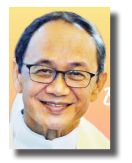
Mayor Jose Ivan Dayan Agda
Mayor Jose Ivan Dayan Agda said that next year, the city government will construct a parking space building that will address parking area woes.
Agda said that aside from solving the problem, the proposed facility could also help generate additional funds for the city government.
“If you will notice we are having a problem on parking spaces in the city. Even basketball courts are now being used as parking areas,” the city mayor said.
“This is one of the investments that the LGU sees to have recurring income,” Agda added.
The city mayor said that they are planning to construct the parking building at the old market site. The building will have three to four floors.
Aside from the parking building at the old market site, they will also be designating a parking space at the Baybay Boulevard, a beachfront that stretches for more than two kilometers known to be the surfing site in the city.
Located also in the area are food park, skateboard park, and city park that are regularly flocked by city residents and people from neighboring towns.
The planned parking concept at the Baybay Boulevard, according to the city mayor, will be a two-hour free parking on the designated site but once they exceed parking on the allocated time, the vehicle owner will need to pay a corresponding amount.
“This is one of the revenue generations that the city government plans to implement, hopefully, this could help us in our revenue generation,” Agda said. (ROEL T. AMAZONA)
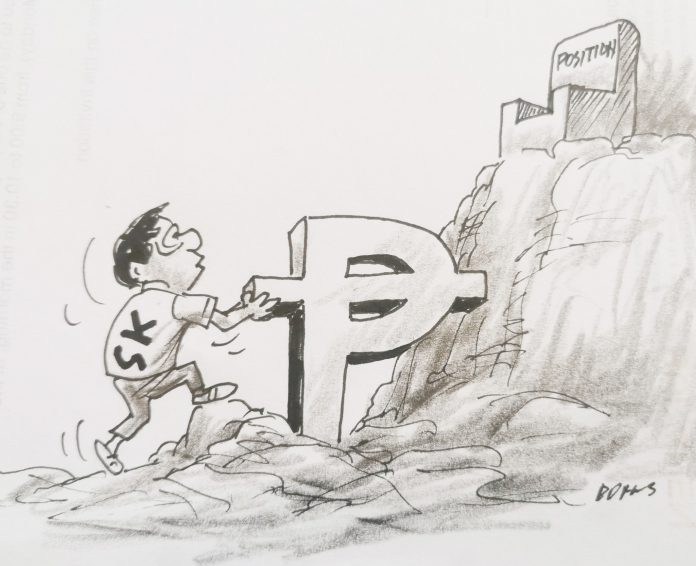
The Sangguniang Kabataan (SK) elections serve as a crucial platform for nurturing young leaders and engaging them in local governance. However, the increasing prevalence of vote buying has cast a dark shadow over these elections, compromising their integrity and impeding the development of a responsible and accountable youth leadership.
A long-term consequence of vote buying in SK elections is the misallocation of leadership positions based on wealth rather than merit or competence. When candidates resort to buying votes, capable and deserving young leaders may lose their chance to serve their community effectively. As a result, the youth are deprived of the opportunity to witness true leadership qualities, thoughtful decision-making, and responsible governance. Moreover, it discourages young individuals from pursuing personal growth, education, or skills, as financial resources tend to take precedence over intellectual capabilities.
Vote buying also erodes the principles of fair and transparent democratic processes.
Elections are meant to be a reflection of the collective will of the people, facilitating an open and just selection of leaders. However, when votes are bought and sold, this principle is subverted, diminishing the power of genuine public opinion. Ultimately, this practice undermines the foundations of democracy by concentrating power in the hands of those who can afford to buy votes, rather than those who genuinely represent the concerns and aspirations of the community.
Perhaps the most concerning aspect of vote buying in the last SK elections is its perpetuation of a culture of corruption among the youth. When young individuals witness this unethical behavior being rewarded with positions of power, it sends a disheartening message that corruption is an accepted means to achieve personal and political goals. This degradation of moral values ultimately affects society, seeping into other realms and creating a cycle of corruption that becomes harder to break. If we are to cultivate a responsible and upright generation of leaders, it is imperative to eradicate this culture of corruption in the form of vote buying.
The prevalence of vote buying even in SK elections poses a significant threat to the integrity and development of the youth’s leadership potential. This practice not only demeans the spirit of fair elections but also hampers the overall progress of society. Only through concerted efforts can we hope to reverse the corrupting influence of vote buying and restore the true purpose and potential of SK elections.
The Israel-Hamas conflict has long been a source of tension in the Middle East. However, recent escalations and emerging global dynamics have led many analysts to contemplate the possibility of this ongoing conflict triggering World War III, given the potential reasons behind, the historical context, the involvement of major world powers, the threat of destabilization, and the implications for global security.
To see the potential for this conflict to ignite World War III, let’s consider the historical context. The dispute between Israelis and Palestinians dates back decades, with both sides experiencing cycles of peace negotiations and violent outbursts. Aside from the latest terrorist attack of Hamas on Israeli civilians, the recent escalation can be traced to increased tensions over land disputes, religious and ethnic divisions, and unequal distribution of resources, all contributing to a broader conflict that threatens regional stability.
One reason why the Israel-Hamas conflict has the potential to escalate into a global war involves the extensive involvement of major world powers. The United States, a long-standing ally of Israel, has provided substantial military aid in the form of advanced weaponry. In contrast, countries such as Iran and Turkey have expressed unwavering support for Hamas, providing both financial assistance and political backing. The entanglement of these powerful nations raises concerns that any escalation between Israel and Hamas could embroil their respective allies, escalating the conflict on a global scale.
Another key factor is the threat of destabilization in the Middle East. This region already struggles with numerous ongoing conflicts, including the Syrian civil war and the rise of extremist groups. The Israel-Hamas war has the potential to exacerbate these conflicts, further fragmenting the region and undermining efforts towards peace. Such destabilization can create fertile ground for the rise of new extremist groups and intensify conflicts, potentially drawing more nations into the conflict, and leading to a far-reaching and devastating World War III scenario.
This recent conflict poses critical implications for global security. The possibility of World War III would inevitably involve the activation of various defense agreements, such as NATO, potentially pitting nuclear-armed nations against each other. Moreover, an intensified conflict would likely disrupt global supply chains, impact energy security, and instigate a refugee crisis with significant implications for the stability of neighboring regions and beyond. The global interconnectedness of economies and security systems means that any large-scale conflict in the Middle East has the potential to reshape the geopolitical landscape, with long-lasting consequences.
While the escalation of the Israel-Hamas conflict into World War III is a hypothetical scenario, it necessitates consideration of the potential implications. Diplomatic efforts, conflict de-escalation measures, and a renewed commitment to peace negotiations are essential to prevent the exacerbation of this conflict and the potential for it to ignite a catastrophic global war.
INDEED, God invites all of us to be with him in heaven which is meant to be our definitive home for all eternity. We should just be prepared to accept that invitation promptly and to be in the proper condition to enter there.
We are reminded of this truth of our faith in a parable Christ told those in a dinner with him. (cfr. Lk 14,15-24) That parable talked about a man who gave a great dinner to which he invited many. And yet, those all those invited started to refuse to go to the dinner, offering all sorts of excuses.
So, the man ordered his servants to go to the streets and alleys of the town and to bring in everyone they would meet, including the poor and the crippled, the blind and the lame. And when after this, there was still space in the dinner, the man told his servants to go to the highways and hedgerows and to bring in anyone they would meet, so that his dinner would be filled.
This parable, of course, shows us how much God really wants everyone to be with him in his Kingdom. That’s because heaven is actually where all of us truly belong since we are children of his, made in his image and likeness, sharers of his life and nature. He would even go to the extent of “pressing” us to enter his kingdom (“compelle intrare,” Lk 14,23).
We should sharpen our awareness that God is truly inviting us to be with him, and that he has given us everything so that we can actually be with him. It’s the best deal we can have. And yet, we can dare to refuse that invitation. We should do something to correct this attitude.
Let’s realize more deeply and abidingly that we are meant to be with God for all eternity. Said in another way, we are meant to be like him, that is, to be saints, to be holy. That should be the main and ultimate goal of our life here earth. Everything in our life should be made as an occasion to pursue that goal.
We have to realize that we are all called to holiness, because everyone is a creature of God, and as such is therefore created in the image and likeness of God, adopted a child of his, and meant to participate in the very life of God.
There is a basic and inalienable equality among all of us insofar as we are God’s creatures and children called to holiness. Regardless of our position and state in life, whether we are priests, religious men and women, or ordinary lay faithful, we have the same calling and purpose in life.
Corollary to this truth is that there is also a basic and inalienable quality of everything in the world to be an occasion and means for our sanctification. To be holy does not mean that we only spend time praying, going to church, availing of the sacraments, etc.
To be sure, prayer, the sacraments, the doctrine of our faith, obedience to the Church hierarchy are important, even indispensable, but these would hang on thin air if they are not supported and made as the goal and expression of a sanctified life that is consistent to the teachings and the spirit of God.
To be holy also means that we have to use our ordinary work, all the things of the world, like the sciences, arts, politics, technologies, etc., properly purified, and all the other circumstances that define our daily life as an occasion and means to look for God, then find, love and serve him.
In a move to accelerate decommissioning of coal plants in Asian-Pacific countries (AsPac), foreign and local investors are encouraged to invest on renewable energy (RE), and help meet the rising electricity needs without increasing carbon emissions as strongly recommended by the Asian Development Bank (ADB).
The ADB projects that the AsPac region will need to invest trillions of dollars in a range of technologies including energy efficiency, renewable generation, and storage. ADB’s recommendation comes at a time that the region is facing the challenge of how to meet the electricity demand sustainably. This is shown by the 940 million people experiencing frequent power outage. Of these, 70 percent in the global electricity demand will come from China, India, and Southeast Asia over the next three years. And, that about 57 percent of the region’s electricity was generated by coal, while 32 percent came from low-carbon sources like nuclear and renewable energies.
ADB management suggested that in order to attract more investments in RE or clean energy, “. . .governments need to put in place mandatory regulations, incentives, capacity building, and carry out information dissemination, including decommissioning of coal plants and decarbonizing, etc.
MY COMMENT :
Indeed, the millennial name of the energy game is switching to renewable energies, decommissioning of coal plants and decarbonization. For RE development, the country could be a virtual hub for investors as the Philippines parade its potentials like solar, wind, offshore sources.
ooo000ooo
NEXT TOPIC : “Bad news for Philippine Agri-Farmers”
SHARE S & T THOUGHTS through E-Mail: drpacjr@yahoo.com.