27.6 C
Tacloban City
April 02, 2026 - Thursday | 5:17 PM
Home Blog Page 895

A Paradox

0

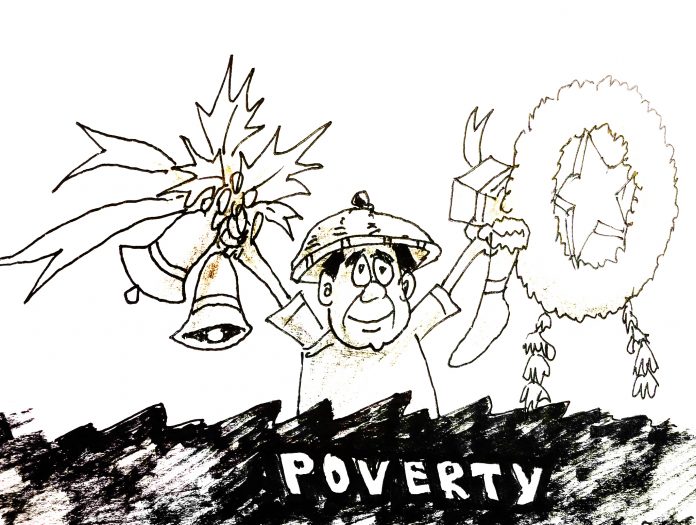
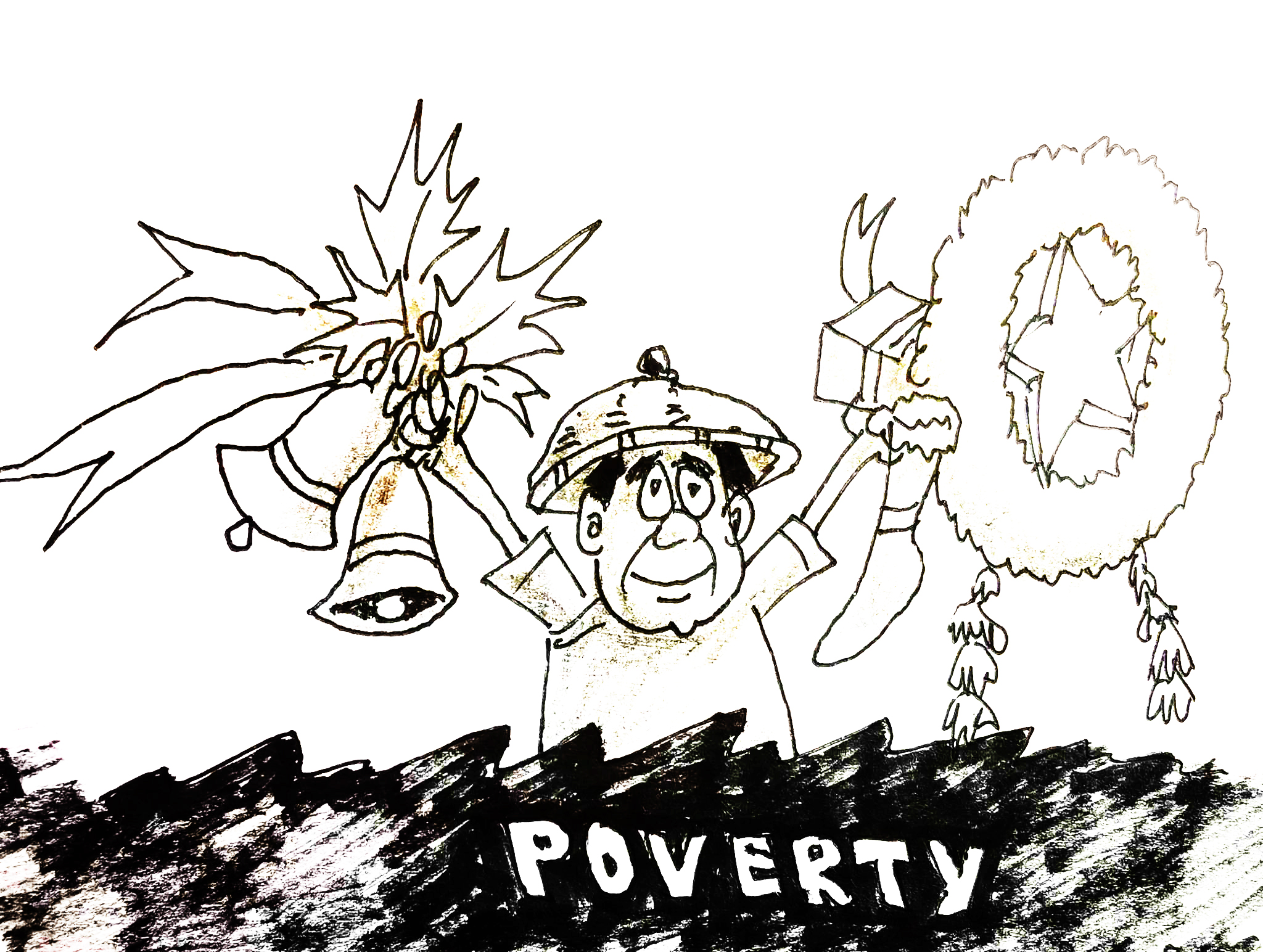
The holiday season often brings joy and excitement as people decorate their homes with twinkling lights, magnificent trees, and elaborate displays. However, it is disheartening to witness the existence of lavish and costly Christmas decorations juxtaposed with prevailing poverty.

In our country, the holiday season is associated with delivering feelings of warmth, unity, and abundance. However, within the broader context of poverty, these lavish decorations bear witness to socio-economic disparities. Individuals and communities immersed in poverty could perceive these ostentatious displays as a means to escape their daily struggles, making their deprivation even more palpable. Moreover, the pressure to conform to societal expectations, driven by commercial interests and advertising, perpetuates a culture where people feel compelled to spend exorbitant amounts on decorations, oftentimes at the expense of meeting more pressing needs.

The desire to create beautiful and festive environments during Christmas is often driven by psychological needs for belonging, status, and happiness. People living in poverty may experience a heightened sense of isolation and exclusion during this period, fueling their yearning for recognition and celebration. This psychological drive can lead to the pursuit of expensive decorations as a way to meet emotional needs. Ironically, however, the extravagant displays may only deepen the psychological gap, as they magnify the difference between those who can afford them and those struggling to make ends meet.

Societal and cultural expectations surrounding Christmas celebrations play a significant role in shaping spending patterns. Media portrayals of idealized holiday festivities, emphasizing opulence and grandeur, perpetuate unrealistic ideals and fuel consumerism. Advertisements featuring elaborately decorated homes and luxurious gifts create a narrative where spending is equated with love and care. This cultural pressure, combined with a lack of financial literacy and impulse control, can drive individuals to seek expensive decorations and gifts as a means to validate their social worth and assimilation into mainstream culture.

As the festive season beckons, the paradox between lavish Christmas decorations and ongoing poverty is an issue with deep-rooted societal and psychological implications. Both socio-economic disparities and cultural influences contribute to the perpetuation of this paradox while exacerbating the psychological toll it takes on those living in poverty. Why not dismantle that paradox and foster a more equitable celebration of the season?
Searching for the uncivilized

0
DOMS PAGLIAWAN

In our modern world, where globalization and cultural exchange abound, understanding and appreciating diversity have become essential. Amidst this context, the search for remnants of uncivilized minorities raises intriguing questions about cultural survival, adaptation, and assimilation. What are the complexities of this search, paying particular attention to how these remnants challenge the traditional concept of civilization?

Before embarking on the topic, it is crucial to establish a nuanced understanding of “uncivilized minorities.” Such groups are often marginalized societies, often indigenous or descendants of indigenous peoples, who maintain cultural practices that are distinct from the dominant group or society. I don’t know if we still have many of them in our country, perhaps in Mindanao or even Samar. The term ‘uncivilized’ is laden with historical ethnocentric baggage, which should be approached with sensitivity and critical analysis. Let’s view ‘uncivilized’ merely as a historical construct, acknowledging that this terminology cannot be used to universally classify entire communities or individuals.

The search for remnants of uncivilized minorities can be rooted in the discipline of anthropology, which has historically aimed to study and comprehend diverse cultures. Anthropologists play a significant role in initiatives that explore and critically examine cultural diversity, with an emphasis on preserving cultural heritage. By documenting the customs, traditions, and rituals of these minority groups, anthropologists contribute to the collective knowledge and appreciation of human civilization.

One must acknowledge that cultures are not stagnant, but rather fluid entities that evolve and adapt over time. The remnants of uncivilized minorities often raise intriguing questions about cultural survival and adaptation. Maintaining certain aspects of traditional practices amid a rapidly changing world allows these communities to preserve their unique identity. However, the complex interplay between preservation and assimilation poses challenges for these groups, as they must navigate the impact of globalization, modernization, and external forces on their cultural practices.

Anthropological ethnography plays a crucial role in understanding and documenting the remnants of uncivilized minorities. Through conducting immersive fieldwork, ethnographers employ various research methods to explore the lives and practices of these marginalized groups. By observing, interviewing, and participating in the daily lives of community members, anthropologists elucidate the intricate landscape of cultural identity and contribute to the broader understanding of human diversity.

The concept of civilization itself needs to be critically evaluated when searching for remnants of uncivilized minorities. Often, the dominant society associates civilization with progress, technological advancements, and socioeconomic development. However, within this search, the remnants challenge this preconceived notion, forcing us to question what constitutes civilization. By recognizing alternative ways of life as equally legitimate and valuable, we widen our perspective on human existence and contribute to a more inclusive understanding of civilization.

Examining the remnants of uncivilized minorities requires vigilance in navigating ethical considerations. It is vital to approach the subject matter respectfully, avoiding misinterpretation or exploitation. Working together with these communities, researchers and policymakers should foster cultural preservation initiatives that protect the practices and knowledge crucial to these groups’ identity. Collaboration, mutual respect, and co-production of knowledge are key to preserving cultural diversity while ensuring the empowerment and self-determination of marginalized communities.

Preachers?

0
AL ELLEMA
AL ELLEMA

For so long we have been harboring the wrong notion that Catholics do not use the bible. If we see people roaming around carrying bibles, we can be sure they are not Catholics. The practice is still true in this era and generation, for Catholics are not even required to own a bible. While other sects are using the bible in their activities, Catholics do not as they are just made to listen to the Word of God during Holy Masses. The faithful are not obliged to carry the Holy Bible during liturgies. Studying the Word of God is not part of the liturgy unlike other sects where bible reading is done as part of their activities

While young Catholic kids are made to attend Catechism before receiving first communion, other sects expose their kids to the bible based on their misconstrued explanation of the faith. We adhere to the teaching authority of the Catholic Church and do not delve studying the bible on our own personal interpretation. Other sects are too assuming in making private interpretations and teaching the word of God to their followers without consulting the Church majesterium as to how bible is to be reflected on and understood.

It is precisely the wrong practice of reading the Bible and delving into private interpretations that do not conform to the teaching of the Catholic Church that was built and established by Jesus Christ that had caused the proliferation of many sects. The Church which Jesus Christ entrusted to Peter had been given the authority to teach the faith when the apostles were commanded to go and preach the good news. No one of the apostles was told to write the teachings. This is why the Holy Bible came much later as a compilation of product of the discernment of the Catholic Church. It was compiled from manuscripts that were scattered in different places and times.

Sects that make the Holy Bible the fundamental source of their faith and teaching are lost in their chosen path. The fundamental truth that these non-Catholic sects miss or just refuse to recognize is that the Catholic Church was established by Jesus Christ long before the Holy Bible was completed. This means that the Catholic Church had already been preaching the Good News immediately when the apostles received the command to preach which was too long before the Holy Bible came into being.

Knowing the bible is knowing Christ. This is why people has to read the bible, or for those who cannot read, listen to the readings. The Catholic Church that compiled all the sacred writings into books, chapters and verses had set the daily readings for a three-year cycle. Attending masses daily and listening to the readings is tantamount to have read the entire bible. One does not read it selectively and not in its entirety, otherwise, it would result to personal misinterpretation.

In doing our personal reading, we only have to reflect the word of God and how it touches our daily life. We should refrain from making personal interpretations as we have no training on hermeneutics like our Catholic priests. We encounter many people who try reading and interpreting the bible and they sound like false preachers.
comments to alellema@yahoo.com

Prepare the best place for Jesus

0
FR. ROY CIMAGALA
FR. ROY CIMAGALA

THE first reading of the 4th Sunday of Advent, which this year falls on December 24, tells us of King David feeling a little disturbed because while he was living in a house of cedar, the ark of God dwells in a tent. (cfr. 2 Samuel 7,2)

And so, the prophet Nathan told him: “Go, do whatever you have in mind, for the Lord is with you.” But the Lord somehow corrected Nathan by somehow telling him to tell David not to worry so much about the house for the ark of God as for being with God always.
“Go, tell my servant David,” God told Nathan, “‘Thus says the Lord: should you build me a house to dwell in?’ It was I who took you from the pasture and from the care of the flock to be a commander of my people Israel. I have been with you wherever you went, and I have destroyed all your enemies before you. And I will make you famous like the great ones of the earth…” (2 Sam 7,5-9)

This Christmas, while we try our best to celebrate the joy of Christ’s birth, let’s make sure that we prepare the best place for him to stay with us always. Let’s make sure Christ is always with us. And the best way we can do that is when we give him nothing less than our heart where he should stay. Thus, we need to conquer our heart for Christ, since our heart tends to be by itself rather than to be with Christ.

We all know that our heart is where our true treasure is. (cfr. Mt 6,21). That’s because the heart is not only a physical or biological organ that in itself is already indispensable in our life.

It is actually the very seat of our thoughts, desires and conscience. It’s that part that contains our whole being, and therefore the most precious part we have. Our whole identity, both in its stable and dynamic states, is found in the heart.

It’s the source of what our mouth would say. “Out of the abundance of the heart the mouth speaks.” (Mt 12,4). It is what gives the motives for our thoughts, desires, words and deeds.
It’s also where we hear the voice of God as well as that of the devil, where we discern the spirit of God and that of the evil one. It’s where we make our decisions, promises and commitments.

It’s where the dynamics of our faith, hope and charity is played out. But it can also be where merely worldly values, passing and relative, can dominate. Thus, it is where our interior struggle is done, where our choice of either God or ourselves is made.

And if we want to be assured of the authenticity or sincerity of one’s thoughts, words and deeds, we normally ask if they really spring from one’s heart.

How important therefore that we learn to engage the heart with the right treasure, the ultimately genuine one, the one that lasts forever, and not the many pseudo-treasures that the world offers.

Thus, we should often echo those words in Scriptures in our ears: “My son, give me your heart, and let your eyes delight in my ways.” (Prov 23,26) Or, Christ’s words: “You shall love the Lord your God with all your heart…” (Lk 10,27) Here God both begs and even commands for our heart.

Let’s resolve more strongly to give our heart to Christ, especially during this Christmas! MERRY CHRISTMAS TO ALL!

31 LGUS in EV bestow ‘Gawad Kalasag’ Award for this year

0
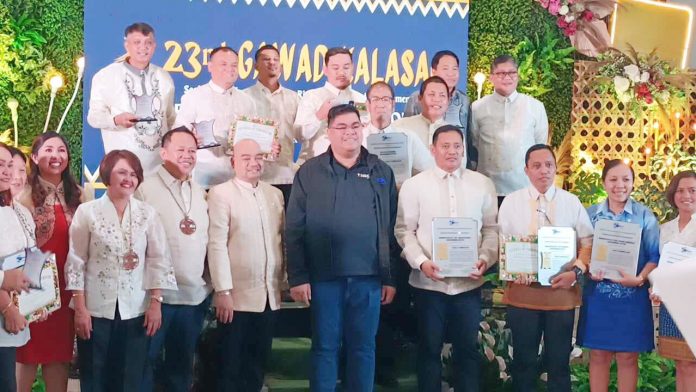
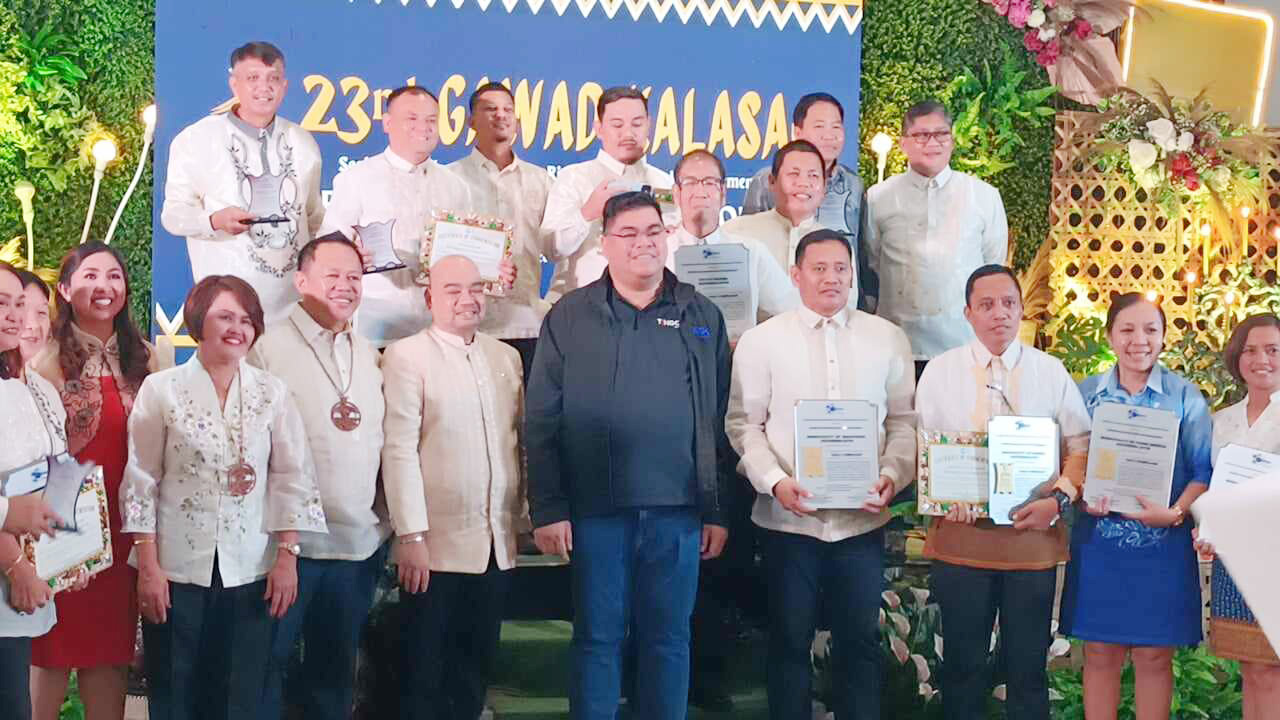
31 local government units in Eastern Visayas were bestowed ‘Kalasag Award’ by the Office of Civil Defense held on Thursday(Dec.21). Among those present were mayors of the LGUs and Rep. Jude Acidre of the Tingog party-list. (Photo Courtesy)
31 local government units in Eastern Visayas were bestowed ‘Kalasag Award’ by the Office of Civil Defense held on Thursday(Dec.21). Among those present were mayors of the LGUs and Rep. Jude Acidre of the Tingog party-list.
(Photo Courtesy)

TACLOBAN CITY – The Office of Civil Defense(OCD) recognized 31 local government units in the region for their hard work in the disaster risk reduction and mitigation bestowing them the Gawad Kalasag Award, now on its 23rd year.

The awarding, held at the Oriental Hotel de Leyte Thursday(Dec.21), was led by OCD-8 Regional Director Lord Byron Torrecarion and partner agencies like the Department of Social Welfare and Development (DSWD), Department of Interior and Local Government (DILG), Department of Science and Technology (DOST), and Ormoc City Councilor Lalaine Marcos, representing Mayor Lucy Torres-Gomez.

This year’s awardees were the municipalities of Can-avid in Eastern Samar; Catarman in Northern Samar; and the province of Southern Leyte which received the “beyond complaint” award, the highest recognition given to the LGU.

Fully complaint awards were given to Arteche, Balangiga, General Macarthur, Guiuan, and Maydolong, all in Eastern Samar province; towns of Gamay, Laoang, Lope de Vega, Palapag, San Antonio, and San Roque in Northern Samar; Tabango, San Miguel, and Ormoc City in Leyte province; Tarangnan and Marabut, both in Samar; Bontoc, Liloan, Limasawa, Macrohon, Padre Burgos, Pintuyan, Silago, Sogod, Hinundayan, and Maasin City, all in Southern Leyte.

Also receiving the fully complaint award were the provinces of Samar and Northern Samar.
Torrecarion attributed the increase of Gawad Kalasag recipients this year to the conduct of caravan in every LGU to explain what the award is all about and its requirements.

Torrecarion said that the number of awardees this year is around 80% higher than the number of LGU awardees last year with only eight winners.

DILG Regional Director Arnel Agabe said that the increase of awardees this year is a good indicator that the LGUs are already capacitated to what are the necessary responses to do whenever there is an impending calamity or disaster.

“We know that the region is located along the Pacific Ring of fire, which means that our geographical location is prone to various natural hazards like typhoons and earthquakes. So with this, it is necessary that the LGUs are capacitated, they know what to do and the DILG is pushing for them to do a list of protocols which will guide them on what to do as preparatory actions and at the same time what they will do during typhoon,” he said.

Agabe added that the increase of Gawad Kalasag awardees is also a good indication because it also means that the recipient of the Seal Good Local Governance from the region will also increase as it is used as one of the basis or indicators to receive such an award, considered the highest recognition DILG bestow to the to LGUs.

Mayors present during the awarding shared that with the region’s geographical location facing the Pacific Ocean makes it imperative for them to be always ready to face challenges brought by natural disasters and calamities like typhoons.

“This award tells us that we are on the right track. That we are doing the correct response during times of calamities and emergency needed by the community from the government,” Mayor Roland Boie Evardone of Arteche said.

Guiuan Mayor Annaliza Kwan, for her part, said that they are thankful that their municipality received the highest recognition for disaster response and humanitarian effort from the OCD.

“Being on the location of the typhoon path, the LGU is always doing its best to be always prepared and respond to the needs of the community but capacitating, training, and educating the people on what to do as typhoon approaches,” she said.

Rep. Jude Acidre of the Tingog party-list group, in his message, highlighted the importance of coordination of all stakeholders in responding to the needs of the affected community and the importance of mitigating the risks and hazards brought by a disaster.

“As we commend your achievement we must also recognize that our work is far from over. The challenges posed by climate change, (and) rapid urbanization demand to remain vigilant and adaptive to disaster risk reduction and management,” he said.

He added that the government should continue to invest in capacity building, innovation, and cooperation at all levels to ensure preparedness for future challenges.
(ROEL T. AMAZONA)

PLDT, Smart extended assistance to flood-hit areas in the Visayas

0

TACLOBAN CITY– The Philippine Long Distance Telephone( PLDT)Inc. and its wireless unit Smart Communications, Inc. (Smart) scale disaster resilience in Visayas in 2023 as the group ramped up the deployment of Ligtas Kits in the region and provided immediate response to calamity-affected communities.

This year, PLDT and Smart distributed the Ligtas Kits, an emergency communications package, to eight cities and municipalities in the Visayas.

The local disaster risk reduction and management offices (DRRMOs) in the region can use the Ligtas Kit to augment their disaster preparedness and response.

The beneficiaries were Bacolod City and Silay City in Negros Occidental; Dumaguete City in Negros Oriental; Siquijor in Siquijor; Camotes, Cebu; Tagbilaran City, Bohol; Catarman, Northern Samar; and Borongan City in Eastern Samar.

“We remain steadfast in our commitment to help build more disaster-resilient communities through the services we offer, as well as other inclusive mobile technologies stored in the Ligtas Kit. We want to assure our valued LGU partners that we are with them in their goal to protect their constituents from various adversities,” said Marylou Gocotano, head of the PLDT and Smart Stakeholder Management- Visayas.

The Ligtas Kit carries a power station, solar panel, rechargeable megaphone, crank radio, satellite phone, smartphone, Smart LTE pocket Wi-Fi, rechargeable flashlight, and whistle.
The beneficiaries this year include the local government units of Bacolod City and Silay City in Negros Occidental; Dumaguete City in Negros Oriental; Municipality of Siquijor in Siquijor; Camotes in Cebu; Tagbilaran City in Bohol; Municipality of Catarman in Northern Samar; and Borongan City in Eastern Samar.

“Communication plays a big role before, during, and after a disaster. This kit will serve as our link to various agencies, barangays, and families so that information and assistance can reach them quickly,” said Emerald Guevara, disaster risk reduction management officer of Catarman.

Providing aid after a disaster is another way through which PLDT and Smart strive to assist communities in the Visayas.

In the second half of 2023, massive floodings occurred in some parts of Negros Occidental and Samar Island caused by torrential rains.

PLDT and Smart, together with their social outreach arm PLDT and Smart Foundation, immediately extended aid to affected communities by distributing relief packs and providing communication support to put up Libreng Tawag (free calls) stations.

A total of 1,000 relief packs were deployed to Bacolod City and Bago City in September, and 1,500 relief packs were also given to the flooded barangays in Catarman and Lope de Vega, Northern Samar; Jipapad and Arteche, Eastern Samar; and Calbayog, Samar in November.
(LIZBETH ANN A ABELLA)

Recent Posts

DALMACIO C. GRAFIL
PUBLISHER

ALMA GRAFIL
EDITOR-IN-CHIEF

ROMEO CEBREROS
OFFICE IN-CHARGE

OFFICE
BRGY. SONGCO, BORONGAN CITY

CONTACT NUMBERS
(055) 261 – 3319 | 0955 251 1533 | 0917 771 0320 | 0915 897 7439 | 0921 511 0010

DALMACIO C. GRAFIL
PUBLISHER

RICKY J. BAUTISTA
EDITOR

ALMA GRAFIL
BUS. MANAGER

OFFICE
RIZAL AVENUE, CATBALOGAN
(INFRONT OF FIRE DEPARTMENT, NEAR CITY HALL)

CONTACT NUMBERS
0917 771 0320 | 0915 897 7439 | 0921 511 0010

EMAIL
lsdaily2@yahoo.com

WEBSITE
www.issuu.com/samarweeklyexpress