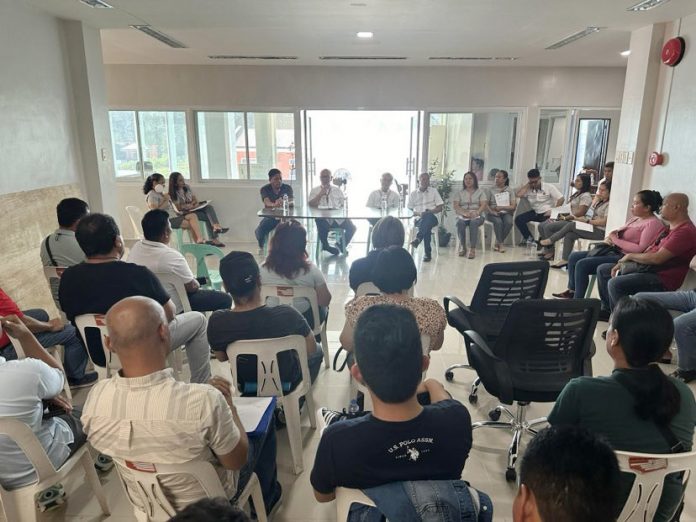
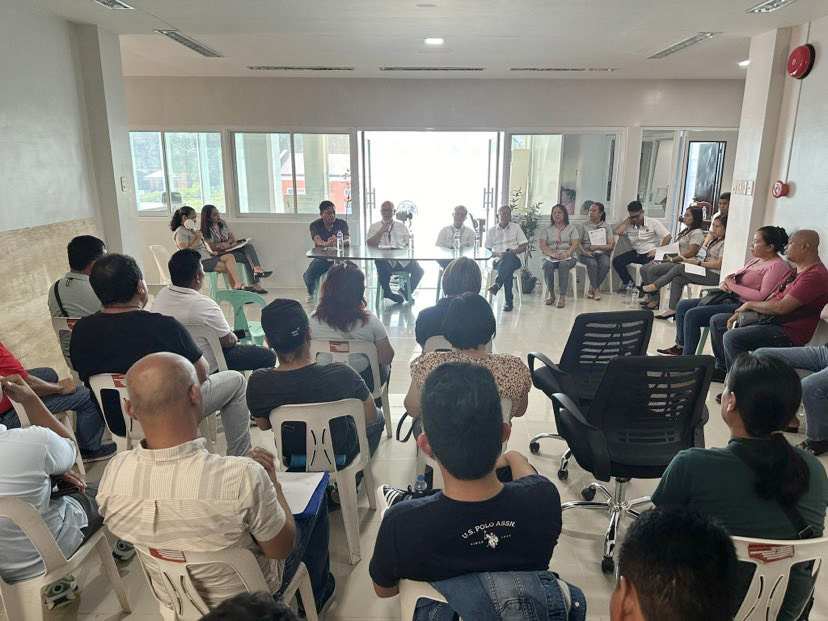
In his meeting with contractors, District Engineer Leo Edward Oppura of the second district engineering office asked them to coordinate with their office in the implementation of the projects.
(PHOTO COURTESY)
In his meeting with contractors, District Engineer Leo Edward Oppura of the second district engineering office asked them to coordinate with their office in the implementation of the projects. (PHOTO COURTESY)
TACLOBAN CITY– The Leyte 2nd District Engineering Office (L2DEO) of the Department of Public Works and Highways (DPWH) held a coordination meeting with the contractors before the onset of the CY 2024 projects on January 8, 2024.
District Engineer Leo Edward Oppura spearheaded the meeting was attended by his assistant, Engr. Francisco Robin, Jr., section chiefs, project engineers, and other key personnel involved in the project implementation.
The meeting focused on discussing project implementation plans, program of works, technical aspects, contract document status, challenges, issues, and concerns.
Robin Jr. encouraged the contractors’ full cooperation and commitment to adhere to the department standards to facilitate a smoother implementation of the project.
Oppura, meanwhile, stressed that DPWH and contractors are partners in implementing projects.
“Cooperation and coordination are needed to attain work-accomplishment targets. It signifies that maintaining constant communication with the contractors will allow it to achieve its infrastructure development goals with the highest possible quality,” he said.
Oppura urged the contractors to work closely together with the project engineers, particularly in ensuring that the plans and program of work are rigorously implemented, to avoid project delays.
At the same time, the district office will also conduct close monitoring of all projects to ensure that plans and programs of work are properly adhered to.
He also advised the contractors to find ways as much as possible to avoid negative slippage that may result in non-payment, cancellation of contract, or blacklisting.
During the discussion, it was emphasized how important it is to correctly implement traffic management and safety during construction to safeguard on-site personnel and motorists and to prevent accidents. (LIZBETH ANN A ABELLA)
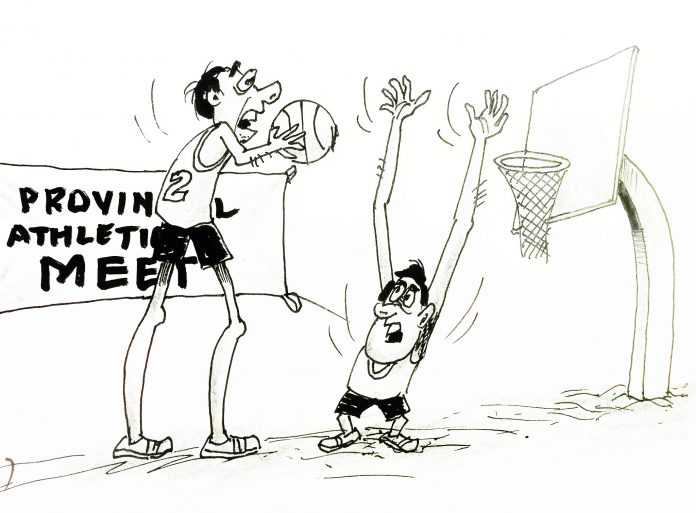
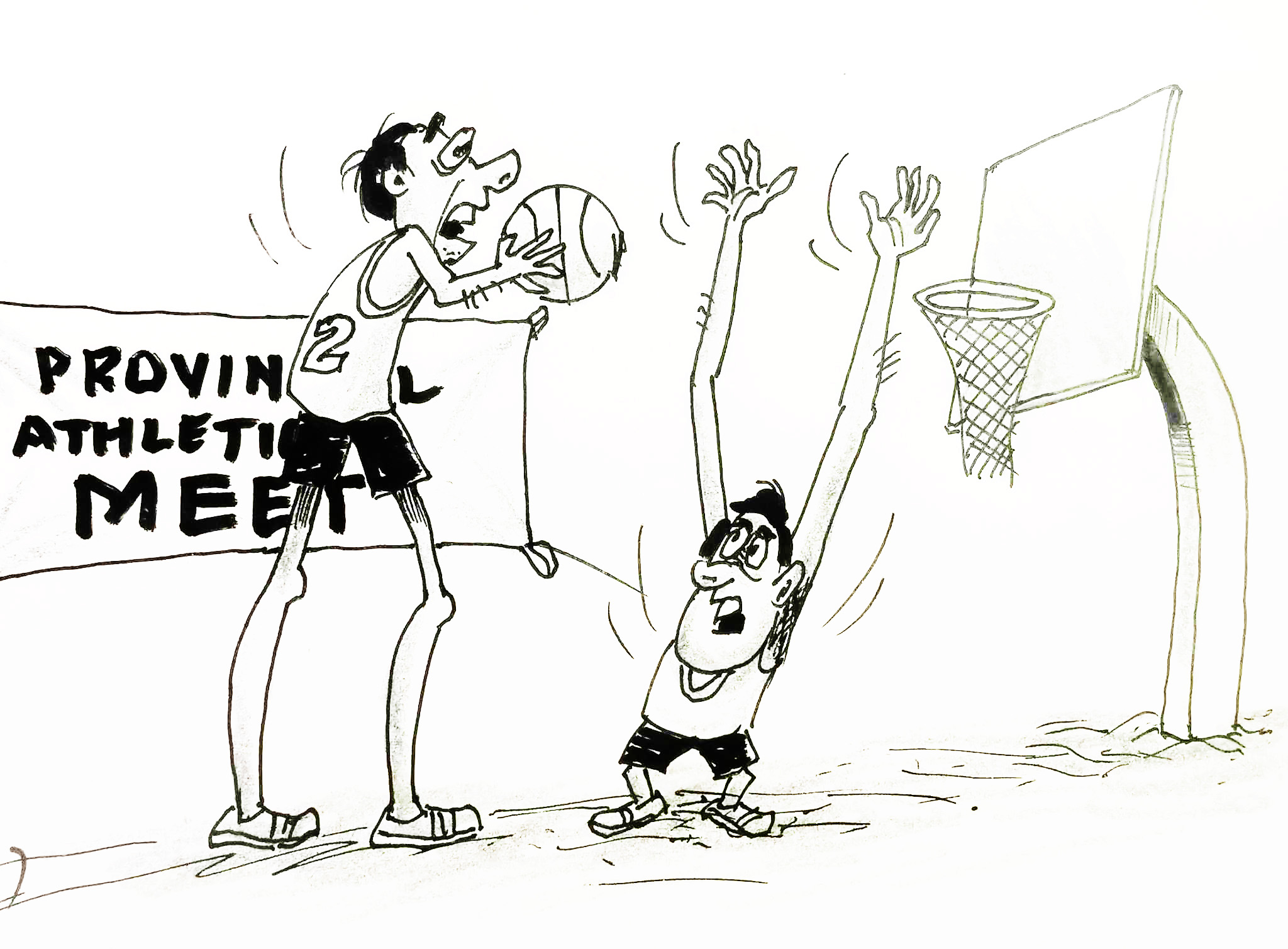
The provincial athletic meets of various divisions are highly anticipated events in the sporting calendar, as they showcase the incredible talent and dedication of athletes from different provinces of the region. This annual extravaganza brings together athletes, coaches, and spectators from all walks of life, setting the stage for fierce competition and unforgettable displays of athletic prowess.
This athletic competition offers a platform for athletes to showcase their exceptional skills and abilities, attracting participants from various divisions, and creating a delightful blend of talent and athleticism. From the blistering speed of sprinters on the track to the graceful maneuvers of gymnasts in the arena, these meets serve as a showcase for the incredible range of physical abilities possessed by our dedicated athletes.
Moreover, the provincial athletic meets provide valuable lessons in perseverance and determination. Behind every successful athlete lies countless hours of hard work and sacrifices. These sporting events epitomize the proverbial “blood, sweat, and tears,” as athletes overcome numerous obstacles and setbacks on their journey toward excellence. We can’t help but admire their ability to push through physical and mental fatigue, resolutely pursuing their goals.
While some sports may seem individualistic, such as track and field, the broader context of the event emphasizes the collective effort of different divisions. Athletes rely on their coaches, teammates, and support staff to achieve optimal performance. This atmosphere of camaraderie and collaboration provides a stark reminder of the power of teamwork in achieving common goals. Here we can see the importance of collaboration in academic and professional settings, and these athletic meets serve as a tangible reminder of the significance of constructive teamwork.
Indeed, the provincial athletic meets of various divisions offer a thrilling and enlightening experience for athletes, coaches, and spectators alike. May these meetings serve as a constant source of inspiration and motivation for our student-athletes, reminding them of the importance of discipline, perseverance, and collaboration in pursuing their own academic and professional goals.
The rise of technology and the increasing prevalence of gadgets have undoubtedly revolutionized our lives. However, this progress has not come without its consequences. One concerning issue is the surge in vehicular accidents caused by the use of gadgets while driving. Here and there, we hear of gadget-related accidents, hence the need to explore the impact on road safety, human behavior, legislation, and potential solutions.
Gadget-caused vehicular accidents pose significant threats to road safety. The diversion of attention from the road due to texting, browsing, or engaging with a gadget simultaneously jeopardizes the driver’s ability to react promptly to unexpected situations. Distracted drivers become more prone to committing traffic violations such as reckless driving, running red lights, or failing to yield, thereby increasing the risk of collisions and injuries.
Consequently, not only do these accidents endanger the lives of individuals involved, but they also burden healthcare systems and put additional strain on public funds.
The allure of immediate connectivity and constant digital engagement creates a perceived need to stay connected, even while on the road. This behavioral pattern demonstrates the challenge of modifying individual attitudes toward gadgets and underscores the importance of targeted education and awareness campaigns. Furthermore, the addictive nature of gadgets renders drivers more likely to engage in risky behaviors, disregarding the potential consequences and prioritizing instant gratification over road safety.
To tackle this pervasive problem, policymakers need to implement stringent legislation that effectively discourages gadget use while driving. Graduated licensing programs and educational courses should include thorough modules on the dangers of distracted driving.
Governments can also introduce stricter penalties, such as hefty fines, the suspension of driving privileges, and mandatory driver education programs for those found guilty of gadget-related accidents. Coordinated efforts between lawmakers, law enforcement agencies, and local communities are essential to create a culture that rejects gadget usage while driving.
Considering the role that technology plays in engendering gadget-related accidents, it is pertinent to explore possible technological solutions as well. Smartphone manufacturers can develop software that disables certain functionalities while a vehicle is in motion or provide users with options for enabling “driving mode” settings. Additionally, advanced driver assistance systems (ADAS) may help mitigate the risks associated with distracted driving. Collaborations between technology companies and car manufacturers hold the potential for innovative solutions that enhance road safety while accommodating our ever-connected lifestyle.
An informed society is pivotal in combating gadget-caused vehicular accidents effectively. Educational campaigns targeted at all age groups, from school children to adults, can disseminate knowledge about the dangers of distracted driving. These campaigns should emphasize the potential consequences, including loss of life, physical harm, legal implications, and financial costs. Raising awareness can help establish a societal norm that considers gadget use while driving socially unacceptable, fostering shared responsibility for upholding safe driving practices.
To address this issue comprehensively, society must acknowledge the implications of road safety, recognize the complex interplay between human behavior and technology, and enact legislation that incentivizes responsible gadget use. Furthermore, technological advancements and public education campaigns hold significant promise for mitigating the risks associated with distracted driving. We have to preserve lives, safeguard road users, and ultimately foster a safer, well-connected future.
THAT need is clearly seen when Christ himself said: “Whoever does the will of God is my brother and sister and mother.” (Mk 3,35) If we always abide by our Christian faith that we have been created in God’s image and likeness, meant to share in his divine life and nature, then the only conclusion we can make is to unite our will with God’s will.
Our will, which is where we find our true selves, should not just be floating around on its own, thinking that it is how it enjoys its freedom. We need to acknowledge that our will is a creation of God and is meant to be united with God’s will. We need to acknowledge the truth that our real freedom is when our will is united with the will of God.
This, definitely, is not an easy task to do, given the fact that it is precisely in our will where we choose whether we would like to be with God, to be part of his family, or to be simply on our own. And given how we handle this issue, starting with our first parents all the way to the present, we always have the strong tendency to think that our will is simply our own.
We therefore have to be strongly wary of this danger and do everything we can to avoid it. I suppose it goes without saying that we need to be frequently reminded that our will needs to be anchored on the will of God. That’s how our will acquires its proper status.
Especially nowadays when there are just so many things that can grab our will to be on its own, we really need to train ourselves to develop a strong regimen of self-discipline and constant rectification.
It would be good if we frequently make pauses during the day to see where our will is anchored. That’s because even in those areas where we can exercise a certain autonomy or where we are encouraged to make initiatives, etc., we should be clear that all these things should be done in accord with God’s will. Everything should be referred to God’s will.
We need to remember always that our true humanity or the perfection of our humanity can only be properly pursued if our will is united with God’s will. Christ, the pattern of our humanity, shows us the way when he himself said, “Truly, I tell you, the Son can do nothing of his own accord, but only what he sees the Father doing.” (Jn 5,19)
This constant need to refer everything to God’s will will obviously require tremendous humility on our part, given our strong tendency to do our own will alone. That’s why Christ himself said that if we have to follow him, we need to deny ourselves and carry cross. (cfr. Mt 16,24) There is no other formula for us to discipline our will to be united with God’s will.
We need to convince ourselves strongly and frequently that it is when our will is united with God’s will that we can achieve the condition proper to us. Yes, it may involve a lot of sacrifice, but the joy and fulfillment such sacrifice would yield us is so much greater, infinitely greater than any sacrifice we may have to go through.
It’s important that we be always aware that our will is always united with God’s will! That’s where we can our best condition in life.
CLEMELLE L. MONTALLANA,DM, CESE
ASSOCIATE PROFESSOR III
CLEMELLE L. MONTALLANA,DM, CESE ASSOCIATE PROFESSOR III
The Teacher Education Roadmap 2024-2033 is a strategic plan that aims to improve the quality and relevance of teacher education in the Philippines. It was developed by the Department of Education (DepEd), the Commission on Higher Education (CHED), and the Professional Regulation Commission (PRC) in collaboration with various stakeholders1.
The roadmap is expected to have a positive impact on the educational status of the Philippines by producing competent, committed, and compassionate teachers who can effectively facilitate learning and contribute to nation-building1. According to the Global Education Monitoring Report 2022, the Philippines has made significant progress in achieving gender equality in education, but still faces challenges in ensuring quality, equity, and inclusion for all learners.
In this second instalment this modest writer dwells on some specific issues that for me are exponents of the well-planned roadmap which upon reading imprinted in me, more than a topical admiration but of deep dive love for the good possibilities it is packed with.
For one, it thoroughly tackles the Wellbeing. Professional and Career Development and Qualification of Public-School Teachers, based on RA 7836 or the Professionalization Act of Philippine Teachers of 1994, Magna Carta for Public School Teachers, and the Philippine Professional Standards. All these leaves nothing to chance and take away the power of political backing and endorsements, one that subvert the proper ranking of teacher applicants. Perhaps, the disgusting power that politicians hold on some Schools Division Offices are placed at the minimum because of the guidelines stipulated herein.
Secondly, in one segment called Low Financial Motivation Impact on Quality and retention Challenges, the Department of Education without mincing words DepED accepted the fact that perception of having teacher education as a low reward pre-service course in college as truth. Compared to the police and other uniformed Personnel, teaching is an inferior profession in terms of salary and incentives, high time that this reality is mentioned and acknowledged.
As space will not suffice for my comments which has been mostly positive, I will make another column on the matter, soon.
Representatives belonging to the majority block are moving headstrong to change the constitution. The move had been initiated on grounds that appear as resurrection of in previous attempts, that of opening the economic provisions that restrict foreigners from owning corporations and properties to the detriment of Filipinos. The purported purpose being raised by the proponents is to attract foreign investors to propel our country’s economic growth. But the many foreign trips of the magical president had drawn commitments from supposed foreign investors.
The aim is sugarcoated with promising projections for a better socio-economic life of the Filipino people.In reality though, the move is clearly not limited to amending specific provisions that are deemed irrelevant. The majority under people the administration umbrella is bound, by the name of its initiative, to change the charter. That had been the battlecry of many of the politicians who keep their hidden agenda, with sights at lifting term limits more than any other.
The charter change proponents are conveniently pointing to other provisions and term extension is not one of them. But such denials are too good to be true. Once the move for charter change would prosper, there is nothing that can stop these politicians from opening the entire charter for all kinds of amendments, including the form of government as what happened during the despot whose son is now the magical president.
Under the present setup, it is hard to be convinced how the charter is so infirm as to require urgent action for radical changes that is bound to go beyond mere amendments. There are provisions that are seen incongruous and others that are irrelevant if not absurd but the charter had served its primordial purpose of restoring political stability and affording the people their fundamental rights, freedom and liberty. The inclusion of term limits had been a proactive response by its framers to contain the rising of family political dynasties.
It is very clear that moves to change the charter had primarily been aimed to lift term limits which had been the roadblock to the selfish ambitions of politicians who want to stay in power for as long as they wish. If there is anything to be changed, it is those moving to change the charter and not the charter.
By and by, the Filipino people would be at the losing end as the recent move for chacha that is charter change is for the mighty and powerful politicians’ benefit dance. comments to alellema@yahoo.com