22.7 C
Tacloban City
April 09, 2026 - Thursday | 4:01 AM
Home Blog Page 838

9 villages in Samar Island declared as ‘drug-cleared’ by PDEA

0

TACLOBAN CITY – The regional oversight committee on the barangay drug clearing program (ROCBDC), led by the Philippine Drug Enforcement Agency (PDEA) in this region, announced the clearance of nine villages on Samar Island from illegal drugs.

According to a statement from PDEA-8, the drug-cleared barangays include Banuyo in Borongan City; and Banuyo, Cag-abaca, Galutan, JP Rizal, and McKinley in Catarman town, as well as Binay, Monbon, and Sangay in Palapag town, all located in Northern Samar province.

Additionally, seven barangays have been declared drug-free, namely Gebonawan, Maghipid, and San Jose in Lope de Vega town; Maragat and Sangputan in San Vicente town; Seven Hills in San Isidro, and San Antonio in Catubig, all situated in Northern Samar.

Furthermore, 13 barangays have maintained their status as drug-cleared barangays. These include Anglit, Balud, Bulao, Burgos, Camabayan, Dolongan, May-it, New San Agustin, Roxas, San Fernando, Serum, and Sulod, all located in the municipality of Basey in Samar province.

Meanwhile, 34 barangays across Samar Island have retained their drug-free status following monitoring and validation by PDEA and the Philippine National Police, indicating the absence of active illegal drug personalities in their respective areas.

These barangays encompass Cagmanaba, Cahicsan, De Maria, Flormina, Hinabangan, Mirador, San Antonio, San Isidro, San Jose, and Santa Catalina in Mondragon town, as well as Guindaulan and Kailingan in Rosario town, all situated in Northern Samar province.

In Samar province, the barangays include Cancaiyas, Balante, Baloog, Binongtu-an, Buenavista, Can-abay, Del Pilar, Guintigui-an, Iba, Inuntan, Loog, Mabini, Manlilinab, Mongabong, Old San Agustin, Panugmonon, Pelit, Salvacion, Sawa, Sugca, Sugponon, and Villa Aurora in Basey town.
(ROEL T. AMAZONA)
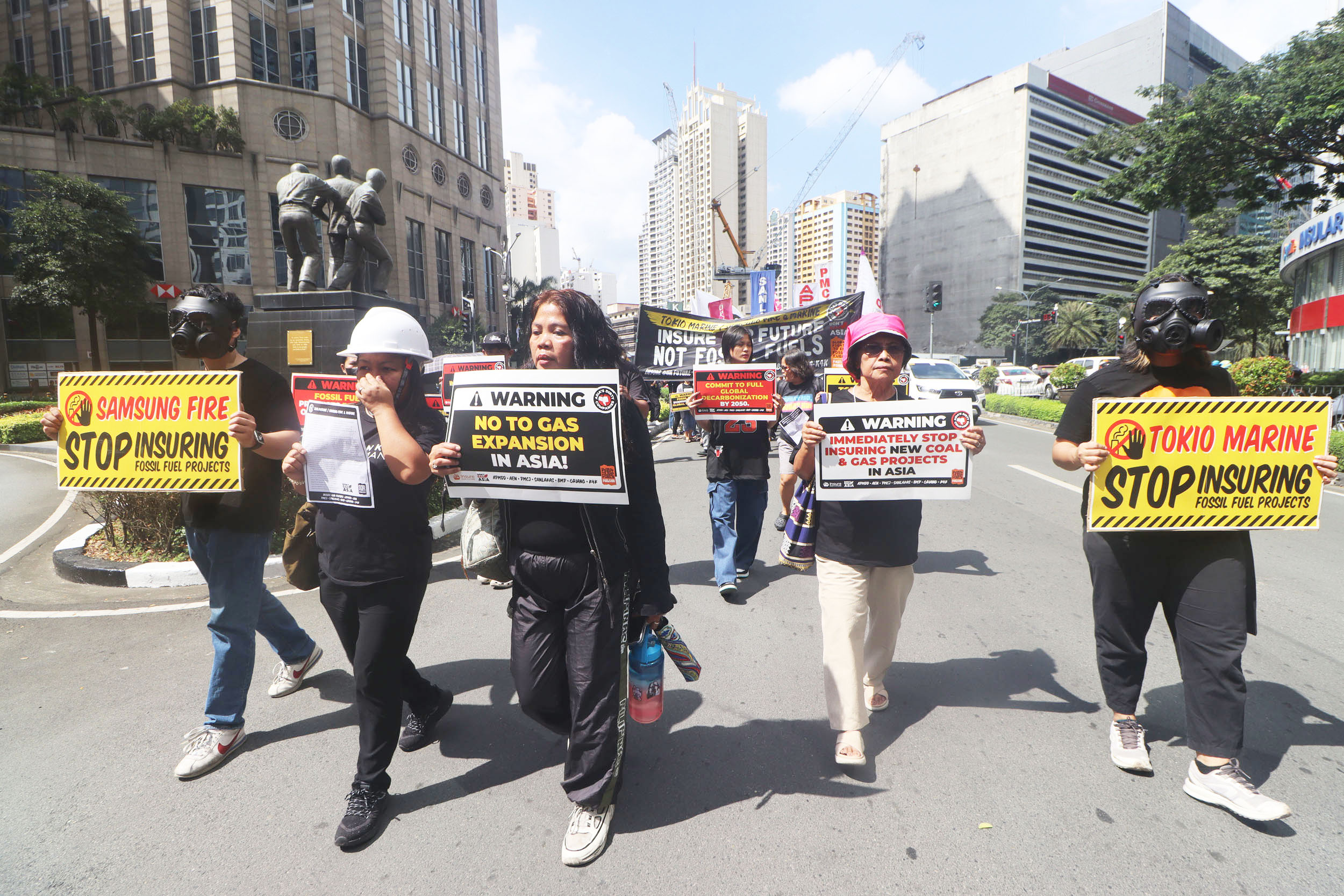
Climate activists hit insurers of fossil fuel companies

0
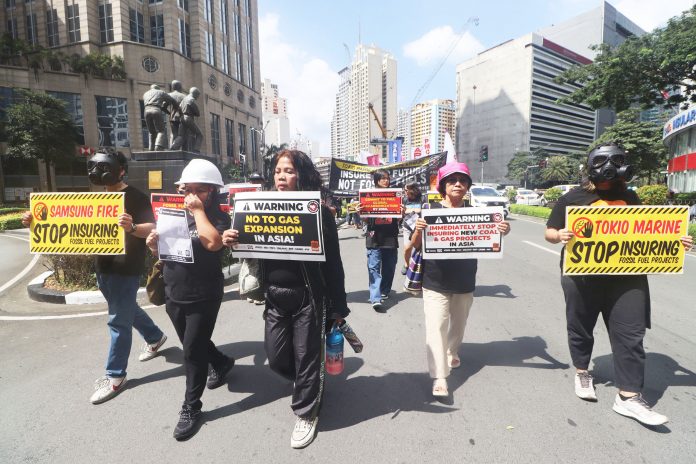
Filipino climate groups stage a protest rally at the Makati business district in Manila on March 1, 2024 to demand insurers of coal, oil, and gas projects to withdraw their support to fossil fuel companies. (Photo by Elmer Valenzuela)
Filipino climate groups stage a protest rally at the Makati business district in Manila on March 1, 2024 to demand insurers of coal, oil, and gas projects to withdraw their support to fossil fuel companies.
(Photo by Elmer Valenzuela)

TACLOBAN CITY-Climate activists have strongly condemned companies that insured coal, oil, and gas companies for being complicit in harming the people and the planet.

“2023 was already the hottest year on record, and it could get worse. The insurance industry is guaranteeing a future with more wildfires, floods, droughts, and storms if it continues to insure fossil fuel companies and their projects,” said Lidy Nacpil, coordinator of the multi-sectoral group Asian Peoples’ Movement on Debt and Development (APMDD).

“We urge them to put people and planet first over profits, respect human rights, and support the urgent transition from dangerous fossil fuels to renewable energy, “ Nacpil added during a protest rally at the Makati business district in Manila on March 1, 2024.
The demonstration was of this year’s “Insure Our Future,” a Global Week of Action being held in key cities around the world from February 26 to March 3.

“We urge them [big insurance companies] to put people and planet first over profits, respect human rights, and support the urgent transition from dangerous fossil fuels to renewable energy,” the climate campaigners said in a statement.

Ian Rivera, national coordinator of the Philippine Movement for Climate Justice (PMCJ), maintained that these insurers “are silent enablers of the climate crisis by insuring fossil fuel companies and plants.”

“However, they are not being held accountable for the damage they caused to the communities and the crisis. It is time to put a spotlight on insurance agencies, to demand reparations, and to stop being part of the problem,” he added.

Meanwhile, similar actions were conducted by APMDD member organizations in India, Bangladesh, the UK, the USA, Japan, South Korea, Switzerland, France, Peru, Colombia, Germany, and Africa.
(RONALD O.REYES)

Internet installer electrocuted in Biliran

0

ORMOC CITY– An internet installer lost his life after accidentally coming into contact with a live wire from the local electric cooperative in Barangay Agutay, Maripipi, Biliran, on Tuesday (Feb. 27).

The victim was identified as Jayson Montino, 29, single, who worked as a laborer/installer for Isla Net Fiber and resided in Brgy. Panjobjoban 2, Almagro, Samar.

Local police, led by Police Staff Sergeant Michael Roque Puno, responded to reports of an electrocution incident at the scene.

According to initial investigations and eyewitness accounts, the victim and his team were in the process of installing a 12-core fiber wire in the vicinity of the barangay.

The victim was using a company-issued aluminum retractable stick to elevate the fiber wire for installation. Tragically, the retractable stick accidentally made contact with the live wire of the Maripipi Multipurpose Cooperative (MMPC), resulting in electrocution.

Two companions of the victim, identified as Romo and Monares, both 23, heard the victim’s cries and rushed to his aid.

They found the victim trembling while still holding the aluminum retractable stick and lying on the grassy area at the site of the incident. The companions immediately called for a rescue vehicle.

Upon arrival, Dr. Mary Grace Llever from the Maripipi Rural Health Unit pronounced the victim dead at the scene due to cardiac arrest secondary to electrocution caused by high voltage wire.

The victim’s remains were transferred to a local funeral parlor for post-mortem examination before being transported back to his hometown of Almagro.
(ROBERT DEJON)

DPWH-NSFDEO fast track Gebulwangan Bridge construction to alleviate decades-long struggle for residents

0
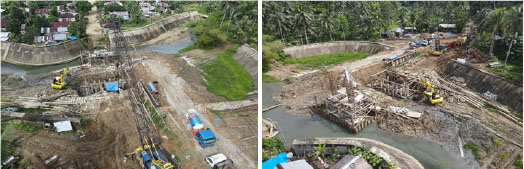
The picture shows the ongoing construction of Gebulwangan Bridge in Catarman, Northern Samar

CATARMAN, N. Samar- The DPWH-Northern Samar First District Engineering Office is fast-tracking the construction of the Gebulwangan Bridge to address a long-standing concern for the residents of Barangay Gebulwangan and its neighbouring communities, addressing a persistent concern that has lingered for decades.

This two-phase project covers the construction of a road with a 3-Span Reinforced Concrete Deck Girder (RCDG) bridge with a total length of 45 meters with an estimated cost of ₱60 million. It will soon replace the current wooden bridge, offering a safer and more reliable passage for the community.

Residents have long faced challenges navigating the precarious wooden bridge, particularly during inclement weather when it often becomes impassable. The initiation of this construction project marks a significant stride towards ensuring a safer and more reliable connectivity network for the community.

District Engineer Alvin A. Ignacio stated, “The ongoing construction of this bridge exemplifies the district’s commitment to the welfare and development of the communities we serve. It reflects our dedication to providing them with a secure and reliable passage.”

Funded under the GAA 2023 budget, the construction is progressing as scheduled and is expected to be completed within the designated timeframe. The ongoing efforts signify a concrete step towards realizing the community’s dream for improved connectivity.

Once completed, the new concrete bridge will not only facilitate the smooth flow of people and goods on regular days, but will also serve as a resilient lifeline during calamities, ensuring easier access for emergency services of 3 Barangays with an estimated population of almost 3,000.
(ANALIZA A. PABIA, PIO ALTERNATE/PR)

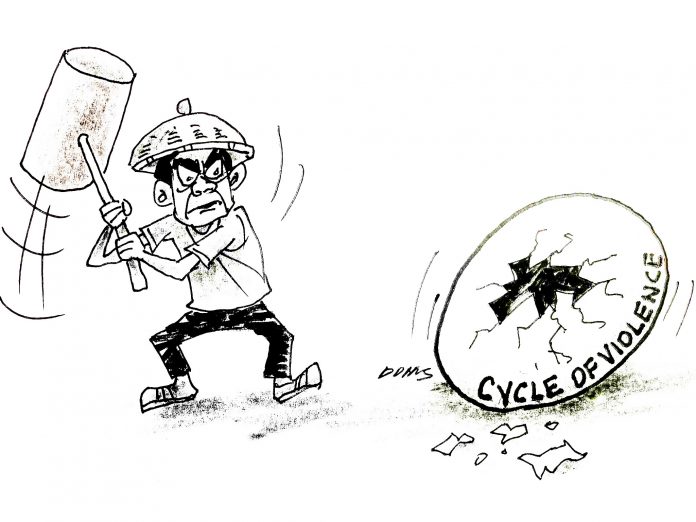
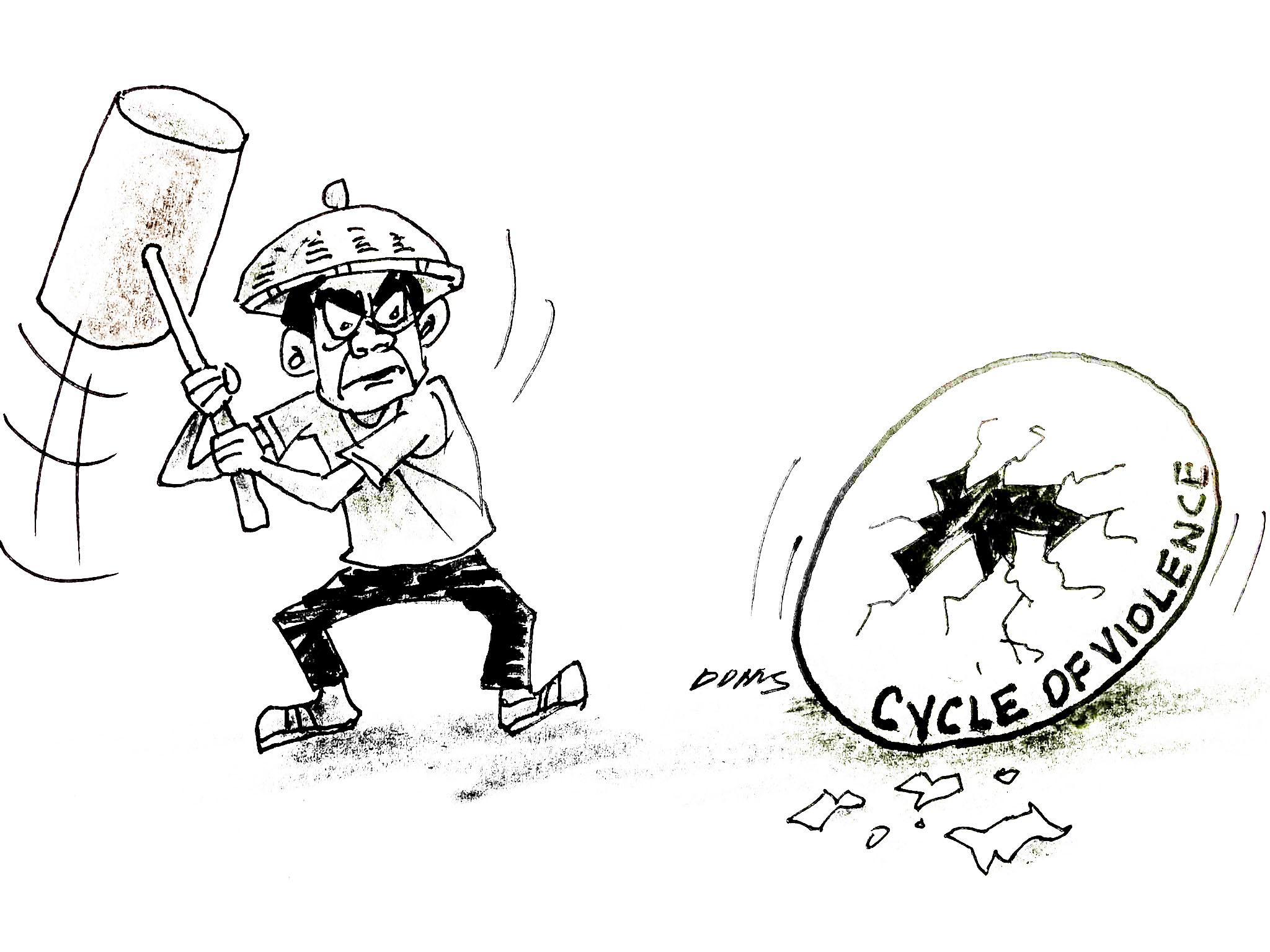
A cycle to break

0

In the face of the never-ending cycle of violence in some parts of Eastern Visayas, we can’t help but blame it on certain reasons that must have been sustaining it all these years. Why should something continually happen without a cause, without its triggers and sustaining motivation behind it?

As we figure it out, the cycle of violence in the concerned areas must be attributed to certain factors. One of which is poverty and lack of economic opportunities. Many individuals in this region struggle to even meet their basic needs, which can lead to frustration, desperation, and ultimately violence. When individuals feel hopeless and see no way out of their dire circumstances, they may turn to violence as a means of asserting power or control. Take the agrarian disputes for example.

Another contributing factor is their being uneducated. Without proper education, individuals may easily resort to violence to resolve conflicts or address their grievances. Normally, the lack of education leads to ignorance and misunderstanding, which can fuel violence and perpetuate the cycle. In remote areas, for example, people are mostly ignorant about the laws as many of them are unlettered and do not care about legal matters, thus taking the laws into their own hands.

Furthermore, social and political norms in Eastern Visayas can also play a role in perpetuating the cycle of violence. Gender inequality, patriarchal attitudes, and a culture of silence around issues of abuse can all contribute to the prevalence of violence in the region. These social scenarios can create a permissive environment for violence to occur unchecked, leading to a cycle of abuse and violence that is difficult to break. Add to this a hostile political environment, and you have a fertile ground for violence.

Overall, the cycle of violence in some parts of Eastern Visayas stems from a combination of economic, social, and political factors. Addressing these would involve improving access to education, promoting economic opportunities, challenging harmful social and political norms, and providing support for those affected by violence. We hope to break the cycle of violence and create a safer, more peaceful environment for the people of Eastern Visayas.

Abusing generosity

0
DOMS PAGLIAWAN

Generosity is a quality that is highly valued in society, as it involves giving freely without expecting anything in return. Recipients, however, sometimes abuse generosity. This can occur when they take advantage of someone’s generosity for their gain, without showing gratitude or reciprocating the kindness shown to them.

We can easily relate to this because this is commonly done by many of our countrymen. When someone is kind and generous to us, we tend to abuse it in some ways, thus offending and antagonizing the person showing some generous acts. As a Waray adage puts it, you are just given a finger to hold on, but you grab the entire arm, abusing the giver’s kindness.

One way in which generosity is often abused by recipients is when they become dependent on the generosity of others. This can create a cycle of enabling behavior, where the recipient does not take responsibility for their actions or seek to improve their situation. Instead, they rely on others to provide for them, without making serious efforts to become self-sufficient.

Another way is when the recipients fail to show gratitude for the help that they have received. This lack of appreciation can demoralize the giver, who has gone out of their way to help someone in need. This lack of gratitude can also lead to resentment on the part of the giver, as they feel that their generosity has been taken for granted.

Furthermore, recipients may abuse generosity by manipulating others into giving more than they are comfortable with. This can involve emotional manipulation or guilt-tripping, where the recipient plays on the emotions of the giver to extract more favors or resources from them. This kind of manipulation can strain relationships and create a sense of mistrust between the giver and the recipient.

In some cases, recipients may also abuse generosity by using the resources they have been given for purposes other than what was intended. For example, someone may receive financial assistance to pay for necessities, but instead use the money for luxury items or non-essential expenses. This kind of behavior shows a lack of respect for the giver’s generosity and can lead to a breakdown in trust.

Individuals need to be aware of the potential for their generosity to be abused by recipients, and to take steps to protect themselves from being taken advantage of. This may involve setting clear boundaries and expectations for how their generosity is to be used, as well as being cautious of individuals who consistently ask for help without showing any willingness to improve their situation.

Ultimately, while generosity is a noble and admirable quality, individuals need to be mindful of the potential for it to be abused by recipients. Givers should ensure that their acts of generosity are truly making a positive impact in the lives of others. It’s good to give to others in need, but if the recipients are taking advantage of that act, then the giver might as well stop it to avoid serving as a milking cow by abusive recipients.

Recent Posts

DALMACIO C. GRAFIL
PUBLISHER

ALMA GRAFIL
EDITOR-IN-CHIEF

ROMEO CEBREROS
OFFICE IN-CHARGE

OFFICE
BRGY. SONGCO, BORONGAN CITY

CONTACT NUMBERS
(055) 261 – 3319 | 0955 251 1533 | 0917 771 0320 | 0915 897 7439 | 0921 511 0010

DALMACIO C. GRAFIL
PUBLISHER

RICKY J. BAUTISTA
EDITOR

ALMA GRAFIL
BUS. MANAGER

OFFICE
RIZAL AVENUE, CATBALOGAN
(INFRONT OF FIRE DEPARTMENT, NEAR CITY HALL)

CONTACT NUMBERS
0917 771 0320 | 0915 897 7439 | 0921 511 0010

EMAIL
lsdaily2@yahoo.com

WEBSITE
www.issuu.com/samarweeklyexpress