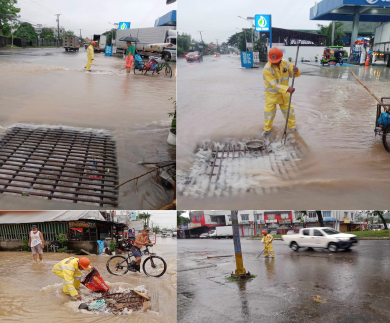
TACLOBAN CITY – The Tacloban City District Engineering Office (TCDEO) deploys its maintenance team early this morning, February 10, 2025, to inspect roads and drainage systems for potential flooding. This comes in response to persistent rains caused by the shear line, which continue to affect Leyte.
The Maintenance Section, led by Engr. Charlie B. Tampil, mobilized personnel as early as 6 a.m. to conduct thorough inspections and declogging operations on road drainages. These efforts aim to ensure that major roads remain passable despite the ongoing inclement weather.
According to the latest update from the Philippine Atmospheric, Geophysical and Astronomical Services Administration (PAGASA), the shearline affecting Leyte is bringing cloudy skies with scattered rains and thunderstorms. The prevailing weather system, influenced by the shear line, has potential to produce moderate to heavy rainfall, which could lead to flash floods and landslides in low-lying and mountainous areas.
District Engineer Rebecca G. Yuse emphasized the importance of vigilance and preparedness amid the current weather conditions. “We are closely monitoring the situation and implementing proactive measures to mitigate flooding and road disruptions. I urge the public to remain alert and immediately report any blocked drainage systems or hazardous road conditions to our office so that we can respond swiftly,” Yuse said.
She further assured residents that the Maintenance Team will remain on the ground to address drainage issues as needed, ensuring public safety and minimizing disruptions to transportation. (PUBLIC INFORMATION UNIT)
TACLOBAN CITY – The Philippine Health Insurance Corp. (PhilHealth) in Eastern Visayas has disbursed a record P5.6 billion in claims in 2024, reflecting a 51% increase from P3.7 billion in the previous year.
According to Asisclo Militante Jr., head of PhilHealth’s field operations division, the rise in claims is attributed to the agency’s expanded coverage, particularly benefiting low-income families, and improved awareness of healthcare benefits among members.
“We had more claims last year as we expanded our coverage, especially for poor families. We are focused on maintaining critical services to ensure that those who need them most continue to receive proper medical care despite funding challenges,” Militante said during the ‘Kapihan sa Bagong Pilipinas’ of the Philippine Information Agency(PIA) Tuesday, February 11.
PhilHealth also accelerated its claims processing, reducing the turnaround time from 26 days to just 19 days, significantly faster than the 60-day legal limit and the 30-day ideal processing period.
Militante emphasized that there have been no cases of delayed payments to hospitals and healthcare providers in the region.
Currently, there are over 200 accredited PhilHealth healthcare facilities in Eastern Visayas, including hospitals, rural health centers, and birthing clinics.
Meantime, Rosario Suyom, the agency’s health care delivery management chief, reported that moderate-risk pneumonia ranked first in total benefits paid, amounting to P741 million, while hemodialysis remained the most frequently claimed procedure, with payments reaching P710 million.
In 2023, PhilHealth processed 162,733 hemodialysis claims, compared to 19,678 pneumonia-related claims. However, the higher payout for pneumonia in 2024 is due to a 50% increase in benefits, from P15,000 to P29,250 per case.
At present, 4.9 million individuals—including PhilHealth members and their dependents—are covered under the agency in Eastern Visayas.
TACLOBAN CITY– The mayor of Borongan City, Jose Ivan Dayan Agda, has called on his people to venture into agripreneurship, particularly fish farming, as part of the city’s ‘Dukwag Agrikultura’ program.
“I really appeal that we engage in entrepreneurial business for our food security,” Mayor Agda said in a Viber interview.
The rising prices of fish stem from the city’s insufficient local production, an issue that could be addressed if more Boronganons took up fish farming, the city mayor added.
The mayor reaffirmed his commitment to pushing for fish farming as a key strategy for the city’s food security. “It is in line with the city’s vision to make basic needs affordable for ordinary people,” he said.
“Fish farming has already shown success, but our efforts to convince more people to engage in agricultural entrepreneurship must continue. We must not rest until those who participate in the Dukwag Agrikultura program achieve financial independence,” he added.
To support this initiative, Mayor Agda encouraged residents to take advantage of the ‘Dukwag Agrikultura’ program, assuring them that assistance would be readily available.
“If you encounter problems, do not hesitate to inform my office so we can find solutions. This does not only apply to ‘Dukwag’ but to all services of the city,” he added.
According to Mayor Agda, some residents have already started fish caging for bangus (milkfish) farming.
He shared that, based on monitoring by the City Agriculturist Office, bangus grown in fish cages along Borongan’s coastal areas thrive naturally due to the abundance of plankton, their primary food source.
“The quality of Borongan’s bangus can even rival the famed Dagupan bangus,” he said, expressing optimism that this could serve as a strong foundation for the success of the ‘Dukwag Agrikultura’ ordinance, which aims to boost food production and security in the city.
Mayor Agda also urged residents to support local fishermen by purchasing their catch, emphasizing that experiencing the taste and quality of Borongan’s bangus firsthand would further promote its value.
Currently, fish cages for bangus can be found in the villages of Punta Maria, Takyang, parts of Tabunan, and Canlaray. (JOEY A. GABIETA)
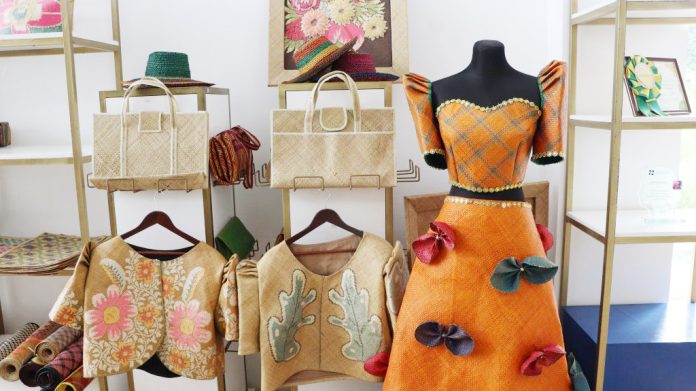
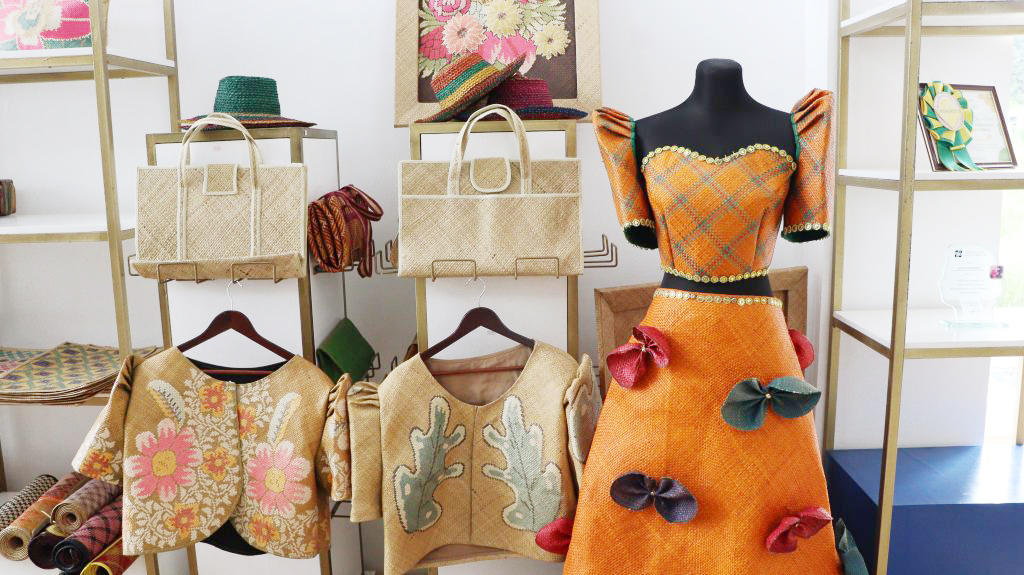
ELEGANCE IN TRADITION.A stunning display of handcrafted products made from ‘tikog’, a native grass used in weaving. Featured in the collection are intricately designed bags, traditional garments, and accessories, showcasing the artistry and craftsmanship of local artisans. (AAC,PIA Samar)
ELEGANCE IN TRADITION.A stunning display of handcrafted products made from ‘tikog’, a native grass used in weaving. Featured in the collection are intricately designed bags, traditional garments, and accessories, showcasing the artistry and craftsmanship of local artisans. (AAC,PIA Samar)
CATBALOGAN CITY– The ‘tikog’ weavers of Basey, Samar, used to wait over a week for tikog, or wild grass, to dry under the sun.
This grass is used as raw material for their woven bags and other artisan items. Now, with the new eco-dryer facility, they can dry the grass in just one day, free from weather worries.
This significant advancement was enabled by a project recently funded by the Department of Science and Technology-Community Empowerment through Science and Technology (DOST-CEST), which cost over P500,000.
The initiative supports over 1,200 members under the Basey Association for Native Industry Growth Inc. (BANIG) by providing an eco-dryer facility and dyeing techniques, enhancing their production capacity, and preserving their cultural heritage.
“This project was proposed because of the needs of the weaving communities, especially the BANIG, for them to have a drying facility. The province of Samar sought the assistance of the DOST to adapt the technology of the DOST-FPRDI on the eco dryer,” said Emelyn A. Maglahus, supervising science research specialist of DOST Samar.
Increased productivity
The traditional method of drying tikog grass can take up to three days, depending on the weather conditions, based on Florencia Octa’s experience, a skilled Tikog weaver from the Basiao Native Weavers Association (BANWA).
She explained that once the grass is dried, it is then colored and dried again before being flattened in preparation for weaving. The entire process of producing a single product can take more than a week to complete.
With this recent innovation, the drying time has been reduced to less than a day. This allows them to work more efficiently and produce higher-quality products in under a week, according to Anita Ogrimen, the president of BANIG.
“We are having difficulty drying Tikog and Buri, so by using the eco-dryer, we won’t struggle anymore because we can dry the Tikog and Buri, allowing our production to continue. Unlike before, without the eco-dryer, if we run out of usable Tikog, production stops. We are very lucky and grateful to DOST for having a program like this, as their support is truly a great help,” said Ogrimen.
Concerted efforts
To support the production efforts of Tikog weavers, the Department of Trade and Industry (DTI) also provided flattening and sewing machines, financial assistance, and technical training.
The Department of Labor and Employment (DOLE) facilitated the cultivation of tikog grass. The provincial government also supplied a building for the weavers’ workplace, while the local government unit of Basey contributed a water system.
All these concerted efforts culminated in the remarkable success of tikog weavers, allowing their exquisite products, such as bags, coin purses, home decor, and Filipiniana attire, among others, to be showcased at various regional, national, and even international trade fairs.
The items sold by the Tikog weaving community at trade fairs help meet their families’ basic needs and allow them to support their children’s education.
The adoption of eco-drying technology for tikog weavers in Basey, Samar, boosts production efficiency and preserves cultural heritage. This initiative, backed by government agencies, empowers local artisans to thrive in competitive markets and share their craftsmanship globally. (AAC, PIA Samar)
The ongoing upgrade and extension of Daniel Z. Romualdez (DZR) Airport is expected to be completed soon. Eastern Visayas has suffered for decades from the limitations of its primary gateway, stifling economic growth and deterring potential investors. The completion of this project is not just an improvement; it is a necessity that will determine the region’s trajectory in the years to come.
A modernized DZR Airport will allow Eastern Visayas to compete with other regions in tourism, trade, and investment. At present, the airport’s inadequate facilities and short runway restrict larger aircraft from landing, limiting passenger volume and cargo capacity. Expanding the airport means more flights, increased tourism revenue, and improved accessibility for businesses. The region’s potential is immense, but without proper infrastructure, it remains underutilized.
Economic growth hinges on efficient connectivity, and DZR Airport is currently a bottleneck rather than a conduit for progress. Provinces like Cebu and Iloilo enjoy economic booms partly because of their international airports, which attract investors and create jobs. Eastern Visayas must not remain in the shadows of these regions. A better airport means a stronger, more dynamic economy where local industries—agriculture, fisheries, and manufacturing—can scale up and access wider markets.
Beyond economics, this upgrade is a matter of safety and resilience. Typhoon Yolanda exposed the vulnerability of the airport’s infrastructure, highlighting the need for a facility that can withstand extreme weather conditions. A stronger, well-equipped airport ensures that emergency response efforts will not be crippled when disasters strike. Delays in this project only prolong the risk of history repeating itself, leaving the region unprepared for the next calamity.
The government, along with all stakeholders, must push for the swift completion of the DZR Airport expansion. Bureaucratic inefficiencies and funding issues should not be excuses for stagnation. If Eastern Visayas is to progress, it must be given the infrastructure to do so. The people of the region deserve an airport that matches their aspirations, not one that continues to hold them back.
It happened just the other day. I was in a coffee shop, minding my own business when a song started playing—an old love song from the late eighties. And just like that, I was no longer in that café. I was back in high school, awkwardly watching a Christmas dance party, my palms sweaty, my heart racing like it had a mind of its own. It’s funny how music does that—how it hijacks time, drags us back to moments we thought we had buried, and makes us feel things we didn’t sign up for. And let’s be honest, sometimes it’s infuriating. Who said I wanted to revisit that embarrassing chapter of my life?
But that’s the reality. Like it or not, music stitches itself into the fabric of our experiences, binding songs to emotions, places, and people in ways we never agreed to. We don’t get to choose which song gets glued to which memory. A funeral hymn might forever remind us of a loss. A cheesy pop song could transport us to a road trip with friends, windows down, the wind tangling our hair. And sometimes, unfortunately, a once favorite love song turns into an unbearable gut punch after a bad breakup. Music doesn’t care about our preferences. It’s the uninvited guest in our subconscious, hitting the play button whenever it pleases.
This strange power of music isn’t just some poetic nonsense—it’s science. Our brains are wired to connect sound with memory, creating a shortcut that makes a few notes enough to flood us with feelings. That’s why an old jingle from childhood can make us recall the smell of our grandmother’s kitchen, or why a song we barely liked can still remind us of a specific summer. It’s not the melody or the lyrics alone—it’s what they carried when we first heard them. Music is less about sound and more about context.
And yet, for all the nostalgia it brings, music can be a cruel prankster. Have you ever tried to move on from something, only for a song to drag you back? There’s no way to prepare for it. One moment, you’re fine, and the next, you’re standing frozen in the middle of a grocery aisle because the supermarket decided to play your song—the one that belonged to someone who’s no longer around. You try to shake it off, but it’s too late. The music has already done its job.
But maybe that’s also the beauty of it. Maybe music exists to remind us that nothing is ever truly gone. People leave, places change, but the songs remain, stubbornly preserving the moments we think we’ve forgotten. Even pain, when set to music, becomes something almost poetic—a melody of what once was. Perhaps the reason music holds on so tightly to our past is that it knows we need those reminders, whether we like them or not.
Of course, not all musical flashbacks are welcome. Some songs bring warmth, not wounds. A childhood lullaby, a wedding dance, a song played on repeat during the best summer of our lives—these are the ones we seek out, the ones we turn to when we need comfort. In that sense, music is both a curse and a gift, ambushing us with some memories while gently cradling us with others. We can’t control which songs get attached to which moments, but at least we can decide which ones we keep playing.
Maybe, instead of getting annoyed at music’s hold on us, we should embrace it. Let it pull us back to where we need to be, whether for closure, for laughter, or simply as a reminder of who we once were. After all, if life insists on being a playlist of memories, we might as well learn to appreciate the music.