25.5 C
Tacloban City
September 18, 2026 - Friday | 9:26 PM
Home Blog Page 630

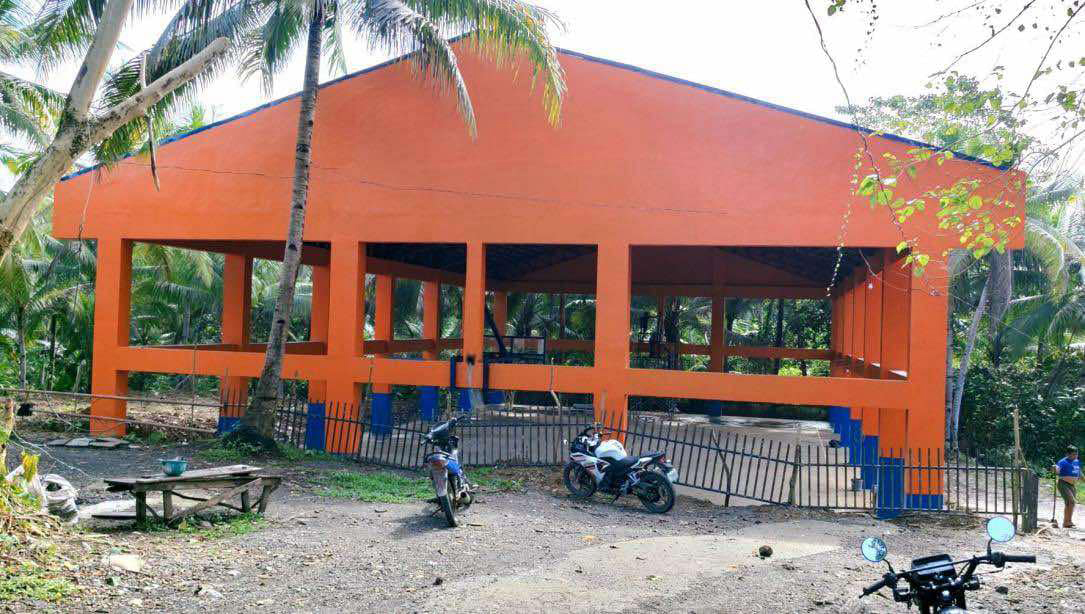
DPWH-L2DEO reports completion of a multi-purpose building in Barugo town

0
MULTI-PURPOSE BUILDING. The Department of Public Works and Highways (DPWH) Leyte Second District Engineering Office (L2DEO) reported completion on the construction of the P7.91 million worth in Barangay Caboloan, Barugo town. (L2DEO)

TACLOBAN CITY – The Department of Public Works and Highways (DPWH) Leyte Second District Engineering Office (L2DEO) has completed the construction of a multi-purpose building in Barangay Caboloan, Barugo, Leyte, providing the local community with a much-needed venue for various social and recreational activities.

According to District Engineer Leo Edward Oppura, the newly constructed multi-purpose building covers an area of 574.04 square meters.

The project involved the construction of a reinforced concrete structure with finishing, pavement painting, steel trusses, and long-span roofing sheets, making it suitable for multiple functions. Additionally, basketball hoops and goal systems were installed to support local basketball enthusiasts.

Barangay Chairman Leo Costa Alvaran expressed his gratitude for the project, emphasizing how it addresses a long-standing community need.

“When it rains, we do not have a suitable place; oftentimes, we borrow tents just to continue our activities,” he said.

“I am very grateful that our dream of having a covered court has come true. We can now hold our events here. Thank you very much for constructing this covered court,” Alvaran added.

The multi-purpose building provides a versatile space that meets the diverse needs of the community. It can serve as a venue for local gatherings, sports events, meetings, and other recreational activities, fostering social interaction and collaboration.

Additionally, it can function as a reliable evacuation center in times of natural disasters.
The project was implemented with a total budget of P7.91 million with the construction commenced on May 6, 2024, and was completed on November 21, 2024.

(LIZBETH ANN A. ABELLA)

Drowning Fields

0

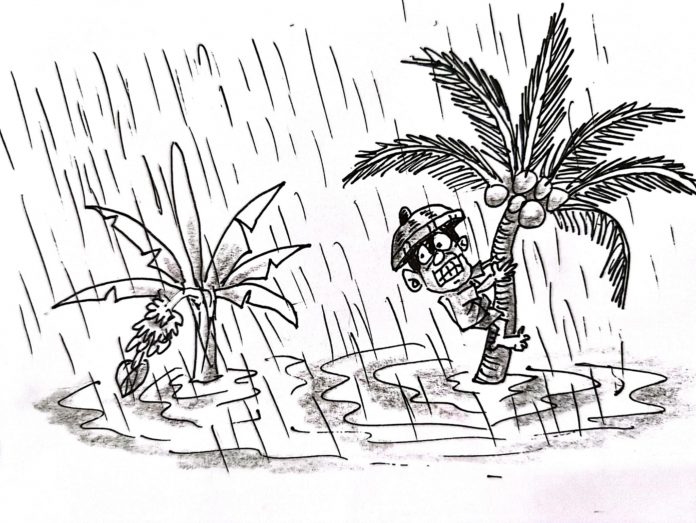
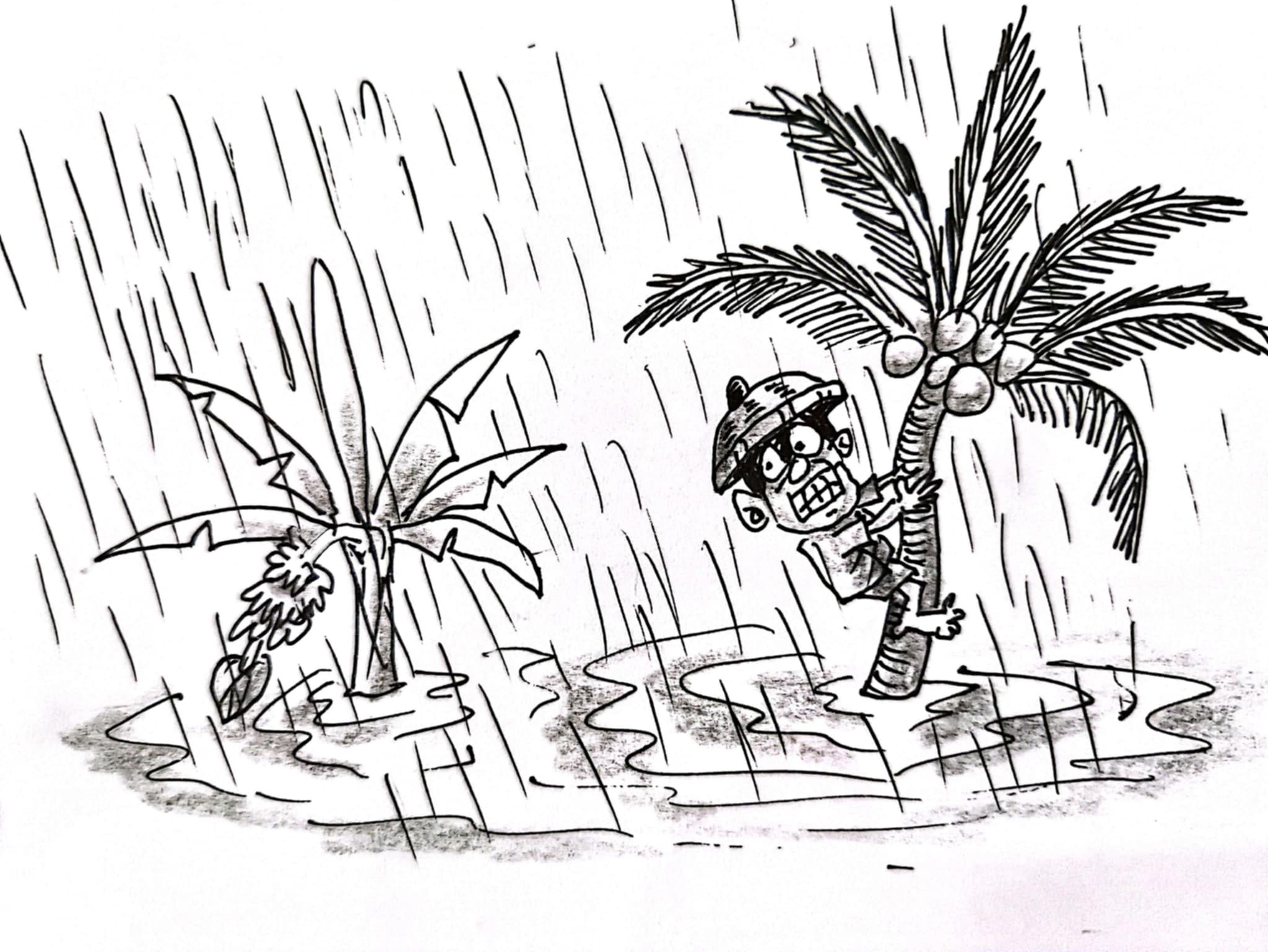
Continuous rains and invading floodwaters are ruining extensive portions of farmlands, rotting crops in the fields before they can be reaped. The devastation is tremendous, jeopardizing the country’s food supply and destroying the lives of farmers who plow the fields. If permitted to continue, what is left of farm investments would be nothing but debt, and what is left for people to eat would be nothing but desperation.

Golden fields of ripening rice are now and look like stagnant lakes, their harvests wasted to weeks of immersion. Cornfields and vegetable gardens that could have nourished families and provided market vendors with sustenance now remain idle to rot their shells beneath mounted piles of mud. The damage this has done to the farmers is astronomical—seeds, fertilizers, and work rendered useless as waters engulfed everything in one swoop. Meanwhile, consumers face skyrocketing prices, as the lack of local produce pushes them to depend on expensive imports.

Food security is now a very real crisis in the making rather than something to be expected in the future. Should farming losses persist, the nation would be heavily reliant on overseas producers, and that reliance would come at an expense. The expense of importation is shouldered by regular folk who are compelled to cut back on their meager earnings just to make ends meet. Without food grown here, economic vulnerability increases and hunger is a problem not merely for the poorest but for everyone in the nation.

The failure of the government to anticipate deteriorating weather has contributed to the crisis. There ought to have been flood defenses, sustainable drainage, and pre-emptive relief to affected farmers way before the waters began rising. There are knee-jerk band-aid solutions only—cash assistance that reaches a few, meager subsidies, and hollow promises that do nothing to alleviate the pain of those who have lost their source of livelihood.

The country must act swiftly. Farming infrastructure must be transformed to be weather-resistant against calamities, and relief work must be made temporary, paving the way for permanent solutions. The flood-affected areas must be provided with better irrigation and water diversion systems so that no more harm can come to them. The farmers do not need to bear this loss; they need to be reimbursed immediately and given technology to go back to farming. Without such intervention, the fields will remain uncultivated, and the people’s tables will remain bare.

We need trees

0

Rains came in with such ferocity the last time I saw the swollen creek gulp down a footpath, and then a rice field, then the road. Water roars like a demon, with trees and knee-high mud and scattered things. Still, men continue cutting down trees as if they had nothing else to live for despite all being true.

I don’t have to be a scientist to know that trees hold the earth together. They grasp at the ground with their roots like a grasping hand preventing it from running away when the sky rains and turns the world into a mire. Trees anchor the planet so that the ground doesn’t yield, shattering and pouring down hillsides in landslides that destroy homes and lives. I’ve seen it with my own eyes: homes consumed whole, streets erased out of existence, towns leveled to soggy rags. We curse the rains, but the truth is we’re cursing our own wild hands.

It’s simple to say, “Let’s plant more trees,” and it’s true—we should. But the planting is the simple part. The difficult part is keeping them alive. I have witnessed individuals happily participating in tree-planting rituals, forgetting the saplings as soon as photo opportunities are completed. A neglected tree is equivalent to a dead one, a weak stick poised to wilt under the sun or be trampled by goats. Without attention—without water, without protection from roaming animals and thieving hands—our touted solution turns into a hollow ritual.

And speaking of greedy hands, I’ve lost count of how many newly planted trees have vanished overnight, their absence marked by a pitiful stump. People cut them for fences, firewood, for house posts, thinking that one tree won’t make a difference. But one tree does make a difference. So many “one tree” separate firm land from landslides, managed floods from torrential downpours sweeping everything clean. We cannot continue to chop down young trees faster than we can plant them. That’s trying to fill a dripping bucket-we will never have enough.

I understand the need for those appropriating these trees. For generations, in large parts of rural areas, wood is costly, and getting wood out of the hills has been a family tradition. But times have changed. The rains fall stronger these days, the soil not quite firm, and the risks bigger. What was innocuous—cutting some poles to build a fence—had become a roll-slowly disaster. And yet still, some never wish to learn the link until the flood sweeps through their doorsteps.

We can no longer be shortsighted. We shall plant trees but be their guardian. Schools, barangays, and civic groups should not merely conduct tree planting but tree nourishing. We must have the people’s watch to guard those saplings for the trees won’t be taken nor allowed to wither if the people really wanted them not to. Now imagine if one family took a tree, oh the difference A single mango or narra tree, well maintained, can live for generations, shading roads, stabilizing soil, and keeping disaster at bay.

And let’s be honest: it’s not so much about trees. It’s about our attitude towards nature, towards the future, towards the world we leave behind for our kids. We must cease to think of the environment as a bottomless tank of resources and start thinking of it as a co-conspirator in survival. If we don’t, then we will keep getting caught wading up to our necks in floodwaters, looking for clues as to what went wrong. But in fact, we already know.

The answer is easy, but the task is difficult: plant, defend, and stay. The trees will take care of their side, but will we?

EDSA misnomer (First of two parts)

0

It was all wrong from the very beginning and the wronging went on up to the present. The blunder of Mr. Marcos and his cohorts in acceding to call a snap election for a fresh mandate, relying so much on his magic that kept him in power for two decades. He miscalculated everything, from the use of guns, goons and gold (his famous 3Gs) in the elections, to massive cheating in the counting of votes that culminated in the walkout of computer tabulators who could no longer bear the systematized cheating, to the call for civil disobedience, up to the peaceful convergence of the multitude that staged the bloodless People Power Revolution of 1986. The wrongs of the conjugal dictatorship were terminated by a people that rose in peaceful struggle against the abuses of the dictator.

The struggle against the abuses of the dictatorship is not the People Power Revolution that happened at EDSA. It was a long battle fought by the nameless men and women who resisted the dictatorship all throughout the dark years of martial law. Thousands of these courageous Filipinos were maimed for life and the less fortunate ones were sent to the deep abyss of no return. Those who disappeared during the dark years had never attained justice in their struggle for change and in the pages of history as well. Those who survived are still fighting for justice both in the proper place in history and in obtaining the compensation that the courts awarded for their sufferings under martial law.

Even the penultimate battle that led to the fall of the dictator and the catapulting of Cory Aquino to the presidency was not an overnight event at EDSA but a long battle that took place across the nation. The first People Power Revolution in 1986 was a demonstration of the Filipino courage to change an abusive dictatorial regime by peaceful bloodless means. It caught world attention and became a model for other peoples in various countries that wanted change and democracy by way of peaceful means.

This world-renowned event placed our country in the global political map for its being a bloodless revolution. But that fame would soon get lost along memory lane among our people and before the world. That event ended two decades of dictatorship. It is unfortunate that two decades after, a new dictator emerged, abusing power to protect a doubtful mandate that was won not much by the vote but by the cellphone. That doubtful mandate came after the ouster of a popular actor who became president after the stint of a police general who defected from the conjugal dictator but hid in fear in a police camp that was eventually protected by the throng of peace-loving people that converged at EDSA who fought the conjugal dictator.

It is grossly wrong to be calling the People Power Revolution as EDSA. The latter is merely a highway where the final blow to topple the dictator was staged. Better still to accord the historical event as People Power Revolution because calling it EDSA conveniently delimits the struggle to that event that happened in that famous highway and effectively excludes the supreme sacrifices and struggles of all the unnamed and faceless heroes across this Filipino nation.
comments to alellema@yahoo.com

“Let charity with ardor blaze”

0

I SAW that phrase in one of the daily prayers for priests, the Liturgy of the Hours, or the Breviary. It struck me immediately since it reminded me of how charity should be. It should be ardent, never cold, and blazing, never like a dying ember.

Indeed, charity which is none other than a vital participation and the very expression of the love that is the very essence of God as shown in full by Christ, cannot be other than that. Despite our weaknesses, we should just try to develop such kind of charity since that would identify us with God as we should, his image and likeness as we are.

Remember the description of charity made by St. Paul: “Love is patient, love is kind. It does not envy, it does not boast, it is not proud. It does not dishonor others, it is not self-seeking, it is not easily angered, it keeps no record of wrongs. Love does not delight in evil but rejoices with the truth. It always protects, always trusts, always hopes, always perseveres.” (1 Cor 13,4-7)

And in the Song of Solomon, we have this description of charity: “For love is as strong as death, and ardor is as relentless as the netherworld.” (8,6)

We have to realize more deeply that we are made for charity and we should try our best to develop that charity in ourselves, if we want to be consistent to our basic identity and dignity as God’s image and likeness, sharers of his divine life and nature.

We, of course, have to continually ask for God’s grace to enable us to develop and grow in charity. But what can help us also is to develop that attitude of being pro-active in loving everyone, irrespective of how they are to us. Whether they are friendly to us or not, helpful to us or not, etc., we should take the initiative to love them, not only in terms of intentions and sweet words, but most importantly in terms of deeds, of service that should be done gratuitously.

We have to be wary of our tendency to judge others based only on what we know so far of them. Again, let’s remember what St. Paul said in this regard: “Love never fails,” he said.

-But where there are prophecies, they will cease; where there are tongues, they will be stilled; where there is knowledge, it will pass away. For we know in part and we prophesy in part, but when completeness comes, what is in part disappears.” (1 Cor 13,8-11)

Our judgment on others, based only our limited knowledge of them, can at best be only tentative. What should always abide in our relationship with others should be charity. That is why Christ even went to the extent of commanding us to “love our enemies.”

It’s when we have this pro-active attitude of charity that we can manage to be always in good spirit, full of desire to do a lot of good, to understand everyone, to find excuses for whatever faults and failures we see in others and in ourselves. It’s when our charity would indeed be with blazing ardor.

Obviously, for this to happen, we should be willing to make sacrifices and to suffer, because we cannot deny that we all have our weaknesses and mistakes. But then, if we have the proper understanding of these conditions, we know that they give us the chance to grow more in charity.

The tarnished trophy: Why business awards are losing their luster

0

Once a coveted symbol of achievement, business awards are facing a growing wave of skepticism. While they were once seen as a mark of excellence, a testament to hard work and innovation, a growing number of people question their legitimacy and value. This shift in perception is driven by a complex interplay of factors, ranging from concerns about bias and transparency to the changing landscape of business recognition.

One of the primary reasons for the declining trust in business awards is the perception of bias. Critics argue that many awards are influenced by personal connections, industry affiliations, and financial considerations. The selection process, often shrouded in secrecy, fuels speculation about favoritism and the potential for manipulation. This lack of transparency erodes the credibility of the awards, making it difficult for recipients to claim genuine merit.

Furthermore, the proliferation of awards ceremonies has diluted their impact. With countless organizations vying for recognition, the sheer volume of awards has diminished their significance. The once-exclusive honor of winning a prestigious award has become more commonplace, leading to a sense of devaluation. The saturation of the market makes it difficult for recipients to stand out and truly benefit from the recognition.

The changing landscape of business recognition is also contributing to the diminishing trust in awards. With the rise of social media and online platforms, businesses are increasingly seeking recognition through digital channels. Online reviews, customer testimonials, and social media engagement are becoming more influential in shaping public perception than traditional awards. This shift in focus has led to a questioning of the relevance of awards in an increasingly digital and transparent world.

The growing emphasis on diversity, equity, and inclusion (DE&I) has also cast a critical eye on business awards. Critics argue that many awards fail to adequately represent diverse voices and perspectives, perpetuating systemic biases within the business community. The lack of representation in leadership positions and the dominance of certain industries raise concerns about the awards’ ability to truly reflect the breadth and depth of innovation and achievement across diverse sectors.

Years ago, I had a concerning experience with two of my clients who received an invitation to an “exemplary entrepreneur” award ceremony. The email, while praising their achievements, had a peculiar request – a hefty Php6,000/plate fee for the event and a minimum Php15,000 sponsorship requirement. This immediately raised red flags, and I advised my clients to be cautious.

Further research revealed that this organization had a history of awarding similar prizes annually, with many online comments suggesting it was a scheme to generate revenue rather than a genuine recognition of achievement. Given the organization’s lack of prominence within the business community, I felt it was an unethical attempt to exploit entrepreneurs, and I was relieved my clients saw through it.

The diminishing trust in business awards presents a challenge for organizations seeking to recognize excellence. To restore credibility and value, award programs need to address the concerns about bias, transparency, and relevance. This can be achieved through:

– Transparent selection processes: Award programs should implement clear and transparent selection criteria, ensuring that the process is fair, objective, and open to scrutiny.

– Diverse judging panels: The judging panels should reflect the diversity of the business community, ensuring that a wide range of perspectives and experiences are considered.

– Focus on impact: Awards should prioritize recognizing businesses that have made a tangible impact on their industries, communities, or the world at large.

– Emphasis on innovation: Awards should celebrate businesses that are pushing boundaries, developing innovative solutions, and driving positive change.

The future of business awards hinges on their ability to adapt to the changing landscape and address the concerns of a skeptical audience. By embracing transparency, diversity, and a focus on impact, award programs can regain the trust and respect they once held, becoming a true celebration of excellence and a catalyst for positive change.
————–
If you have any questions or would like to share your thoughts on the column, feel free to send an email to jca.bblueprint@gmail.com. Looking forward to connecting with you!

Recent Posts

DALMACIO C. GRAFIL
PUBLISHER

ALMA GRAFIL
EDITOR-IN-CHIEF

ROMEO CEBREROS
OFFICE IN-CHARGE

OFFICE
BRGY. SONGCO, BORONGAN CITY

CONTACT NUMBERS
(055) 261 – 3319 | 0955 251 1533 | 0917 771 0320 | 0915 897 7439 | 0921 511 0010

DALMACIO C. GRAFIL
PUBLISHER

RICKY J. BAUTISTA
EDITOR

ALMA GRAFIL
BUS. MANAGER

OFFICE
RIZAL AVENUE, CATBALOGAN
(INFRONT OF FIRE DEPARTMENT, NEAR CITY HALL)

CONTACT NUMBERS
0917 771 0320 | 0915 897 7439 | 0921 511 0010

EMAIL
lsdaily2@yahoo.com

WEBSITE
www.issuu.com/samarweeklyexpress