TACLOBAN CITY — The Eastern Visayas Medical Center (EVMC) has expanded its specialized neurosurgical capabilities after successfully performing its first excision of an intramedullary spinal cord tumor with the aid of an advanced intraoperative neuromonitoring system.
The procedure marked a significant milestone for the government-run referral hospital, allowing its neurosurgical team to use real-time monitoring of the patient’s neurological functions while removing the tumor.
The operation was made possible through EVMC’s newly acquired Innomed Intraoperative Neuromonitoring System, which enables surgeons to monitor critical nerve pathways throughout the procedure.
The technology helps the surgical team identify and preserve vital neurological structures and determine the safest extent of tumor removal, reducing the risk of neurological injury and improving the prospects for recovery.
The procedure was led by neurosurgeon Dr. John Peter Paiso, with Dr. Mae Anne Gelizon as assistant surgeon.
The anesthesia team was headed by neuro-anesthesiologist Dr. Glenn Chavez, assisted by Dr. Rose Ann Perante and Dr. Regine Sevilla, while Anabelle Basas served as neuro nurse.
Intramedullary spinal cord tumors develop within the spinal cord itself, making their surgical removal particularly delicate because of the potential risk of damaging nerve pathways that control movement, sensation, and other vital functions.
Hospital officials said the successful procedure demonstrates EVMC’s growing capacity to provide highly specialized neurosurgical services in the region, reducing the need for patients to travel outside Eastern Visayas for complex procedures.
The milestone also highlights the importance of advanced medical technology and multidisciplinary teamwork in improving the safety and quality of specialized surgical care.
EVMC said the achievement reinforces its commitment to strengthening its neurosurgical services and providing modern, patient-centered healthcare to patients in Eastern Visayas.
ORMOC CITY — A 36-year-old fisherman wanted for multiple counts of alleged violation of Republic Act No. 7610 was arrested during a manhunt operation in Naval, Biliran on August 8, police said.
The suspect, a resident of Barangay Balite, Kawayan, Biliran, was arrested in Sitio Aslum, Barangay Santo Niño, Naval, by personnel of the Kawayan Municipal Police Station and other participating law enforcement units.
Police said the arrest was carried out by virtue of a warrant issued by a competent court in connection with multiple counts of violation of Section 5(b), Article III of RA 7610, or the Special Protection of Children Against Abuse, Exploitation and Discrimination Act.
The court set bail at P140,000.
The arrest resulted from a SACLEO Manhunt Operation conducted by joint law enforcement personnel, with assistance from partner agencies and information sources.
Police said the suspect was informed of his constitutional rights in a language he understood following his arrest.
He was brought to the Kawayan Municipal Police Station for documentation and proper disposition before being turned over to the appropriate judicial authorities.
Major Ian Salvador Po, officer-in-charge of the Kawayan police station, commended the personnel involved in the operation for their vigilance and professionalism.
“This successful operation demonstrates our unwavering commitment to uphold the rule of law and ensure that individuals involved in criminal activities are brought to justice,” Po said.
He added that police would continue intensifying efforts to locate and arrest individuals with outstanding warrants as part of efforts to maintain peace and order in the community.
The Kawayan police station said it would continue working with other law enforcement agencies in conducting operations against wanted persons and strengthening public safety in the municipality.
CHARGED. Matag-ob, Leyte Mayor Bernardino “Bernie” Tacoy faces an Ombudsman complaint, along with 13 other municipal officials and police personnel, over an allegedly unauthorized three-day cockfighting event held during the town’s annual fiesta in June. Tacoy denied the allegations, maintaining that the local government secured all necessary permits and clearances and describing the complaint as politically motivated.(FILE PHOTO)
Tacoy describes case as ‘political harassment’
CHARGED. Matag-ob, Leyte Mayor Bernardino “Bernie” Tacoy faces an Ombudsman complaint, along with 13 other municipal officials and police personnel, over an allegedly unauthorized three-day cockfighting event held during the town’s annual fiesta in June. Tacoy denied the allegations, maintaining that the local government secured all necessary permits and clearances and describing the complaint as politically motivated.(FILE PHOTO)
TACLOBAN CITY — Matag-ob, Leyte Mayor Bernardino “Bernie” Tacoy and 13 other municipal officials and police personnel are facing a complaint before the Office of the Ombudsman over an allegedly unauthorized cockfighting event held in the municipality during its annual fiesta in June.
The 38-page affidavit-complaint, filed by Jennifer Torrevillas and received by the Ombudsman on August 6, accuses the respondents of allegedly allowing and facilitating a three-day special cockfighting activity on June 11, 13 and 14 despite the alleged absence of the required approval or clearance from the Philippine National Police (PNP).
Tacoy, however, maintained that the Local Government Unit of Matag-ob secured all the necessary permits and clearances for the event, saying the complaint was politically motivated.
“We wish to emphasize that the cockfighting event in question was conducted in full compliance with applicable laws and secured all necessary permits and clearances,” Tacoy said in a statement issued Wednesday, August 12.
He said the LGU had not yet received an official copy of the complaint.
Tacoy also described the complaint as “purely harassment and politically motivated,” alleging that it was filed by individuals who lost in the last two elections and supported by a politician who, he said, was targeting his critics. He did not identify the individuals or politician he was referring to.
“This is a clear attempt to hinder us from performing our official duties, yet we remain undeterred by these baseless allegations,” Tacoy said.
“We shall continue to serve the people of Matag-ob faithfully and in accordance with all existing laws and regulations,” he added.
Named as respondents along with Tacoy are Vice Mayor Romeo Albarida, members of the Sangguniang Bayan, municipal licensing officer Jose Jasper Edullantes, and then Matag-ob police chief Maj. Jay Nuñez Zamora.
The complaint alleges that the cockfighting activity was authorized through Sangguniang Bayan Resolution No. 26-163 and a mayor’s permit issued by the municipal Business Permits and Licensing Office.
Torrevillas, who identified herself as a resident of Barangay Mansahaon, Matag-ob, cited a certification issued by the Leyte Police Provincial Office (LPPO) dated July 8, 2026, which allegedly stated that the police office had not issued any certification of no objection, clearance, authority, permit or similar document for the cockfighting activity.
The alleged absence of the PNP document is one of the main issues raised in the complaint.
According to the complaint, the event was held as part of the town’s annual fiesta and was promoted as entertainment for balikbayans and other visitors.
Torrevillas also alleged that while the municipal resolution identified the municipal covered court or gymnasium as the venue, the actual cockfighting activities were held at another location in Barangay Bonoy, where a temporary or makeshift cockpit had allegedly been established.
The complaint also cited statements allegedly made by Tacoy during a June 22 flag-raising ceremony and in a subsequent interview in which he reportedly said that the activity had been authorized and that a PNP certification of no objection had been obtained.
The complainant said subsequent verification with the LPPO resulted in the issuance of the July 8 certification stating that no such document had been issued.
The respondents are accused of possible violations of Presidential Decree No. 449, or the Cockfighting Law of 1974, and Section 3(e) of Republic Act No. 3019, or the Anti-Graft and Corrupt Practices Act.
The complaint also seeks administrative sanctions against the respondents for alleged grave misconduct, serious dishonesty, conduct prejudicial to the best interest of the service, abuse of authority, gross neglect of duty and violations of Republic Act No. 6713, or the Code of Conduct and Ethical Standards for Public Officials and Employees.
Torrevillas asked the Ombudsman to investigate the allegations and determine the respondents’ possible criminal and administrative liabilities.
She also sought their preventive suspension, subject to the Ombudsman’s determination and applicable rules.
TACLOBAN CITY — Three students from Baybay City brought international recognition to Eastern Visayas after earning top awards in the GHMEC Guangdong–Hong Kong–Macau English Contest 2026 – Global Preliminary Stage.
The three young contestants from Baybay City competed in the Global Qualifying Round, held online from June 28 to July 11, 2026, against participants from different countries. The preliminary stage results were announced on Aug. 8.
Leading the awardees was Mark Jayven Marabante of Baybay 1 Central School, who received the International Gold Award in the 3–4 age group for his performance in the competition.
His sibling, Mark Jhyron Marabante, also from Baybay 1 Central School, won the International Silver Award in the 7–8 age group.
Another member of the Marabante family, Mark Jayden Marabante of Baybay National High School, also received an International Silver Award in the 13–14 age group.
The siblings achievements drew recognition from the regional office of the Department of Education (DepEd) which congratulated them for bringing distinction to their respective schools, families, Eastern Visayas, and the Philippines.
DepEd-8 said the learners demonstrated their abilities on an international platform and served as an inspiration to other students in the region.
The regional office also encouraged the awardees to continue pursuing excellence and to inspire their fellow learners through their dedication and achievements.
The international recognition highlights the ability of learners from Eastern Visayas to compete in global academic and language competitions while underscoring the role of schools, teachers, and families in developing their skills and confidence.
ORMOC CITY– Residents of Sitio Camansi in Brgy. Sta. Rosa, Matag-ob, Leyte enjoy safer and more reliable access following the completion of a road concreting project by the Department of Public Works and Highways (DPWH) Leyte 4th District Engineering Office (DEO).
The project, funded under the 2025 General Appropriations Act (GAA), involved the construction of a 1,600-meter Portland Cement Concrete Pavement (PCCP) with a carriageway width of 6.10 meters. Box culverts were likewise installed along the alignment to improve drainage and keep the road passable during periods of heavy rainfall. The undertaking was completed under a contract amounting to P23,985,712.75.
Before its improvement, the road was an unpaved dirt road that turned muddy and difficult to traverse during the rainy season.
Four-wheeled vehicles were frequently unable to pass through the area, leaving motorcycles as the only practical means of transport. During heavy downpours, even motorcycles could not get through, compelling residents to complete their journeys on foot.
With the road now concreted, residents can travel to and from the community throughout the year, with more reliable access to schools, health facilities, markets, and other essential services. (PR)
DPWH Leyte 2nd DEO intensifies contractor
coordination to ensure timely project completion
DPWH Leyte 2nd DEO intensifies contractor coordination to ensure timely project completion
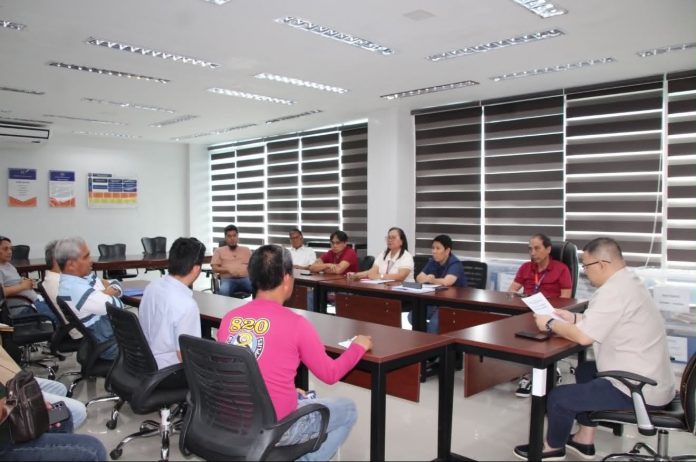
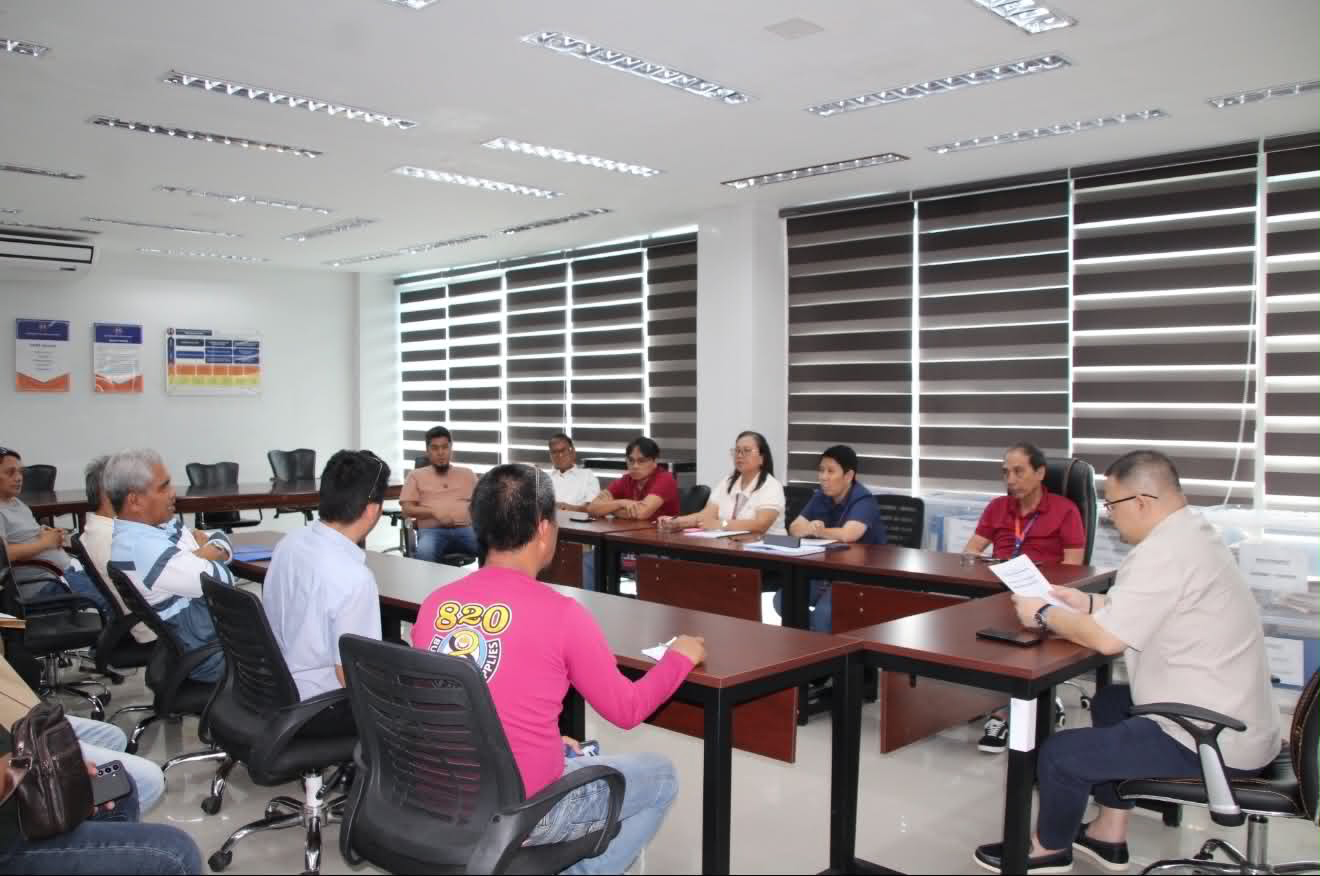
TACLOBAN CITY — The Department of Public Works and Highways (DPWH) Leyte 2nd District Engineering Office (DEO) has intensified coordination with contractors to address implementation concerns and ensure the timely completion of infrastructure projects in the district.
Newly appointed District Engineer Leandro Visorde emphasized the need for stronger collaboration between the DPWH and its partner contractors during a coordination meeting held Aug. 5 in MacArthur, Leyte.
Visorde urged contractors to strictly adhere to approved plans and specifications, meet project schedules, and maintain quality workmanship, stressing that timely project completion is essential to ensure that government-funded infrastructure benefits the communities they are intended to serve.
The meeting provided an opportunity for the district office and contractors to discuss the status of ongoing and upcoming projects, contract compliance, workplace safety, and other concerns that could affect project implementation.
Construction Section Chief Engr. Lorie Bel Alicando stressed the importance of regular coordination and close monitoring of project accomplishments to immediately address problems and prevent delays.
Alicando said sustained communication between the district office and contractors would help ensure that projects remain on schedule and comply with approved plans, technical specifications, and other government requirements.
Contractors expressed their support for the district office’s initiatives and committed to working closely with DPWH officials to ensure that projects are implemented efficiently, safely, and in accordance with government standards.
The coordination meeting underscored the Leyte 2nd DEO’s commitment to strengthening its partnership with contractors and other stakeholders in delivering safe, quality, and timely infrastructure projects that contribute to the development of Leyte’s Second District.