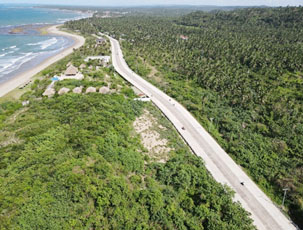
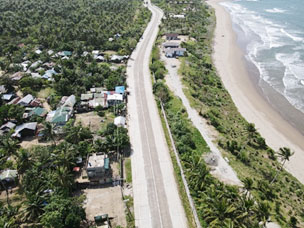
MANILA-The United States and the Philippines are proud to announce their plans to accelerate the full implementation of the Enhanced Defense Cooperation Agreement (EDCA) with the agreement to designate four new Agreed Locations in strategic areas of the country and the substantial completion of the projects in the existing five Agreed Locations.
The EDCA is a key pillar of the U.S.-Philippine Alliance, which supports combined training, exercises, and interoperability between our forces. Expansion of the EDCA will make our alliance stronger and more resilient, and will accelerate modernization of our combined military capabilities.
The addition of these new EDCA locations will allow more rapid support for humanitarian and climate-related disasters in the Philippines, and respond to other shared challenges.
The United States has allocated over $82 million toward infrastructure investments at the existing five sites under the EDCA, and is proud that these investments are supporting economic growth and job creation in local Philippine communities.
The United States and the Philippines have committed to move quickly in agreeing to the necessary plans and investments for the new and existing EDCA locations.
The U.S.-Philippine Alliance has stood the test of time and remains ironclad. We look forward to the opportunities these new sites will create to expand our cooperation together. (PR)
One consumer product from the “Tree of Life” called coconut (Cocos nucifera L.) is in the pipeline for commercialization. The proposed product is coco juice blended with tropical fruits and vegetables which could be exported globally due to the high demand of healthier products. Indeed, the ‘new’ product will boost the Coconut Industry of the country, but a manna from heaven for the coco farmers.
The government has tasked the Philippine Center for Postharvest Development and Mechanization (PhilMech), to develop a technology for coconut farmers to venture into value added products like the fruit- and veggie-blended coconut juice drink.
The common practice among farmers engaged in copra making, is just to throw away the coconut water when farmers extract coconut meat for drying to produce copra for drying, which are then sold to oil mills to produce coconut oil. The gallons of coconut water wasted is the main component in producing value-added coco juice blended with preferably tropical fruits and vegetables to improve the family income.
The PHilMech has a parallel project which uses coconut water to produce coconut beverage it has developed for the new product, they hope to introduce to the coconut cooperatives as a small scale enterprize.
Under RA 11524 or the Coconut Farmers and Industry Trust Fund Act, PhilMech will establish shared facilities for coconut farmers cooperative and local government units (LGUs). The shared facilities will have various equipment that will allow coco farmers to enter value chain of the commodity. The PhilMech’s coconut water processing technology, using the Greenhouse Solar Tunnel Dryer (GSTD) can process up to 2,000 nuts, approximately 2,000 bottles (350 ml) coconut water per day. Meanwhile the MCSTD can dry coconut meat using heat from the sun, while producing white copra and protecting the product from contamination. White copra has a higher market value.
MY COMMENT:
Coming from the country’s high copra-producing region (Eastern Visayas), I have been a witness to the wastage of coconut water every copra making months. This is cold cash thrown as waste, but for a small percentage of the coco farmers population keeping few liters of the said water to be aged into vinegar. I could not blame the lowly coconut farmers for their ignorance on the many uses of coco water. The devolving of the Department of Agriculture (DA) Technician unit to the LGU is the culprit for want of technicians to visit farms and dialogue with farmers about modernized farming methods. This link mechanism with the farmers is now manned by unqualified staff with only political patronage/eligibility as qualification to the MENRO, CENRO or PENRO workforce!
I have written in this column suggesting that LGUs with large coconut plantation, to put up coconut water depository cum collecting stations to be collected by one private firm dealing coconut water processing – a clear additional income for the farming families in Leyte province, specially the town of Burauen.
ooo000ooo NEXT TOPIC : “Rice and Corn Importation Inevitable” SHARE S & T THOUGHTS through E-mail: drpacjr@yahoo.com.
“A PROPHET is not without honor except in his native place and among his own kin and in his own house.” (Mk 6,4) Famous words of Christ that tell us that we should be wary of our tendency to take the things of God for granted, especially nowadays when we can feel we can depend on God less and less because we happen to know more, do more and achieve more.
This is a very common danger to all of us, and is at bottom a result of letting ourselves be simply guided by our senses, or feelings and our other ways of human estimation, without the guidance of our faith that should lead us to develop the appropriate piety.
We have to be more aware of this danger of over-familiarity and install the necessary defenses against it. More than that, we have to aggressively cultivate the art of always being amazed at God and at all his works. That should be the proper state for us to be in.
Yes, we should cultivate the attitude and habit of always being amazed at everything since everything in the end comes from God and is meant to lead us to God and to glorify him.
We always tend to believe that we can manage to live our life and to handle all kinds of situations just by relying on our own powers, practically denying the fact that our powers come from God and are supposed to be a participation of God’s powers. This is especially so since we now appear to be gaining more power through our inventions and creations.
We obviously have to do our part. In fact, we have to make full use of everything we have got to resolve whatever problems, difficulties, issues, etc., we have in this life. Yes, we have to be very realistic and practical about everything. But we should not forget that we always need God.
Even in our small, usual and very manageable concerns, we should go and be with God first before we attempt to tackle them. We have to remember that everything depends on God, and also in a certain sense, everything also depends on us. It’s a 100%-100% proposition.
This does not mean that we are getting too dependent on him. Truth is, we actually depend on him for everything even if we also should fully use whatever capabilities we have. Yes, we enjoy a freedom that enables us to have a certain autonomy but never a total independence or separation from God.
We have to remember that being God’s creatures who have been created in his image and likeness, we are meant to live our whole life with him. Our relationship with him is not that of a parasite to a host, but rather that of a child to his father. That is our undeniable and inalienable lineage. God and us are meant to be together always. We are meant to share the same life and nature, since God made us his image and likeness.
We have to understand, though, that this abiding state of amazement that we should try to develop is simply not a matter of sensations. Of course, it would be good if we can always feel amazed and in awe. But given the limitations of our bodily organism, we cannot expect that to happen all the time.
The ideal abiding state of amazement is more a matter of conviction, of something spiritual, moral and supernatural. It should be the result of grace that is corresponded to generously and heroically by us.
Before the advent of computer technology, children and young people were into beneficial games that developed their physical strength, social well-being, and mental alertness, not to mention the economical side of those games. But when computerized gadgets came, these youngsters became glued to these things, depriving themselves of those benefits derived from indigenous toys and games.
And so, as digital technology advanced further, many of these kids had even developed addictions to gadgets. Some of them became frail physically, some had ruined their eyes, and others had developed stomach ulcers from skipping their meals or not eating on time. Not only these but some had become socially aloof, distant from loved ones, and absent-minded as though they live in a different world. At times, you can’t nicely talk to them since they tend to be irritable, in deep thought, or unwilling to entertain a conversation.
These are not good indicators to see upon our future citizens and leaders. These are, in fact, signs of societal decadence. We do not want to have future citizens who are physically frail, mentally unfit, loners and unfriendly, and are glued to gadgets since they can never satisfactorily carry out their tasks, make the right decisions, properly relate to other people, and be productive in their fields of assignment. It is for this reason that efforts to rescue them from gadget addiction should be put in place, even if it means putting them in rehabilitation centers. We cannot afford to lose our future generation by allowing them to be devoured by modern gadgetry, their time wasted, and their health ruined.
While attempts to sort of rehabilitate them may prove useful, some alternatives should likewise be introduced. That’s where the need for a reintroduction of those old games and toys comes in. Yes, they must be good alternatives to reckon with. There are some others, of course, but since these are youngsters who are still fond of playing, games should form part of these options. If it’s done in compulsory manners like required school activities, these youths would have no choice but to engage in said games. In the process, and in the long run, they will learn to appreciate them, and eventually play these games at will.
These toys and games are called by many names in various localities—traditional, ethnic, cultural, indigenous, etc. And, believe me, there are so many. That is why youngsters of today will never find them boring to play with since they vary a lot. And what’s more, they can be had for free. One may just ask them from farmers, or from those who live in rural areas since these toys are mostly sourced from farmlands. One may take time to create them, though, to get them ready for fun games. But once created, many of these toys can last for some time despite repeated use.
I can enumerate what I know about indigenous toys. I can make them myself, and play with them. I just know how, knowing that I belong to that older generation before the advent of gadgets. I know the rules of the games, too. If only to save our young people from gadget addiction.
From having had a pattern based on yearly trends, the weather nowadays has seemingly become unpredictable so people with scheduled activities suddenly end up frustrated because they can’t push through with their appointments.
Last Thursday, the sun finally showed up after days and weeks of hiding behind the profusely weeping clouds. This held true in many parts of Leyte and Samar, but when night came, heavy downpours came back, the rains extending into the stretch of the night, thus sort of reviving the prolonged rainy days that had characterized the recent weather system.
In cases like these, the sectors that are directly and heavily affected are those whose occupations are at the mercy of weather conditions. Foremost among them are the farmers whose plants and crops may not survive through continuous rains, especially if they get submerged in floodwaters. While some crops prove non-sensitive to rain, others can’t stand being soaked in water for a long time, just like the root crop gabi and some others. With their crops destroyed, farmers lose a lot.
The fishermen also belong to these sectors who depend on good weather conditions for survival. Under the cold, rainy weather, they can’t take to the sea, especially those with little bancas, or else they would suffer from cold-related ailments. Also, there seemingly are marine creatures that tend to go deeper into the ocean amid rainfall and are then impossible to catch. That’s why some fishermen just do not go out to sea when rains are frequent.
Good for those whose livelihoods can go on regardless of the weather systems outside. Teachers, office workers, and store owners are but a few examples of these people. It pays to be working away from too much exposure to the sun and rain, as they can proceed with life’s activities almost unaffected. Good for them.
ORMOC CITY-The newly constructed two-storey public market building in Lope de Vega, Northern Samar was formally inaugurated on Thursday (Feb. 2) in a simple ceremony.
On that same day, a newly-procured ambulance by the local government unit was also blessed.
The construction of the market building started on April 6 of last year and was completed on December 26 of the same year, municipal information officer Francine Acasia said.
After the turnover and blessing of the new public market, the blessing of the new municipal ambulance followed.
The new ambulance is fully equipped with medical equipment during response and rescue operations.
Mayor Bobby Saludario, in a statement, said that the new market facility is expected to help boost the economy of the town.
“They provide increased livelihood opportunities and marketing services, and are usually standard barometers for the level of development of Local governments,” he said.