TACLOBAN CITY-The construction of the phase II of the Samar Pacific Coastal Road Project has received an initial green light from the South Korean government.
On October 25, representatives from the Export-Import Bank of Korea made their ‘appraisal mission’ regarding possible funding and feasibility of the road project.
The South Korean delegation, as part of their appraisal mission, carried out a project site survey and assessment, report from the provincial information office said.
“They also discussed with local government officials significant information involving the project such as scope of work, implementation plan, terms and conditions, cost estimates, among others,” it added.
The group, accompanied by local personnel of the Department of Public Works and Highways, was welcomed by Governor Edwin Ongchuan and Rep. Harris Ongchuan.
To recall, the South Korean government through its Export-Import Bank of Korean, funded the construction of the first phase of the Samar Pacific Coastal Road project at a cost of P1.03 billion.
The 11.6 kms road and bridge project was formally inaugurated by President Marcos on July 14, 2023 connecting the coastal towns of Catubig, Palapag and Laoang.
It started in 2018 under the ‘Build Build Build’ program of the Duterte administration.
The proposed second phase of the project, dubbed as part of the ‘Build Better More’ project under the current Marcos administration, will involve the construction of road and bridge connecting the towns of Laoang and Palapag covering 15 kms.
It involves the construction of an 800-meter bridge, to be named as Laoang Bridge 2, connecting the village of Talisay to the Laoang población, as well as a 605-meter bridge known as Laoang Bridge 3, connecting the villages of Calamotan to Pangpang, Palapag.
Gov. Ongchuan earlier said that the road and bridge projects will not only help eradicate the province’s insurgency problem but more so, open the opportunities for economic development in the areas traversing the projects. (ROEL T.AMAZONA with JOEY A. GABIETA)
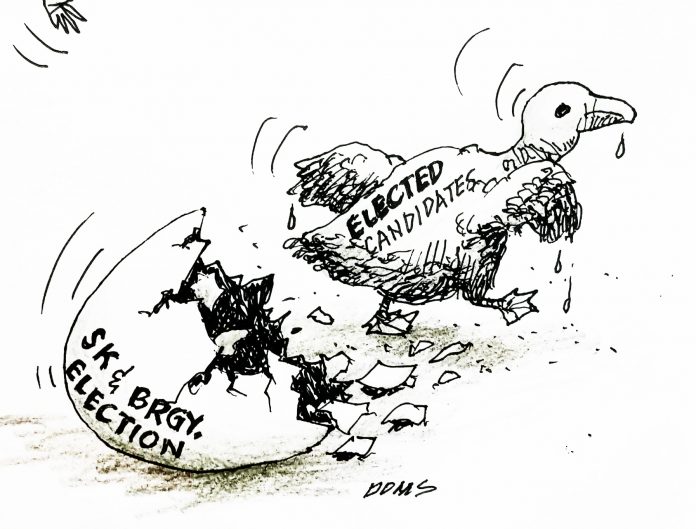
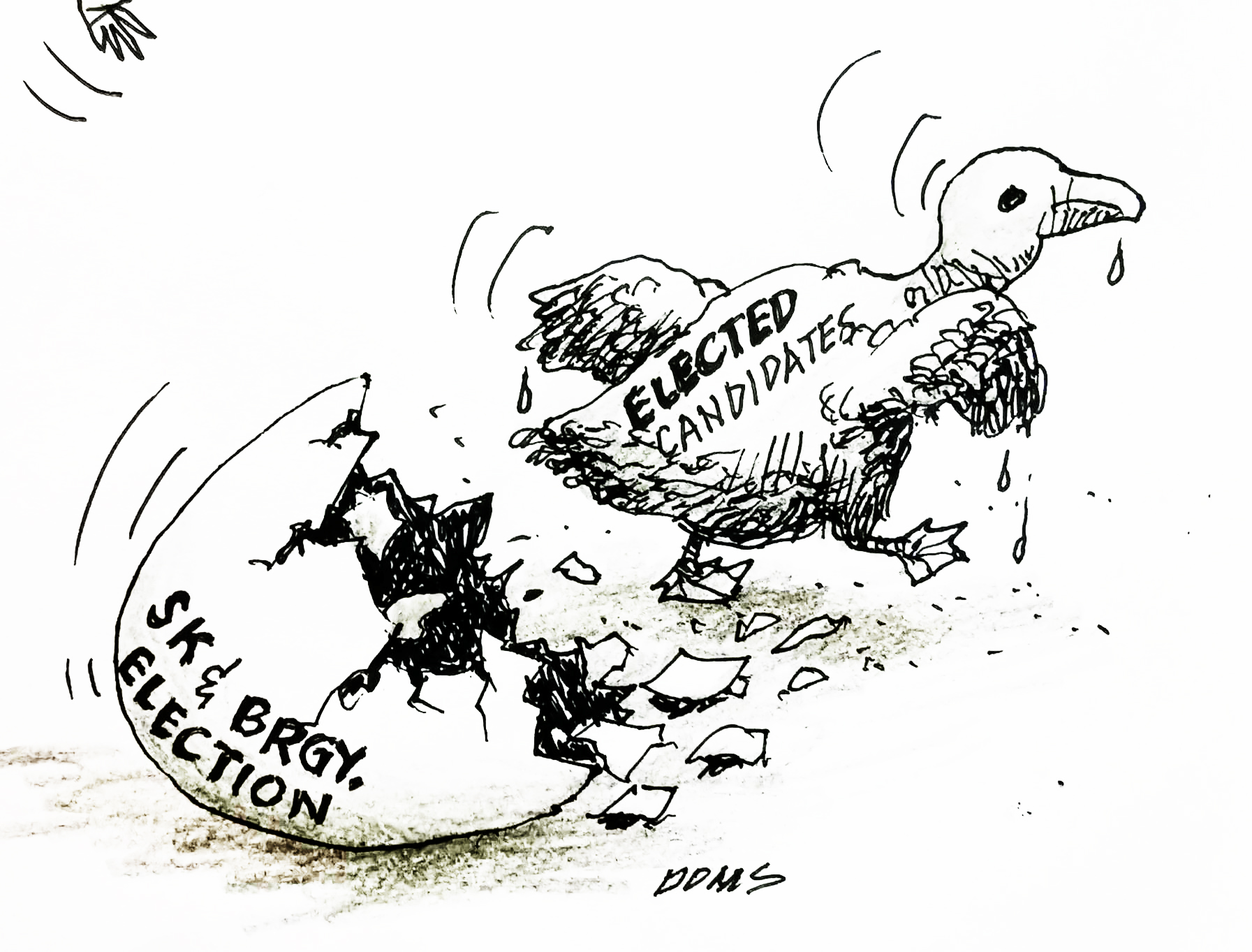
The recently concluded Philippine Sangguniang Kabataan (SK) and barangay elections have finally come to an end, marking a significant moment in the country’s democratic process. These elections serve as a platform for the youth to exercise their right to vote and participate in local governance, and the outcome holds implications for the nation’s future.
The SK elections allow young individuals to have a voice in their respective barangays, the smallest administrative division in the Philippines. By participating in the electoral process, the youth can actively contribute to decision-making that directly impacts their communities. This inclusion of younger generations at the grassroots level fosters a sense of responsibility and empowerment, allowing them to shape their future.
Moreover, the SK elections also serve as a training ground for future leaders and politicians. The youth participating in these elections gain valuable experience in campaign management, public speaking, and constituency engagement. Through these early encounters with politics, aspiring young leaders can develop their skills and principles, preparing themselves for future roles in local and national governance. This signifies the importance of grooming a new generation of leaders who can address the unique challenges the country faces.
The successful completion of the SK and barangay elections signifies a significant step towards strengthening democracy in the Philippines. These elections demonstrate the nation’s commitment to providing a level playing field for all citizens to exercise their right to vote and choose their leaders. The generally peaceful and orderly conduct of the elections highlights the development of transparent electoral processes. A well-functioning democratic system is not only vital for national stability but also for attracting investments and promoting economic growth.
We hope that the SK and barangay elections have left a lasting impact on the country’s democratic framework. The significance of these elections is crucial for comprehending the broader implications they hold for the nation. The nurturing of future leaders and the strengthening of democracy are all essential components that contribute to the nation’s progress. Congratulations to all the winners who aspired to various positions.
The Israeli-Palestinian conflict has been marked by decades of violence and suffering, with Palestinian civilians being the most affected. As informed citizens, it is crucial to critically analyze the parties involved and make an informed decision regarding support. If people could not stand with Israel, at least they should stand with Palestinian civilians instead of backing Hamas.
To fully comprehend the situation, we should acknowledge the complexity of the Israeli-Palestinian conflict. This dispute calls for a thoughtful and measured approach rooted in historical, political, and religious complexities. Recognizing the suffering endured by Palestinian civilians under Israeli restrictions does not necessitate supporting Hamas, as the latter’s ideology and actions reflect extremism and violence.
Hamas, considered a terrorist organization by many nations, including the United States and the European Union, has been a dominant factor in the conflict. It advocates for the destruction of Israel, undermining the prospects of a peaceful resolution. Hamas’ actions, such as indiscriminate rocket attacks on civilian areas, human rights abuses, and its recruitment of child soldiers, demonstrate its disregard for the well-being of Palestinian civilians.
Supporting Palestinian civilians does not condone Hamas’ violent methods. Rather, it entails recognizing their rights to freedom, justice, and self-determination. Palestinians, especially those residing in the Gaza Strip, face dire socio-economic conditions due to continuous conflict and Israeli-imposed restrictions. By prioritizing their needs and advocating for a just and lasting peace, individuals can contribute to the well-being and rights of Palestinian civilians.
Supporting Palestinian civilians necessitates a push for political dialogue and a diplomatic resolution to the conflict. Hamas’ refusal to recognize Israel’s right to exist and engage in peaceful negotiations has impeded any potential progress. Encouraging dialogue, recognition of international legitimacy, and a commitment to non-violence among parties involved can help pave the way for a lasting resolution.
Promoting humanitarian aid and development initiatives is crucial to alleviating the suffering of Palestinian civilians caught in the crossfire. Emphasizing access to education, healthcare, housing, and economic opportunities can help restore dignity and enhance peaceful coexistence. By supporting such initiatives, countries can work towards a more equitable and prosperous future for all Palestinians.
The international community, particularly influential actors such as the United States and the European Union, should prioritize supporting Palestinian civilians while exerting pressure on Hamas to renounce violence and engage in constructive dialogue. These entities can play a pivotal role in fostering a just solution by engaging in diplomatic efforts and providing avenues for peaceful negotiations. Israel is just compelled to impose restrictions since, through the years, Palestinian militants have been brutally attacking them when the chance comes. Jews also have the right and duty to protect themselves, making sure that violent attacks would not anymore happen.
Yes, stand with noncombatant Palestinian civilians, not with Hamas, in the Israeli-Palestinian conflict if you think you cannot side with Israel. Supporting Palestinians does not endorse violence or extremism but rather acknowledges their rights, recognizes their suffering, and advocates for diplomatic solutions, humanitarian approaches, and meaningful international engagement. By doing so, we can contribute to a more balanced understanding of the conflict and work toward a just and lasting peace that respects the rights and aspirations of all parties involved.
IF we are guided by our Christian faith, we know that our life here on earth is not our definitive life. We are meant to pursue our ultimate definitive life with God in heaven. Thus, our life here on earth can only be marked by the indispensable virtue of hope which is first of all a gift from God.
We are reminded of this truth of our faith in the Letter of St. Paul to the Romans. “We groan within ourselves, anticipating our adoption as the sons of God, and the redemption of our body,” he said. “For we have been saved by hope. But a hope which is seen is not hope. For when a man sees something, why would he hope? But since we hope for what we do not see, we wait with patience.” (8,23-25)
To be sure, this waiting with patience that hope involves is never a matter of doing nothing. It’s an active waiting filled with desires and deeds to do a lot of good. In other words, to fill our waiting, our patience, with love. Hope is nourished by love.
This love that nourishes our hope for heaven need not involve big, extraordinary challenges and trials. It can first of all involve the usual ordinary little things that we get involved in everyday. It’s precisely in taking care of the little things that can truly show how our love is genuine, and how our hope is nourished by it.
Yes, we can have a foretaste of heaven, our true definitive home, through the little things of each day. Impossible? Think again. It’s Christ who says it in so many words. “The Kingdom of heaven is like a mustard seed…The Kingdom of heaven is like a yeast…” (Lk 13,18-21)
We need to reconcile ourselves with this happy truth of our faith that we do not have to wait for extraordinary circumstances for us to reach heaven and even to have a taste of it even while still here on earth. With the little, ordinary things in our life, we have all the means and chances to have heaven within our reach.
The secret again is to do everything, no matter how little or insignificant it is in human terms, with love. That is, with the love of God, reflecting and channeling God’s abiding love for us in everything that we do, which usually are small and ordinary things in our day.
Sanctity, our ticket to heaven, certainly requires heroism, even to the point of martyrdom. But we can be sure that by being consistently loving in doing the little things of life, especially when they are hidden and unappreciated humanly, we would already be very heroic indeed.
The Book of Sirach says: “He who despises small things will fail little by little.” (19,1) We have to be most careful because the neglect of little things can easily lull us to complacency, or to think that nothing is wrong and that everything is just fine.
We obviously have to contend with many obstacles along the way. We can tend to be narrow-minded and short-sighted, full of improper biases and attachments. We easily make rash judgments and are often at the mercy of our emotions and passions, putting our reason and faith to sleep.
What we have to do is to learn to find Christ in the little things which comprise most of our day, if not of our whole life. Another way of saying it is to learn to refer everything to Christ, no matter how little or insignificant it is.
This is how we nourish our hope!
CLEMELLE L. MONTALLANA,DM, CESE
ASSOCIATE PROFESSOR III
CLEMELLE L. MONTALLANA,DM, CESE ASSOCIATE PROFESSOR III
Vote buying in elections is a persistent and pervasive issue that has an impact on the level of democracy and governance in the nation. Vote buying, in the opinion of some academics, dates back to the colonial era, when the American and Spanish monarchies utilized coercion and patronage to win the support of the populace’s elites and masses.
However, after democracy was restored in 1986 and political parties and candidates began to compete for votes in a widely dispersed and individualized electoral system, vote buying increased in frequency and became more organized.
Some of the historical factors that have contributed to the persistence of vote buying in the Philippines are:
• Poverty and inequality: Many Filipino voters are poor and vulnerable to economic inducements, especially during times of crisis or hardship. Vote buying provides them with a short-term relief or benefit, while also reinforcing their dependence on political patrons.
• Patronage politics: Philippine politics is dominated by local clans, dynasties, and machines that rely on clientelist networks and personal loyalties to mobilize support. Vote buying is one of the ways that these political actors maintain their power and influence, by rewarding their followers and enticing new ones.
• Weak enforcement of laws: The legal framework against vote buying is inadequate and ineffective, as it is often ignored or circumvented by both the perpetrators and the enforcers. The Commission on Elections (Comelec) lacks the resources and capacity to monitor and prosecute vote buying cases, while the courts are slow and lenient in delivering justice.
• Lack of voter education: Many Filipino voters are not well-informed or aware of their rights and responsibilities as citizens, or of the consequences of vote buying for their welfare and development. They also lack access to alternative sources of information or platforms for participation, which would enable them to make informed and independent choices.
These factors have created a culture of vote buying that is deeply entrenched and difficult to eradicate. However, there have been some efforts and initiatives to combat vote buying in the Philippines, such as:
• Anti-vote buying campaign: The Comelec has launched a Committee on Kontra Bigay, an inter-agency task force that aims to prevent and reduce vote buying incidents through information dissemination, complaint handling, investigation, and prosecution.
• Civil society advocacy: Various civil society organizations have been active in promoting voter education, empowerment, and vigilance, as well as monitoring and reporting vote buying activities. Some examples are Namfrel, PPCRV, Lente, Kontra Daya, and Bantay Balota.
• Social media mobilization: Social media platforms have been used by some citizens and groups to expose and denounce vote buying schemes, as well as to encourage others to reject or resist them. Some examples are #NoToVoteBuying, #IwasanAngBotohan, and #NotForSale.
These efforts have shown some positive results in raising awareness and reducing tolerance for vote buying in the Philippines. However, they also face some challenges and limitations, such as:
• Lack of coordination and cooperation: The different actors involved in combating vote buying have different agendas, strategies, and capacities, which may lead to duplication, inconsistency, or conflict. There is a need for more collaboration and integration among them to achieve greater impact.
• Resistance and backlash: The political actors who benefit from vote buying have various means to counter or undermine the anti-vote buying campaign, such as intimidation, harassment, bribery, or manipulation. They also have a strong hold on their supporters and communities, which makes it hard to change their behavior or attitude.
• Sustainability and scalability: The anti-vote buying campaign requires a lot of resources, commitment, and participation from various stakeholders, which may not be available or sustained over time. It also needs to reach a critical mass of voters who are willing and able to reject vote buying, which may not be feasible or realistic given the social and political context.
In conclusion, vote buying in Philippine elections is a complex and persistent problem that has historical roots and contemporary manifestations. It poses a serious threat to the integrity and quality of democracy and governance in the country. However, there are also some efforts and initiatives that aim to prevent or reduce vote buying through various means. These efforts need to be supported and strengthened by all concerned parties, especially the voters themselves. Only then can the Philippines achieve a truly free and fair electoral system that reflects the genuine will of the people.
So have we perfected the art of vote buying in the Philippines? The answer is yes!
Not just memory but honor is given by the living for all dear departed every this day of the year. People pray for all the souls in purgatory in the faith that they will merit the heaven that Jesus promised. The assurance of salvation was made by Jesus for all the faithful who lived to follow His will. But man had fallen short of God’s grace by living in sin apart from the way that Jesus had shown. It is due to man’s sinful ways that we fall from the merit of the salvation that God promised us.
As death comes like a theft in the night, man is caught unprepared and unworthy of God’s promised salvation. In most cases, man is called by his creator without even being able to seek pardon and reconciliation. But even as man is caught in his sinful and unworthy state, there is hope of salvation for those who believe that there is purgatory where souls are purged and cleansed to be worthy of that promised place in God’s kingdom.
This is the reason why Catholics pray for their dead in the hope and faith that their dear departed will someday be cleansed to merit salvation. Prayers for the dead will earn merit for the souls of those who died unworthy of salvation. The visit to the graves of our dead during All Souls Day is done not just to remember our dead for the fond memories of their lives but more importantly, to pray so that someday they will merit salvation and be able to enter God’s kingdom.
It is truly a wonderful tradition that we set aside a special day every year for our dead. The day ought to be solemn as we remember our loved ones and pray for their salvation. We may not have been remembering them often as we should and pray for their salvation as often as we must but we have this day for that special intention. Apart from the flowers, candles and food that we prepare for our dead, we must above all be prepared in prayers and reflection for our dear departed.
In this year’s All Souls Day, we must therefore go back to the basics by giving more focus on the essentials of the celebration. As we visit the graves of our loved ones, we are expected to offer prayers for our dead. There are masses being celebrated in Catholic cemeteries aside from the prayers that families offer before the graves of their dear departed. Such is the most significant practices that we ought to do in our visit to the cemeteries.
If we can only focus on the essential practices for the salvation of our dead, there would be no problems for our peace officers who are made too busy maintaining public safety and order. The frenzy that most people do in the cemetery is the common causes of disorder that authorities want to minimize if not totally eliminate. The noisy revelry and partying with food and drinks in the cemetery had been the concern of public authorities who want to ensure peace and order and public health. We must try going back to the basics by offering prayers by the family and loved ones of those who had been called by God to the great beyond. comments to alellema@yahoo.com