CATARMAN, Northern Samar– Three times in a row, the provincial government of Northern Samar again received the prestigious Gawad Kalasag Seal of Excellence Award in Disaster Risk Reduction and Management and Humanitarian Assistance – Local Disaster Risk Reduction and Management Councils and Offices (LDRRMCO) category for CY 2023.
The provincial government was declared as ‘fully compliant’ for adhering to the standards for the establishment and functionality of LDRRMCOs as prescribed by the Philippine DRRM law.
The Northern Samar PDRRMC and its PDRRMO was first recognized by the National Disaster Risk Reduction Council (NDRRMC) and the Regional DRRMC in 2021 and subsequently in 2022 for the province’s continuous efforts to attain risk resilience.
Chaired by Governor Edwin Ongchuan, the PDRRMC has continuously strived for excellence in disaster risk governance, to protect lives and properties, and to mitigate the effects of disasters especially in vulnerable communities.
The award was presented on December 20, 2023 in Palo, Leyte during the 23rd Gawad KALASAG Awarding Ceremony. (THE PROVINCIAL GOVERNEMNT OF NORTHERN SAMAR)
A thorough investigation is now being conducted by the Tacloban city police on the discovery of a dead body found inside an abandoned container van on December 22.
The corpse of a still unidentified corpse of a man was found in the container van in Barangay 95-A, Caibaan district.
The victim was described as between the age of 50-60 years old and believed to be 5”2 inches in height.
The police said that the cadaver was discovered by Jonar Cabujat, 25, and a resident of the said village.
Cabujat told police that he was stunned to see a man who was not moving and lying face up under the said container van parked at the roadside.
He immediately called the barangay officials who in turn, asked for police assistance.
The members of the scene of the crime operatives (SOCO) were requested to process the scene which found no foul play on the death of the man and presumed that he died of a natural cause.
The victim’s cadaver was immediately brought to a local funeral parlor while waiting for the family and relatives of the victim to fetch his cadaver. (ROBERT DEJON)
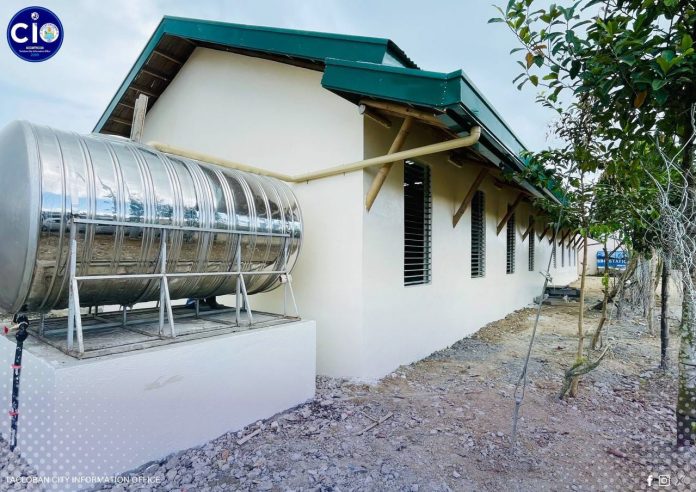
All Hands and Hearts and Streetlight Philippines, Inc. donated a two-classroom school building to St. Francis Village in Brgy.105. Bamboos were partly used in the construction of the facility. (TCIO)
All Hands and Hearts and Streetlight Philippines, Inc. donated a two-classroom school building to St. Francis Village in Brgy.105. Bamboos were partly used in the construction of the facility. (TCIO)
TACLOBAN CITY-In a gratifying gesture of generosity, non-governmental organizations All Hands and Hearts and Streetlight Philippines, Inc. brought an early Christmas cheer to learners and educators by officially handing over a two-classroom school building to St. Francis Elementary School, situated at Barangay 105 Suhi, St. Francis Village 2, this city on December 15, 2023.
This remarkable structure, constructed with Base Bahay’s Cement Bamboo Frame Technology, not only demonstrates cost efficiency but also stands resilient against earthquakes and typhoons.
The technology’s added benefit includes reduced heat retention during the day and rapid cooling at night, ensuring a comfortable learning environment for students.
Representing Tacloban City Mayor Alfred S. Romualdez, Councilor Elvira G. Casal graced the handover ceremony, joined by Streetlight Foundation founder Erlend Johannesen, AHAH Program Director Luisa Jabiles, barangay 105 chairperson Eutequio Balunan, a representative from DepEd Tacloban, dedicated NGO volunteers, as well as the teachers and eager pupils of St. Francis Elementary School. (TACLOBAN CITY INFORMATION OFFICE)
As we all know, the Christmas season in the country is an unparalleled extravaganza, boasting one of the world’s longest Yuletide celebrations. Embedded within the nation’s colorful cultural fabric, the Christmas aftermath is a time of reflection, gratitude, and unity. There are various aspects of the Philippines’ unique post-Christmas period, highlighting its impact on its people, economy, and indigenous customs.
After the joyous festivities, families and communities come together in reflection, focusing on faith, gratitude, and the core values associated with the season. It’s usually a time for bonding, or at times field trips for those who can afford it. Acts of charity and gift-giving continue beyond Christmas day, as individuals reach out to marginalized communities, embodying the spirit of compassion that characterizes the season.
As the celebrations wind down, Filipinos rush to engage in the thriving post-Christmas retail sector. The “Paskuhan” bazaars serve as the epicenter of shopping, offering a myriad of local products and handmade crafts. This stimulates the local economy, supporting small-scale entrepreneurs and traditional artisans. The influx of overseas Filipino workers returning home for the holidays provides an added boost to tourism, which has a trickle-down effect in terms of employment opportunities and income generation.
Influenced by Western customs, the aftermath of Christmas in the Philippines is also an occasion to celebrate some of the nation’s extant indigenous practices. The “Panunuluyan,” a traditional dramatization of Mary and Joseph’s search for shelter, highlights the deep-rooted indigenous storytelling heritage of the country. Various regions exhibit unique post-Christmas rituals. These culturally significant events preserve the nation’s rich heritage and foster a sense of pride and identity among Filipinos.
The aftermath of Christmas epitomizes the nation’s ability to intertwine traditions, faith, and community values into a vibrant cultural tapestry. With these unique facets that compose the Christmas aftermath in the Philippines, we get to witness the nation’s rich cultural heritage and its enduring spirit of unity and celebration.
As the year 2024 comes to unfold, we can make predictions based on current trends and emerging patterns, offering a glimpse into the potential landscapes of politics, healthcare, environmental sustainability, education, space exploration, and the global economy. The future as always holds an abundance of exciting possibilities and uncertainties, making it a compelling subject for analysis.
The year 2024 is expected to witness significant shifts globally. Geopolitical power dynamics may transform, driven by rising powers such as China and India. Additionally, the emergence of political leaders who prioritize climate change is likely to reshape international cooperation and policies. The advancement of technologies, such as blockchain, may enhance transparency and efficiency in electoral processes, potentially reducing instances of cyber meddling.
It’s a year that is poised to witness substantial breakthroughs in healthcare. Advancements in precision medicine, genomics, and artificial intelligence are likely to revolutionize diagnostics, personalized treatments, and the overall efficiency of healthcare systems. Concepts like telehealth and remote patient monitoring, accelerated by the COVID-19 pandemic, might become integral parts of healthcare delivery, providing improved accessibility and reducing costs.
The urgency to address climate change is projected to intensify by 2024. Policy frameworks, corporate commitments, and societal awareness are expected to drive a swift transition towards more sustainable practices. Renewable energy sources, such as solar and wind power, are forecasted to become increasingly predominant, leading to a reduction in greenhouse gas emissions. Furthermore, innovative solutions addressing waste management, deforestation, and biodiversity conservation may gain additional traction in this period.
Education is expected to undergo significant changes by 2024. Technological advancements, such as augmented reality and virtual reality, will enable immersive and interactive learning experiences, transcending traditional classroom settings. Personalized education, tailored to students’ learning styles and abilities, is likely to gain prominence. Additionally, the demand for reskilling and upskilling in response to technological advancements will drive the emergence of lifelong learning platforms to facilitate continued education and professional development.
By 2024, space exploration endeavors are projected to enter an exciting phase. With the increasing participation of private companies, space tourism might become a reality for the wealthy few. Governments and private enterprises are also anticipated to launch ambitious missions to the Moon, Mars, and other celestial bodies, paving the way for potential colonization efforts and deep-space mining. Furthermore, advancements in satellite technology may provide unprecedented opportunities for global telecommunications and enhanced Earth observation capabilities.
The global economy is expected to evolve significantly by 2024. The rise of new economic powers, sanctions, and evolving trade agreements, necessitated by changing geopolitical dynamics, may reshape global commerce. Moreover, automation and AI could alter workforce dynamics, leading to job displacement and the need for novel economic models, such as universal basic income or alternative ways of redefining work and economic value.
While these forecasts are based on current trends and patterns, countless unforeseen events can shape the course of history. Nonetheless, armed with an understanding of emerging trends across various domains, we can better prepare ourselves to adapt, innovate, and shape a desirable future.
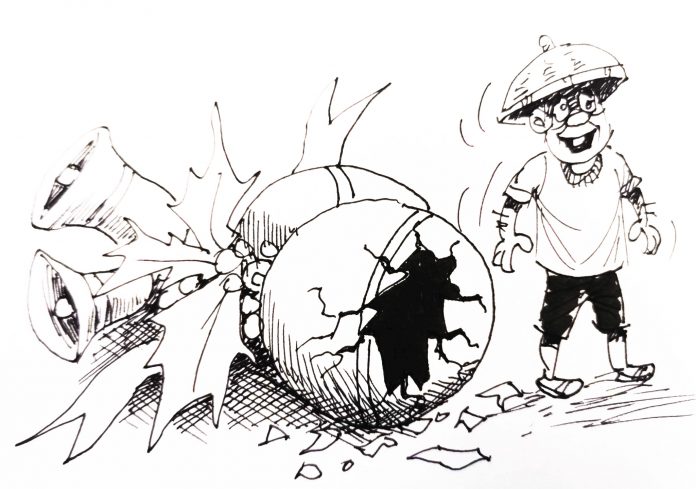
Incidents of firecracker accidents took a nosedive this yuletide according to police and hospital records. The observation is clearly conspicuous in contrast to previous celebrations where the people experience explosive evenings of firecracker frenzies. This, despite the subtler campaign against the use of firecrackers in the merrymaking on Christmas eve. It could be recalled that in previous years, the health department in coordination with other agencies like the police and the education department, had to go into an intensified campaign to remind people about the real hazards of firecrackers. The campaign this year was not that intensive but the effect was tremendous if the police and hospital records would be taken as reliable indicators.
Many people had long decided to forego with the non-essentials of the Christmas celebration due to the hard grind of poverty. The impoverished masses that had long been living in the quagmire of financial nothingness were taking the celebration in stride to the extreme extent of sleeping past Christmas midnight with empty stomachs. These are the people that could tell the drumbeaters of the government’s campaign against poverty about what is truly felt by the poor masses of the present economic condition. Surely, these poor masses could never profess what government had been showing in make-believe propaganda on national television, radio and print media about economic progress and development.
People went back to the basics not on account of any campaign to rid themselves of firecrackers. The riddance from firecrackers is neither a success in law enforcement banning the sale of the items. It too is not a result of the information drive that any government agency may have taken to prevent people from engaging in the dangerous frenzy of igniting firecrackers. If there was silence in the Christmas eve celebration, government efforts against firecrackers had less to do with it. While there might have been some contributory effects of the reminders and the threats about blasted body parts and imprisonment in case of apprehension.
The modest celebration of Christmas owes chiefly to the economic condition that people are in. Even the big businesses that rake in huge profits over the year could not afford to part of their gains to greet their customers and patrons with a yuletide present. There is scarcity of the usual least gifts that people get from stores and business establishments in past years. Even the ordinary calendar could hardly be availed by customers this time. Clearly, the economic condition, the true and real situation that is diametrically opposed to the one portrayed by government on national television ads, is the main Christmas silencer. comments to alellema@yahoo.com