26.6 C
Tacloban City
March 20, 2026 - Friday | 11:46 AM
Home Blog Page 1072

Insurance company continue to thrive despite pandemic

0
Ma. Agnes Costuna (center) of their new three-story building during its inauguration last June 2. Among those who graced the event was Leyte board member Ronan Christopher Reposar, representing Gov. Carlos Jericho ‘Icot’ Petilla.

PALO, Leyte– The insurance business apparently was not affected by the coronavirus disease (COVID-19) that saw business establishments in the country either closing or limiting their operations.

Ma. Agnes Costuna (center) of their new three-story building during its inauguration last June 2. Among those who graced the event was Leyte board member Ronan Christopher Reposar, representing Gov. Carlos Jericho ‘Icot’ Petilla.

This is the case of the Pacific Union Insurance Company (PUIC) which just inaugurated a new office last June 2, a testament that it continues to thrive despite of the pandemic.
Ma. Agnes Costuna, the branch manager, said that she is happy that their insurance company, particularly under her management, continues to attract more clients amidst the pandemic.

“We were not affected by the pandemic. In fact, our clients even grow. This could be due to the fact that the construction sector also continues even during the pandemic,” she said in an interview.

The PUIC caters mostly on constructors bond, surety bond for retention and warranty, biddings and engineering, judicial bonds, motor cars, and fire insurance.

At present, they have around 100 clients coming from different parts of the region, Costuna, who started to manage the PUIC since 2000, said.

Costuna said that the construction of their three-level building is an evidence how their company was not affected by the pandemic.

The building was constructed last February of this year and completed just last month.
Among the guests who graced the inauguration of their new office building were Tanauan Mayor Gina Merilo, and board member Ronan Christopher Reposar, who represented Leyte Governor Carlos Jericho ‘Icot’ Petilla.

In his message, Petilla lauded the PUIC as headed by Costuna for putting their office in Palo, particularly at the by-pass road.

The governor hope that the insurance company could serve more clients not only from Leyte but from other parts of the region.

He also vowed to support the PUIC.
(JOEY A. GABIETA/LIZBETH ANN A. ABELLA)

Float competition staged during the 1st Ibabao Festival

0
FLOAT COMPETITION WINNERS. The entry from San Jose town was declared as the winner of the float competition during the kickoff of the Ibabao Festival in Northern Samar held Sunday (June 4).

CATARMAN, Northern Samar– The municipality of San Jose, this province, bagged the first place award for the best float competition on the kick-off ceremony of the inaugural run of the Ibabao Festival on Sunday(June 4).

The float was designed to replicate a ship using materials available in the municipality and adorned with products that are abundant in the town’s farmlands and marine resources like seaweeds, sea cucumber, root crops, and vegetables.

They bested 18 other entries and won P300, 000 and a plaque from the provincial government.

Lope de Vega was named as 2nd place and received P200,000, while Catubig won 3rd place and received P100,000.

The float parade and competition is just one of the major activities for the celebration of the Ibabao Festival in relation to the 58th founding anniversary of the province.

“While we have lots of municipal festivals we never really had a provincial festival wherein we can provide Nortehanons venue and avenue for artistic and cultural engagement,” Gov. Edwin Ongchuan said during the opening ceremony.

“Hence as we celebrate the 58th founding anniversary of the province of Northern Samar this June, we are launching today the very first Ibabao Festival, a series of exciting events that will showcase the rich history, tourism, and cultural heritage of our province,” he added.

The festival of festivals is slated on June 18 participated by municipalities in the province.
Ongchuan said that they hope that this will raise cultural awareness, deeper appreciation of history, cultural heritage, and development of Northern Samar, instill pride, integrity, understanding, and unity among the present and future generations.
The festival was named after the ancient name of Northern Samar.
(ROEL T. AMAZONA)

Rising population, less food production

0

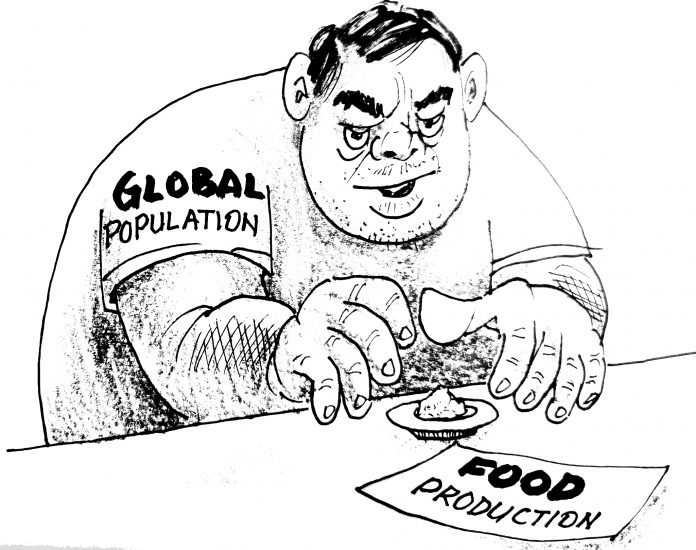
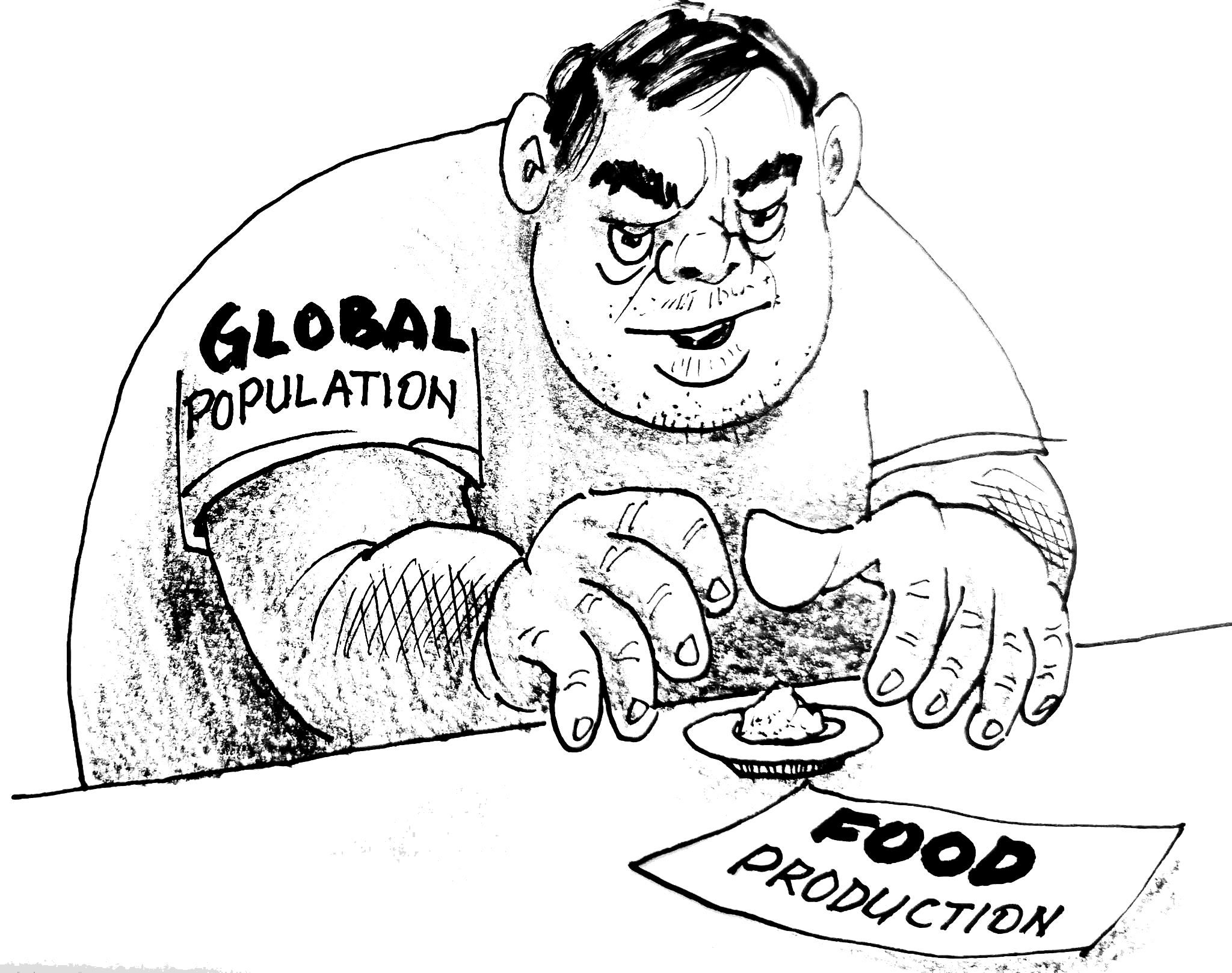
One of the key issues faced by the community of nations is an increase in the number of people, while the amount of food produced remains the same. As a result, there is less food available for each person, leading to food shortage. This problem is compounded by a variety of factors, making it an urgent issue that needs to be addressed through proper planning, distribution, and support.

The leading factor contributing to food shortage is increasing world population. The world’s population is expected to reach 9.7 billion by 2050, meaning that food production must increase by 70% to meet global food needs. While the food produced has increased in the past, it has not kept pace with the rising demand. As certain regions around the world have limited land available for farming, food production has become a major issue in places already experiencing food shortage.

Climate change is another factor, leading to droughts and flooding in various regions. Extreme weather conditions posed by climate change often lead to crop failure, thereby reducing the amount of food produced. As a result, food shortages arise, while food prices increase because of limited supply. In many developing countries, farmers depend on rainfall; climate change has made it more difficult for them to grow crops with the erratic seasons.

Food waste is also contributing to the problem of food shortage. According to the Food and Agriculture Organization (FAO), one-third of food produced yearly is thrown away or lost. In developed countries, consumers waste food by overbuying and not eating it before it expires. In developing countries, food is lost during production, transportation, and storage, meaning that it never makes it to the market. Food waste may not seem significant, but considering the economic, social, and environmental impacts of food production, waste reduction is crucial in ensuring that food shortages are addressed.

Appropriate education and public policy reforms must work in tandem to support the production of high-quality, healthy food. Governments across the world must work collaboratively to address the issue and provide vital support to the population to meet their dietary needs while providing solutions to this critical issue. Failure to take the necessary action may lead to devastating social and economic consequences, ignoring the urgency of such a problematic issue would not only be imprudent but also a failure of adequate leadership.

A tool to regulate

0
DOMS PAGLIAWAN

They call it artificial Intelligence (AI), a rapidly evolving technology which can simulate human cognitive abilities such as problem solving and pattern recognition. It has revolutionized countless industries like healthcare and finance, and has the potential to reshape our world in profound ways. However, AI technologies also have several negative consequences that cannot be ignored.

One of which is its potential to exploit security vulnerabilities. As a result of AI’s ubiquity, intelligent systems can be used maliciously by attackers to breach networks and steal information. Hackers can use programs that are powered by AI to circumvent network security measures and encrypt or steal data without detection. AI itself can quickly become vulnerable to hackers, creating a cycle that makes the breaching of sensitive information a constant threat.

Its potential to create a vicious cycle of inequality is another downside of AI. As AI systems gain automation and decision-making abilities, human jobs are being replaced with automation and AI-powered systems. This phenomenon could lead to the elimination of jobs such as manufacturing, fast food service, and other service jobs. Those displaced by these changes would have no other alternative than to retrain themselves in new areas of AI-based work. Not everyone has this luxury, however, which means that technological progress like AI can cause growing social disparities.

In the form of algorithms, AI has already demonstrated a tendency towards bias and discrimination. In most cases, algorithmic bias is unintentional. The problem arises because algorithms may be run on insufficient or biased data sets, leading to unequal conclusions. For example, an algorithm used to identify potential employees may be trained by biased data sets, resulting in a gender or race bias in its selection of candidates. This can result in an uneven playing field which may have long-term consequences for potential candidates.
Moreover, AI has raised numerous ethical and safety issues. AI systems can lead to the creation of autonomous weapons that require no human intervention as it makes its decision to commit absurdly. This lack of personal control could have disastrous consequences, as these types of weapons could potentially be deployed accidentally or against non-combatants during combat. In uncertain environments, losing control of AI-based systems could only exacerbate already-pathogenic conditions.

Reliance on intelligent systems and automation may further lead to a devaluation of human skills. As AI systems have more responsibility for numerous tasks, people are becoming progressively more detached from their positions, reducing their understanding of the manner by which critical activities are conducted. This disengagement could lead to fewer people learning trade skills, which could make it difficult to tackle emerging problems in technology.

The most severe ill-effect of AI could be its potential for misuse. AI systems have the potential for harm if they are employed in a malicious way. Combination with viruses such as malware or distributed denial-of-service attack (DDoS) could cause significant property damage, data theft, and other critical infrastructure outages. Malevolent actors could use AI as their primary tool for attacking the cyberworld without any human intervention and much greater levels of efficiency.

Although AI is a powerful and potentially world-changing technology, it is clear that ill-effects are possible given the current realities of rapid technological development. Careful study and governance of AI systems and infrastructure are critical to ensure that technological progress through AI systems are managed appropriately and do not have negative long-term consequences.

Outsmarting the know-it-all

0
FR. ROY CIMAGALA
FR. ROY CIMAGALA

WE should never dare to deceive God. In the gospel, there is a part where some leading Jews dared to trap Christ in his speech. (cfr. Mk 12,13-17) They asked if it was lawful to pay census tax to Caesar.

Of course, Christ knew what was behind that question. He therefore asked them to show him a denarius. And since the image of Caesar was in that coin, he just dismissed the whole issue by telling them, “Repay to Caesar what belongs to Caesar and to God what belongs to God.” So, their “gotcha” question completely backfired.

The same thing happened when they accused Christ of casting out demons by the power of the ruler of demons. (cfr. Mk 3,22) That’s when Christ pointed out the inconsistency in their logic. “How can Satan drive out Satan?” he asked. “If a kingdom is divided against itself, that kingdom cannot stand. If a house is divided against itself, that house cannot stand.” (Mk 3,23-25)

Clearly, when one is driven by unbelief and hatred, his reasoning can go off the rails, even the simplest of logic is thrown out. We need to do everything to always strengthen our belief in God, the very cause, origin and pattern of unity amid the vast and increasing diversity and variety of elements we can have in this world.

Nowadays, we are seeing the intriguing phenomenon of asserting what is right and moral as wrong and immoral, and vice-versa. What is clearly an expression of true freedom is now called slavery, and vice-versa. What should clearly be considered as taboo is now regarded as a human right. The forms of self-contradictions go on and on.

To correct this situation or, at least, to deal properly with it, we need to take care and strengthen our belief and our charity. We cannot take this duty for granted, especially now when the world is sinking in confusion and error as it distances itself farther from God.
In many places in the world today, people are now legalizing and inculturating outright immoralities and perversions, rationalizing them as part of their human rights, their freedom, or as a gesture of tolerance on a multiplicity of preferences, etc.

This is a big challenge for all Christian believers who want to be all-the-way consistent with their faith and with humanity itself, for the issues at hand are not just a matter of a particular religion but rather that of our common humanity.

And the Christian faith is not meant only for a few. It is for all, though it obviously is not meant to be imposed on everyone. It has to be accepted knowingly, freely, lovingly, that is, with charity.

Instead of responding to evil with evil, hatred with hatred, we should rather respond to evil with good, hatred with love. That way we turn things around, rather than plunge into the spiral of evil and hatred.

This was specifically articulated by St. Paul in his Letter to the Romans where he said: “Do not repay anyone evil for evil. Be careful to do what is right in the eyes of everyone. If it is possible, as far as it depends on you, live at peace with everyone. Do not take revenge, my dear friends, but leave room for God’s wrath, for it is written: ‘It is mine to avenge; I will repay,’ says the Lord. On the contrary: “If your enemy is hungry, feed him; if he is thirsty, give him something to drink. In doing this, you will heap burning coals on his head.” (Rom 12,17-20)

We have to try our best to erase whatever disbelief, doubt or skepticism we can have as we consider this teaching, since most likely, our first and spontaneous reaction to it would precisely be those reactions.

Masters’ show

0
AL ELLEMA
AL ELLEMA

Wealth and power great concealers of one’s true personality. These characteristics could be used to produce a make-believe image or situation too different from the real one. In many instances, the wealthy and powerful could easily conceal, chiefly their riches as they can make it appear that they are not wealthy and do not own the riches they really own. They have the capacity to publish tales on all media platforms to convince the public on how rich they really are. Even the records of their wealth are easily kept under fictitious names to ensure that they could not be held liable under the law.

What is appalling is their use of such tactics to evade their responsibilities, chief, from the payment of the right taxes. They too are able to get rid from paying the rightful wages and salaries of their workers. They have that ready excuse that they are incapable to giving what is due their workers for they are not earning enough from their businesses where their workers are working with their sweat and blood. They have the connection to influence the government offices tasked to enforce workers’ wages.

In times when workers are begging even for a meager increase in their wages, the rich would easily deny the workers’ plea and show them how they too are hard-up financially. With such story, workers could never expect any positive response to their asking. It would even make the workers believe the story of make-believe and pity their employers who are in dire financial condition, hoping that the condition will be true as told so that they may see the day when their employer are really in great sufferance.

Seldom do rich people who are greedy change their story that they are in poverty, poorer that they hapless workers. When such turnaround happens, the employer would give some pittance in the form of cheap tokens that they think will assuage their sufferings. The token in kind will be brandished to the public to show that the employers are good and kind to their workers.

But the kindness is just for show so that the public would praise the employers for their purported kindness. It would reinforce their tale that they are truly impoverished but are empathic to their workers’ needs. People would then retell their story are commend such employers who kept their secret of wealth and influence. These people have the temerity of using God in their show of piousness and religiosity. But before the eyes of the true omnipotent and omnipresent God, their acts are nothing but a master’s show.
comments to alellema@yahoo.com

Recent Posts

DALMACIO C. GRAFIL
PUBLISHER

ALMA GRAFIL
EDITOR-IN-CHIEF

ROMEO CEBREROS
OFFICE IN-CHARGE

OFFICE
BRGY. SONGCO, BORONGAN CITY

CONTACT NUMBERS
(055) 261 – 3319 | 0955 251 1533 | 0917 771 0320 | 0915 897 7439 | 0921 511 0010

DALMACIO C. GRAFIL
PUBLISHER

RICKY J. BAUTISTA
EDITOR

ALMA GRAFIL
BUS. MANAGER

OFFICE
RIZAL AVENUE, CATBALOGAN
(INFRONT OF FIRE DEPARTMENT, NEAR CITY HALL)

CONTACT NUMBERS
0917 771 0320 | 0915 897 7439 | 0921 511 0010

EMAIL
lsdaily2@yahoo.com

WEBSITE
www.issuu.com/samarweeklyexpress