MUTYA SA IBABAO 2023. Meg Ymata Di(center) of Lavezares was named as the Mutya sa Ibabao 2023 during the coronation on Saturday(June 17). Her court includes Emeliene Marie Rubenecia of Catarman and Kethleen Esquillo of Bobon who were adjudged as first and second runner-ups, respectively. (PHOTO COURTESY)
In Northern Samar
MUTYA SA IBABAO 2023. Meg Ymata Di(center) of Lavezares was named as the Mutya sa Ibabao 2023 during the coronation on Saturday(June 17). Her court includes Emeliene Marie Rubenecia of Catarman and Kethleen Esquillo of Bobon who were adjudged as first and second runner-ups, respectively. (PHOTO COURTESY)
CATARMAN, Northern Samar – The candidate from the town of Lavezares, Meg Ymata Di, was crowned as the first Mutya sa Ibabao in the pageant held Saturday (June 17) evening.
The Mutya San Ibabao is a rebranding of the previous beauty pageant, Miss Northern Samar, and was held to a sell-out crowd at the provincial covered court here.
Di, 19, a 2nd year BS Nursing student bested 19 other candidates who represented their respective towns at the provincial pageant.
Di also received two major awards, best in swimsuit and best in evening gown.
Governor Edwin Ongchuan crowned the new queen and also awarded her a cash prize worth P150,000.
Catarman’s bet, Emeliene Marie Rubenecia, placed first runner-up while the candidate from Bobon, Kathleen Esquillo, placed second runner-up.
The two beauty queens also received P100,000 and P75,000 cash prizes respectively.
Winners of special awards include Jayrene Zyrette Ibañez of San Vicente winning the Miss Congeniality award, and Jasmine Rose Robiños of Laoang who bagged the Miss Photogenic and the Best in Philippine Terno award.
Miss Laoang’s Philippine Terno designer, her fellow Laoangon Nilo Giray, received a cash prize of P10,000 from the province and another P15,000 from internationally acclaimed designer Puey Quiñones a one-year contract, allowance and board and lodging.
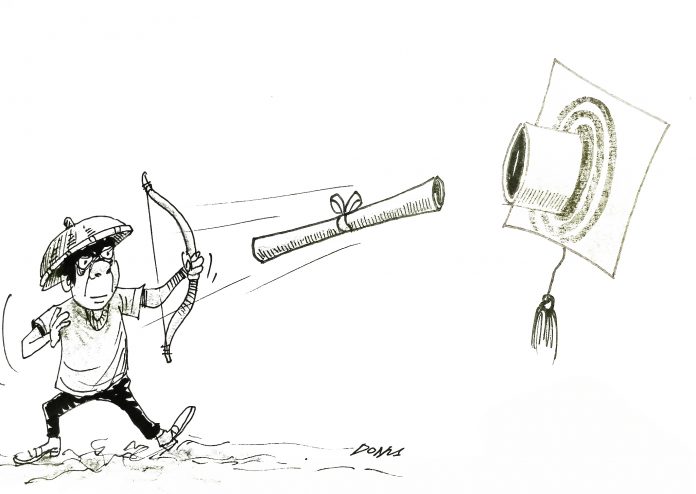
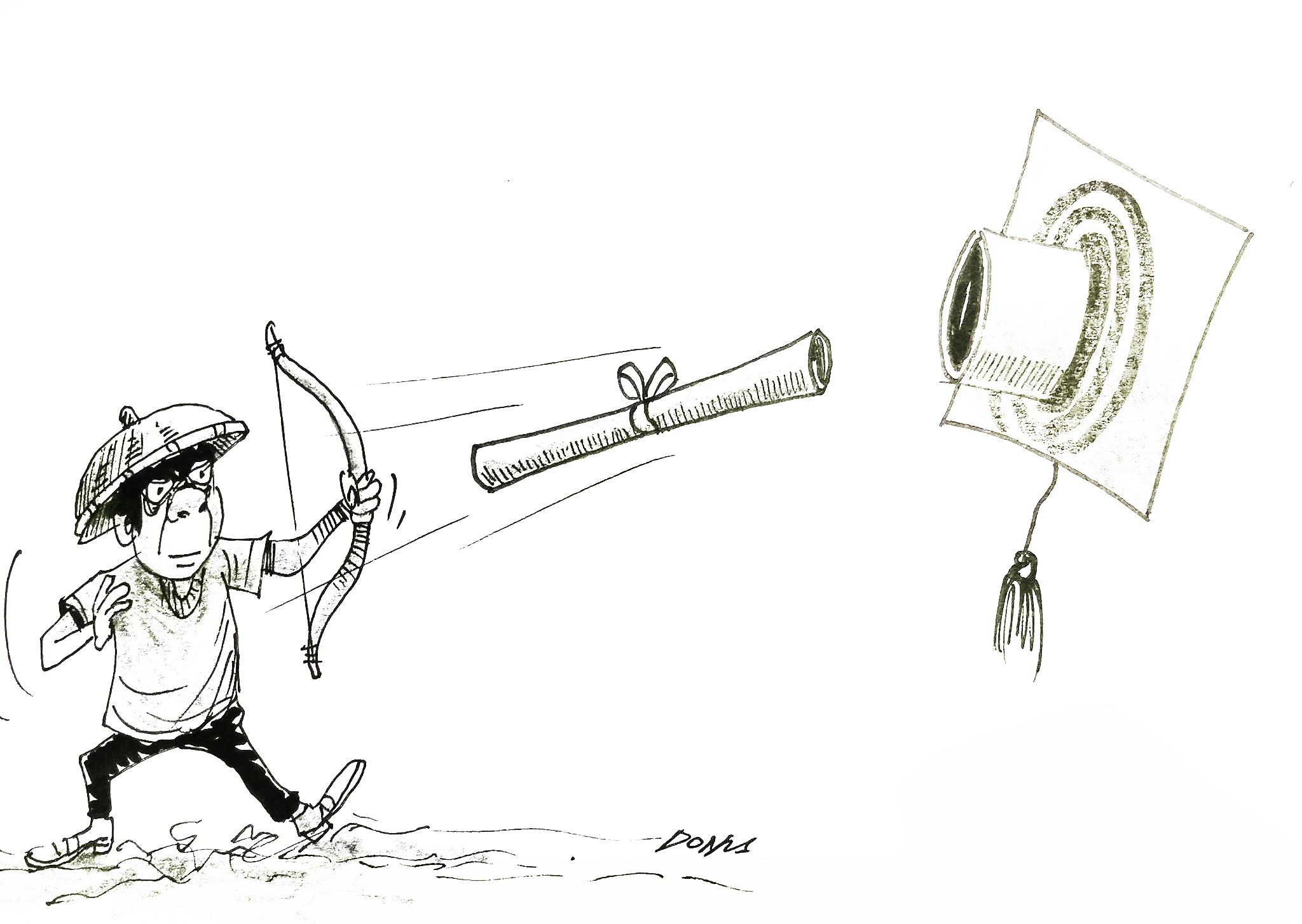
Once again, we are into this graduation season in the country, affording our parents, graduates, and even teachers with mixed emotions as they go through these rites called graduation exercises.
This is a season known as a significant event as it not only marks the end of a school year, but it also signifies a new beginning for our graduates. It is a time where students from all levels celebrate their achievements and are recognized for their hard work and dedication. From kindergarten to college level, graduation season is a time that Filipinos cherish and look forward to.
One of the highlights of graduation season is the graduation ceremony. It is an essential part of the celebration, where students, family, and friends gather in a hall or auditorium to witness the graduates receive their diplomas. Graduates wear traditional graduation attire such as caps and gowns, signifying their academic achievement. The ceremony also includes speeches from honored guests, valedictorians, and salutatorians, commemorating the students’ accomplishments.
Graduation day is also an opportunity for Filipinos to celebrate with their families and friends. It is common for graduates to host a graduation party or a simple get-together to celebrate their achievements. This celebration involves sumptuous food, pictures, and sometimes, performances from the graduates. Families and friends show their support by giving gifts and offering congratulations to the graduates.
Indeed, graduation is a milestone that marks the start of a new chapter. For some, it means gaining greater opportunities, while for others, it may symbolize a chance to give back to their communities. It is a time where individuals are filled with hope and excitement for their future endeavors; a time to celebrate academic achievements, to show appreciation to those who have supported and cheered them on, and to look at the future with optimism and determination.
Many people have already resorted to using Gcash for cashless transactions in today’s digital age as this platform offers convenience and ease of transaction to its users. However, like any other technology tool, GCash has its downsides as well. What are its main disadvantages, and how can these downsides be mitigated?
One big drawback of GCash transactions is the security risk involved. Because transactions happen purely online, without any physical exchange of cash, GCash users become vulnerable to cyberattacks and identity theft. Hackers might gain access to a user’s account and transfer funds without their consent. This issue can be mitigated by setting strong passwords, enabling two-factor authentication, and never sharing personal details with unauthorized persons.
Another downside of GCash is that some vendors do not accept it as a form of payment. GCash is still a relatively new platform in the Philippines, and so not all merchants are yet on board with it. This issue is likely to be resolved over time as more businesses become aware of the benefits of GCash for customers and merchants alike.
The unavailability of GCash top-up centers in certain areas also limits its usability. Top-up centers are required to put cash into one’s GCash account, and their location in some provinces and rural areas is limited. This leaves GCash users in these areas at a disadvantage, as they cannot use it as effectively. This can be mitigated if GCash partners with more businesses to act as top-up centers, or if it integrates with traditional banks to enable online top-up transfers.
GCash can also be limited by its daily transaction limits, which is Php 100,000 (about $2,034) per day and Php 500,000 ($10,170) per month. For users who need to transact larger sums, this may prove inconvenient. This drawback is necessary, however, to prevent its use in illegal activities such as money laundering, terrorism financing, and other fraudulent activities.
Moreover, GCash transactions rely on a stable internet connection to function properly. However, not all areas in the Philippines have reliable internet access, and this can limit its usability. In addition, if the system itself experiences technical downtime, users are left unable to transact. This can be mitigated by improving internet infrastructure and resolving technical issues as quickly as possible.
Lastly, GCash may not be equally accessible to all individuals, particularly those who are unbanked or have limited access to digital technologies. Some individuals may not have the technological know-how or devices required to use GCash, which limits its reach. In addition, some may not have the required identification documents to register for GCash accounts, creating a digital divide in society. This issue can be mitigated by improving digital literacy, providing hardware resources such as smartphones or tablets, and improving documentation accessibility.
GCash may have provided a convenient way to transact online, but with it comes some downsides. But there are ways to mitigate their impact. If these concerns are addressed appropriately, GCash could be a tool to speed up financial transactions, save time, and provide excellent value for users.
CLEMELLE L. MONTALLANA,DM, CESE ASSOCIATE PROFESSOR III
As this piece is being written , about a few hours ago a 6.2 Magnitude quake hits the Calatagan Batangas area, it reportedly rattles Luzon and aftershocks are coming in including the 2:24 PM which is on record at the Philvolcs website .
On 6 February 2023, at 04:17 TRT (01:17 UTC), a Mw 7.8 earthquake struck southern and central Turkey and northern and western Syria. The epicenter was 37 km (23 mi) west–northwest of Gaziantep.[2] The earthquake had a maximum Mercalli intensity of XII (Extreme) around the epicenter and in Antakya. It was followed by a Mw 7.7 earthquake at 13:24.[3] This earthquake was centered 95 km (59 mi) north-northeast from the first.
There was widespread damage and tens of thousands of fatalities. (Wikipedia )
The 1990 Luzon earthquake struck the island of Luzon in the Philippines at 4:26 p.m. on July 16 (PDT) or 3:26 p.m. (PST) with an estimated moment magnitude of 7.7 and a maximum Mercalli intensity of IX (Violent) and produced a 125 km-long ground rupture that stretched from Dingalan, Aurora to Kayapa, Nueva Vizcaya. The event was a result of strike-slip movements along the Philippine Fault and the Digdig Fault within the Philippine Fault System. The earthquake’s epicenter was near the town of Rizal, Nueva Ecija, northeast of Cabanatuan.[6] An estimated 1,621 people were killed,[7][8] most of the fatalities located in Central Luzon and the Cordillera region.
A magnitude 7.3 earthquake with an intensity of 8 struck Casiguran, Aurora at 4:19 a.m. on Aug. 2, 1968, the most severe and destructive experienced in the Philippines then, leaving “several millions of pesos worth of damage.” Phivolcs said 270 people were killed and 261 were injured as a result of the earthquake
In conclusion, earthquakes are deadly, destructive forces that mortals like us cannot withstand.
We are frequently reminded of both the BIG ONE and the BIGGER ONE. even if only to emphasize the earthquake’s potential for destruction.
Everyone is going about their daily lives unconcerned with the possibility that the Big and Bigger Ones are approaching any minute.
Earthquake drills and even fire drills are still just normal exercises that receive no attention because they are a common occurrence.
However, the earthquakes in Turkey and Syria are a horror into which I will not go because of how deadly and destructive they are.
WE have to know what pure love is since we are called to it. Christ described it in this way: “You have heard that it was said, you shall love your neighbor and hate your enemy. But I say to you, love your enemies and pray for those who persecute you, that you may be children of your heavenly Father, for he makes his sun rise on the bad and the good, and causes rain to fall on the just and the unjust.” (Mt 5,43-45)
We have to understand that love is something that we do and give gratuitously, without counting the cost nor expecting any reward. And it is made greater when it is given to someone whom we consider to be unlikeable or unlovable.
We have to be ready to develop this kind of love since it definitely requires a lot of sacrifice and self-denial. It requires more than our human resources and reasons for loving. It requires nothing less than God’s grace, our total identification with Christ who is the pattern of our humanity and the savior of our damaged humanity. Yes, only with God can we have this kind of love.
True love cannot and should not be quantified in terms of cost and reward. It is above all these considerations. It’s a purely spiritual operation that should not be spoiled by giving it some material and temporal value. It’s where we can approximate, keep and build up that dignity of being the image and likeness of God and adopted children of his. It’s how we become God-like.
This is the language of love that was first initiated by God to us and that has generated an endless cycle of love, of gratuitous self-giving to God and to one another. It is important that we feel this tremendous love of God for us so that we can return love with love, with God as the first object of our love and all the others as a consequence.
Let’s remember that God’s love for us accounts for everything that is good in us—our life, our talents and the many other endowments and blessings that we may not even realize. And more than this, God has given us his own self by making us his image and likeness, children of his, sharers of his divine life.
And even if we have damaged that original gift, God has given us his own Son who became man to save us. In other words, God has given us the greatest gift, no less than his own Son who, aside from becoming man like us, had to offer his life on the cross as a ransom for our sins.
We have to learn how to be most aware of this reality of God’s gift to us so that we can learn also how to give ourselves as a gift to him and to everybody else. That’s why Christ told us, “freely you have received, freely give.” (Mt 10,8)
Christ concretely expressed this way of gratuitous self-giving in the new commandment he gave us that we have to love one another as he himself has loved us. It’s a love, a self-giving that is completely gratuitous without counting the cost nor expecting any reward.
Everyday, we have to try to approximate this kind of love. We are actually given many opportunities to develop this kind of love in our daily routine as we meet all kinds of people and situations.
Designed to strengthen the Philippine coconut industry, the Landbank of the Philippines (LBP) has opened a new credit window for the coconut farmers.
The LBP initiative is implemented through the Landbank Coconut Farmers and Industry Development (CFID) Lending Program aimed to increase production in coconut producing municipalities of the country. The same program could be accessed by eligible coco farmers, cooperatives and associations, including the establishment of intercrops and poultry or livestock integration activities.
Under the said program, Landbank provides short-term and long-term loans of at least P1 million, with a fixed affordable interest rate of 2 percent annually. The state-run bank suggests that the individual coco famers can use the loan to increase production and working capital, to acquire machines and equipment, and establish needed facilities. While “coco cooperatives and associations, can also utilize the financing for relending and rediscounting to their members.”
The CFID Lending Program has a lifetime till 2071 “to accommodate as many players from the coconut industry as possible”, in a statement released by the Landbank management. Also, the same program “supports the CFID Plan headed by the Department of Agriculture (DA) and the Philippine Coconut Authority (PCA), which outlines the policies and directs the modernization of the coconut industry of the country.
MY COMMENT:
The Landbank’s CFID Lending Program is a welcomed development to the coconut producing farmers, especially in areas damage by super typhoon Yolanda like the Visayan region. In fact, the post typhoon trauma suffered by my fellow Bisayans lingered for years, the lowly coco farmers at total loss for their lost source of income. I hope that my Waray-Waray farmers will avail of the CFID Lending program of Landbank as to improve their livelihood status.
ooo000ooo
NEXT TOPIC : “PRDP World Bank-funded program for farmers and fishers”
SHARE S & T THOUGHTS through E-Mail: drpacjr@yahoo.com.