28.1 C
Tacloban City
March 24, 2026 - Tuesday | 5:18 PM
Home Blog Page 1014

Palo showcases old-age culture and tradition as it marks its 193rd fiesta celebration this August 6

0
Palo, Leyte Mayor Remedios ‘Matin ‘Petilla lead in the cutting of the ribbon ceremony as the town marks its 193rd annual fiesta on August 6. (LGU Palo)

PALO, Leyte– Several activities have been lined up by the local government here as it is to celebrate its 193rd fiesta celebration on August 6.

Palo, Leyte Mayor Remedios ‘Matin ‘Petilla lead in the cutting of the ribbon ceremony as the town marks its 193rd annual fiesta on August 6. (LGU Palo)

Among these activities include cultural presentations and competitions aim to introduce these to the younger generations of the town.

These activities include the performances of Palo Culture and Arts Organization and Shadow Arts Theater, ‘tinikling’ dance contest, and ‘siday’ competition for elementary students.

Tinikling is a traditional dance of the country that originated in Leyte province while siday is a local term for poetry.

“We want our children to appreciate our local heritage and culture at a very young age for them to carry this on until they grow old,” Danny Lerios said.

Lerios added that this kind of activity no longer exists in other local government units in the province when they celebrate their fiesta.

“Like siday, it is a way of expressing someone’s feelings. Although we can also have this for high school we have this competition for elementary so that they can appreciate while they are young which they can share their story as they grow,” he said.

Aside from showcasing tinikling and siday, the LGU also prepared an activity that will showcase local cuisine and dishes from the town, highlighted at the Palo Food Heritage Festival.

“We wanted to deliver a statement that Palo is a place to go for entertainment, food, relaxing, community-based program, and a culture hub not only on songs and music but also on food,” Mayor Remedios Petilla said.

The Palo Food Heritage Festival is a form of competition participated by residents of the municipality cooking local dishes in a way that was cooked traditionally.

“We want to restore them and we want our children and the younger generation to learn how to cook it and to let the heritage food of Palo going,” Petilla added.

But aside from activities highlighting arts, culture and heritage, the LGU also organized the first Guinhangdan Urban Downhill MTB challenge, which competition is to be held at the Guinhangdan Hill and will be participated by about 87 adventure cyclists from Leyte, Samar, and some participants from Cebu, Luzon and Mindanao.
(ROEL T. AMAZONA)
Excessive Politics

0

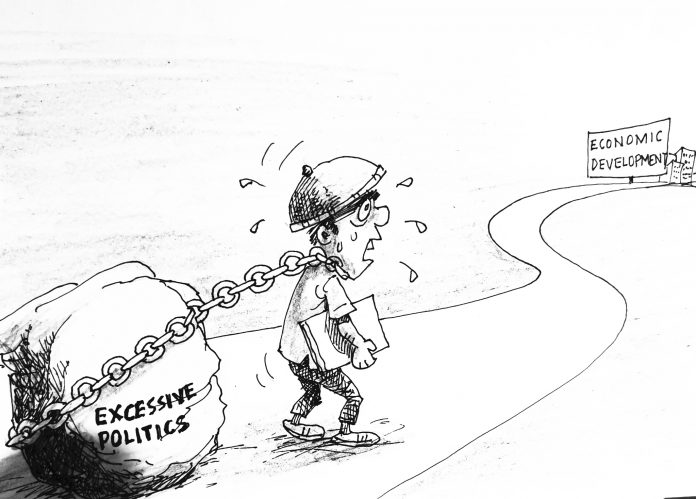
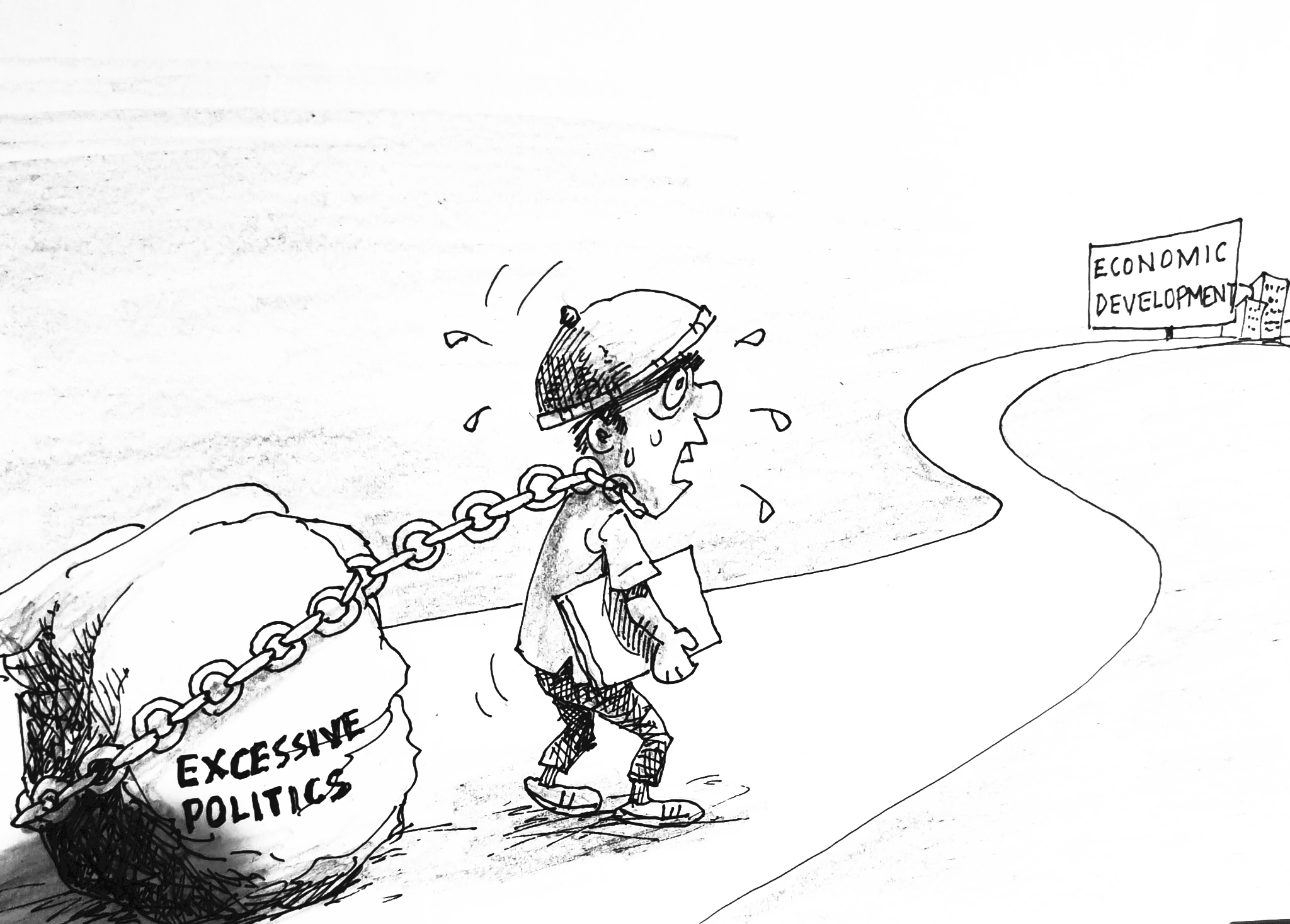
Common knowledge holds that excessive political interference and power struggles can undermine a nation’s progress. By examining the impact on policymaking, economic stability, social cohesion, and infrastructure development, it becomes evident that an overabundance of politics can derail a nation’s journey towards sustainable development.
When politics overshadows rational decision-making processes, policymaking becomes mired in power struggles and personal agendas. Political actors may prioritize short-term gains over long-term sustainability, leading to ineffective and inconsistent policies. The constant shifts in political ideologies with each change in leadership can result in the reversal or abandonment of previously established policies, leaving a nation in perpetual state of uncertainty. This continuous cycle hampers the ability to implement systemic changes, foster investment, and address pressing societal challenges, thereby impeding overall development.

Excessive political interference often contributes to economic instability. Frequent changes in regulations, arbitrary tax regimes, and inconsistent enforcement of laws can deter investments and hinder the growth of businesses. Additionally, excessive corruption and bribery, prevalent in politically driven systems, divert fundings from crucial economic sectors, aggravating income inequality. Furthermore, political instability disrupts macroeconomic stability, leading to inflation, currency devaluation, and an increasing burden of debt. These adverse economic consequences hinder a country’s development and deter foreign investors, further exacerbating the cycle of economic decline.

Too much politics also polarizes and divides societies, undermining social cohesion, and impeding development. Political polarization often occurs when political parties or leaders prioritize their own interests over national unity. This leads to the fragmentation of societies along various fault lines, exacerbating social tensions, and potentially fueling violence or civil unrest. When political conflict takes center stage, it distracts government attention and resources from addressing critical socio-economic issues such as poverty, education, healthcare, and social welfare. The resulting societal divisions can further impede progress by hindering cooperative efforts and eroding trust in national institutions.

Infrastructure projects, such as roads, bridges, power plants, and public transportation, often require long-term planning and stability to ensure successful completion and proper maintenance. But excessive politics can lead to delays, corruption, and mismanagement, stifling progress and frustrating citizens. A lack of reliable infrastructure inhibits economic growth, restricts access to basic services, and limits opportunities for the population, further hindering a country’s development. Take the worst condition of Maharlika Highway in Samar, for a classic example.

Indeed, excessive politics negatively impacts various aspects of our nation’s development. To ensure sustainable development, it is crucial for our country to prioritize rational decision-making processes, promote stability, and foster cooperation among political stakeholders, while simultaneously addressing critical socio-economic challenges.

Scam sellers on Facebook

0
DOMS PAGLIAWAN

As an ever-expanding platform, Facebook has become a hub for online commerce, attracting various legitimate sellers and buyers. However, alongside reputable transactions, the prevalence of scam sellers on Facebook has grown substantially.

The increasing number of scam sellers on Facebook can be attributed to several factors. Firstly, the ease of creating fake profiles allows scammers to assume various online identities and establish trust with potential victims. Additionally, Facebook’s vast user base provides scammers with a wide pool of potential victims, making it an attractive platform for their illicit activities. The anonymity and global reach of Facebook facilitate the perpetration of scams, making it challenging to track and prosecute these wrongdoers.

Facebook scammers employ a range of sophisticated techniques to deceive unsuspecting users. These techniques include using stolen or manipulated images, crafting compelling narratives to evoke trust, and employing persuasive marketing strategies. Furthermore, scammers often manipulate the feedback system on Facebook, using fake accounts to generate positive reviews and establishing a veneer of credibility. These techniques make it increasingly difficult for users to distinguish between legitimate and fraudulent sellers, ultimately leading to greater success for scammers.

The consequences of falling victim to scammers on Facebook can be severe. Users risk financial loss, identity theft, and fraudulent charges on their credit cards. Moreover, victims may suffer emotional distress and damage to their online reputation due to their association with fraudulent transactions. The impact is not limited to individuals alone, but also extends to businesses that may suffer reputational damage if they fall prey to scammers posing as suppliers or partners. This erodes trust in online marketplaces and affects users’ willingness to engage in e-commerce activities on Facebook.

Accordingly, Facebook has already implemented various measures to combat illicit activities. The company utilizes automated detection systems to flag suspicious accounts and content, working in conjunction with user-reported scams. Furthermore, Facebook has increased their collaboration with law enforcement agencies to identify and track scam sellers. However, despite these efforts, the dynamic nature of scamming techniques necessitates constant adaptation and improvement in Facebook’s fraud prevention systems.

To address the prevalence of scam sellers on Facebook, several suggestions can be made. First, Facebook could enhance its user education initiatives by proactively sharing information about scam schemes. This would increase users’ awareness of potential risks and enable them to identify suspicious sellers more effectively. Additionally, implementing stricter verification procedures during account creation, such as identity verification checks, could help prevent scammers from creating fraudulent profiles. Finally, Facebook could establish more rigorous processes for monitoring and removing suspicious accounts to ensure a safer online marketplace.

The use of sophisticated techniques by scammers necessitates continuous improvement of Facebook’s fraud prevention systems. By increasing user education, enhancing verification processes, and implementing stricter scrutiny of accounts, Facebook can work towards reducing the prevalence of scam sellers and providing a safer online marketplace for its users. Ultimately, collective efforts from all stakeholders are crucial in safeguarding the integrity and trustworthiness of this influential social media platform.

LGUs receive P113-B recovery loan from LandBank

0
DR. PACIENTE CORDERO
Dr. Paciente Cordero

Per Landbank (LB) report as of February 2023, it has released P113 Billion in recovery loan from the impact of the pandemic, to over 400 local government units (LGUs) as of February 2023.

LB’s Restoration and Invigoration Package for Self-sufficient Economy towards Upgrowth for LGUs (Rise UP) lending program has reportedly financed P113 billion loans as of February this year benefitting 408 LGUs. The loan program started at the height of COVID -19, provide financial assistance to provide basic and support services is intended for LGUs in need of a resilient and sustainable recovery from the pandemia.

The Province of Quirino’s loan of P67 million loan, the latest beneficiary
LB’s Rise UP lending program, is purposely for the enhancement of its internet connectivity and accessibility as well as procurement of an internet service provided and other related equipment.

From an initial 2020 fund allocation of P10 billion, the program is now managing P150 billion which the LGUs could tap until July 2025.

MY COMMENT:
LandBank’s (LB’s) Post-pandemic Recovery Loan Program is worthy of note, a much-needed strategy to assist and alleviate the families badly hit by COVID-19. The financial assistance through the Rise UP Loan Program did benefit 400 plus eligible families, but it is common knowledge that the current beneficiaries represents only a small percent of the total number of families affected during the pandemic. It is therefore suggested that Rise UP program of LB expanded so that more families are included among the beneficiaries. Also the curentP150 Billion fund needs to be increased to meet the necessities o the victimized families.
ooo000ooo
NEXT TOPIC : “ DOST approves UST R & D Project on oral COVID vaccine”
SHARE S & T THOUGHTS Through Email: drpacjr@yahoo.com.

Let’s always be hopeful

0
FR. ROY CIMAGALA
FR. ROY CIMAGALA

THERE are times when we have to wait, desist from acting at the moment, and hope for a better time that will surely come, although in ways that may not be according to our expectations.

We are reminded of this act of prudence in that gospel parable about the good seed and the weeds. (cfr. Mt 13,36-43) The point of the parable is that there are situations in life when acting at the moment may cause more harm than good. And so, we just have to wait, be patient and hopeful.

In the meantime, what we can do is to continue doing a lot of good, praying, making sacrifices, generously fulfilling our duties and responsibilities, reaching out to others, growing in the virtues, etc.

We have to remember that due to the God-designed life of communion we enjoy among ourselves, we know that anything good we do will always have a good effect on the others. The awareness of this truth of our faith should prod us to be generous in doing a lot of good. We also know that good in itself is self-diffusive. It is in its nature to spread. So, we should just do a lot of good.

As can be seen, to wait, to be patient and hopeful, does not mean to do nothing. What we cannot do at the moment, out of prudence, should push us to do many other good things. Instead of feeling lethargic, we should feel very energetic.

Especially with our present condition that involves an increase of pressure, confusing knowledge overdrives, increasingly sophisticated challenges and difficulties, we need to seriously cultivate this virtue of hope. There’s no other way. It’s either that or we get into a free-fall toward disorder, chaos and desperation.

Our problem is that, as usual, we have a very limited idea of hope. And from that handicapped position, it’s obvious that all sorts of dangers, confusion and errors can ensue.
Among the anomalies besetting our understanding of hope is that it is a purely man-made virtue, with only earthly and natural dimensions and relying solely on human and material resources.

We seem to get stranded in the external properties of the virtue, without entering into its real essence, significance and practicability. We need to recover the true nature and purpose of hope, and spread its knowledge and skill far and wide. That’s what we urgently need these days.

First, we need to understand that hope is a gift from God, one of what are called theological virtues. As such, it goes always in this life with the other pair of faith and charity.

The direct corollary of this reality is that the first thing we have to do about it is to ask for it, often kneeling and begging God our Father not only to grant it to us, which he actually does unstintingly, but also to increase it all the time.

We should never be casual about this fundamental and indispensable requirement of hope. Though we have to be discreet about it and natural in living it, we have to understand that without this condition met, no amount of human ingenuity can substitute it.

Of course, hope increases also to the extent that we deepen our faith and enrich our charity. In this life, these three theological virtues go together and mutually affect one another.

Luxury?

0
AL ELLEMA
AL ELLEMA

Vehicles run with the danger of falling into deep cracks on our highways. The cracks pose real risks to both lives and properties. Traveling along the highways of Samar would give one a scare on many portions of the highway that are badly broken. The cracks are not properly marked with warning signs, sending vehicles to leap at high speed or halt in screeching manner as brakes are abruptly applied to avoid from falling in such holes.

Many motorists had certainly encountered these death traps that could cause vehicles turning turtle at an instant mistake of the driver. Passengers are surely cursing government for pushing them into the edge of road mishaps due to badly broken pavements that have no warning signs. Those who are unfamiliar with such road cracks are caught by surprise upon reaching the brink to perdition. If one is traveling at high speed, the risk of jumping into deep cracks or tumbling off the pavement if very high.

The situation is not beyond repair but government is simply not giving enough attention and priority to such problem. It is unfortunate that many repairs are being done on highway pavements that are seemingly still in good condition while dilapidated portions are being left in such bad condition. What is lamentable is the absence of road signs that will forewarn motorists of the dangers they are about to pass. Some roadblocks are placed to prevent vehicles from going straight into such cracks but even the roadblocks are unpainted are hardly visible especially at night.

People could only wail every time the vehicle they are riding pass over such deep cracks. While many are complaining in murmurs, nothing is being raised to the attention of concerned agencies. But the problem is very glaring for government officials not to notice. It is really bothersome that government would only act when something bad happens. As long as motorists are able to evade the deadly cracks and no accident happens, government would not lift a finger.

There is a weighing station purportedly erected to check the weight of moving vehicles, particularly heaving trucks, trailers, wing vans and heavy equipment. Unfortunately, people in the area could only sigh at how such heavy and overweight vehicles are permitted to cross san juanico bridge and travel on the seemingly sub-standard pavement along the Samar portion.

While government could not undertake repairs or even place road signs to warn people from falling into deadly cracks on our highways, there is much fund to banner shameless faces of politicians and government officials whose expensive billboards are scattered along our highways. Maybe people should pester government officials with complaints if only to push them to act on matters affecting their very lives. Until when can we endure living on the great dangers of deadly cracks.
comments to alellema@yahoo.com

Recent Posts

DALMACIO C. GRAFIL
PUBLISHER

ALMA GRAFIL
EDITOR-IN-CHIEF

ROMEO CEBREROS
OFFICE IN-CHARGE

OFFICE
BRGY. SONGCO, BORONGAN CITY

CONTACT NUMBERS
(055) 261 – 3319 | 0955 251 1533 | 0917 771 0320 | 0915 897 7439 | 0921 511 0010

DALMACIO C. GRAFIL
PUBLISHER

RICKY J. BAUTISTA
EDITOR

ALMA GRAFIL
BUS. MANAGER

OFFICE
RIZAL AVENUE, CATBALOGAN
(INFRONT OF FIRE DEPARTMENT, NEAR CITY HALL)

CONTACT NUMBERS
0917 771 0320 | 0915 897 7439 | 0921 511 0010

EMAIL
lsdaily2@yahoo.com

WEBSITE
www.issuu.com/samarweeklyexpress