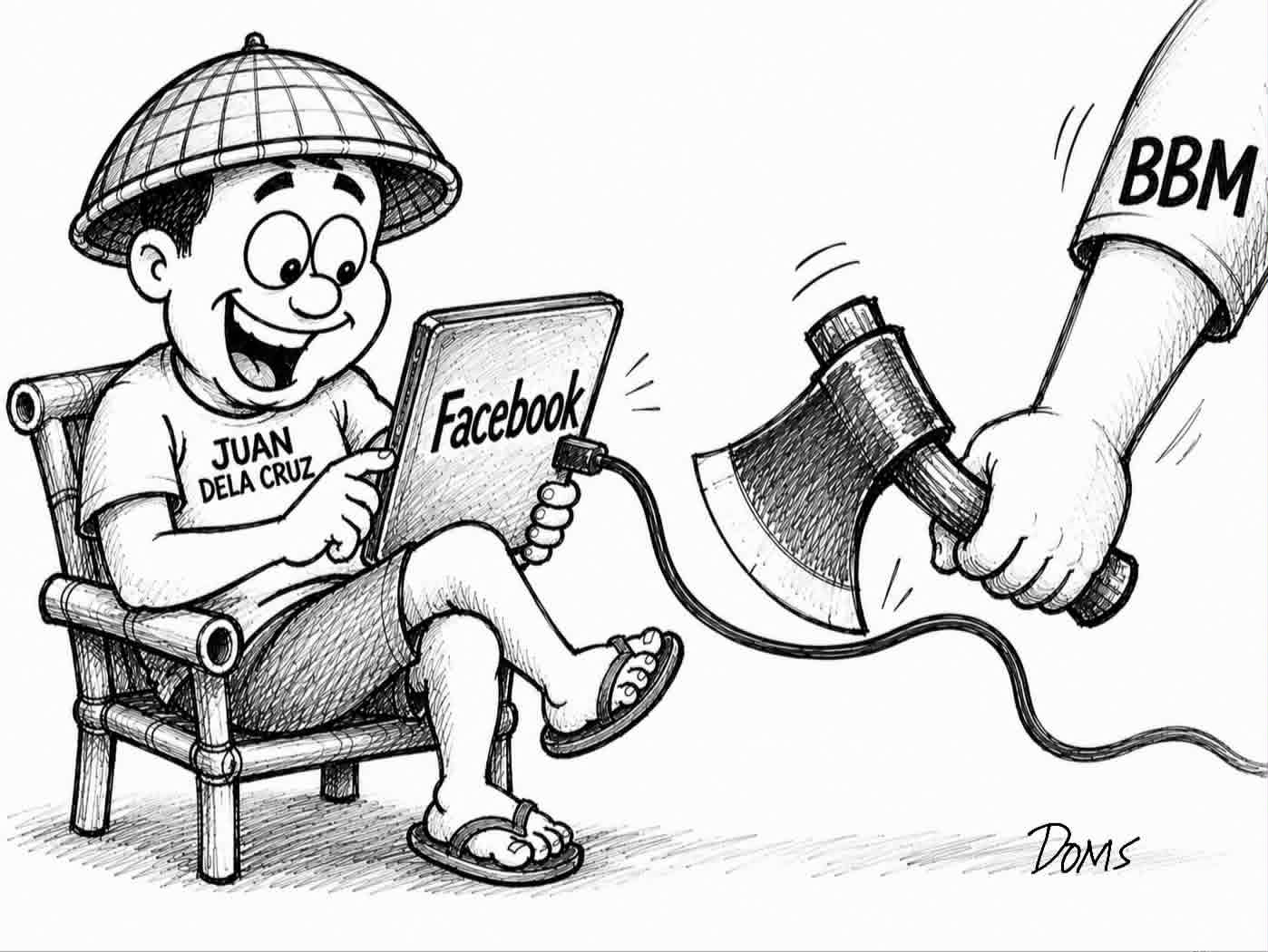
It proliferates on social media that President Ferdinand Marcos Jr. is planning to ban Facebook in the country. Such a proposal poses a serious threat to freedom of expression. Silencing an entire platform for carrying criticism is excessive, dangerous, and undemocratic. The government must answer public grievances, not suppress the people who raise them.
For millions of Filipinos, Facebook is more than a source of entertainment. It is a practical channel for news, public discussion, livelihood, emergency information, community coordination, and communication with relatives abroad. It also gives ordinary citizens—especially those without access to newspapers, television networks, or government offices—a place to report abuses and question public officials. Closing that channel would disproportionately silence the poor while leaving the powerful with many other ways to speak.
The government may legitimately act against scams, cybercrime, coordinated disinformation, threats, exploitation, and other unlawful online conduct. But those problems must be addressed through clear laws, evidence-based investigations, due process, and action against particular offenders. A nationwide ban would punish millions of lawful users for the wrongdoing of a limited number. It would be similar to closing every newspaper because one publication printed false information.
Such a ban would also expose a disturbing failure of priorities. Public anger will only deepen when authorities appear eager to restrict social media while corruption, smuggling, questionable contracts, defective flood-control projects, and the misuse of public funds remain unresolved. Citizens naturally ask why criticism receives a faster response than allegations involving billions of pesos. A government cannot demand silence while failing to provide convincing answers about matters that directly affect public safety and national resources.
The President and other public officials must reject any attempt to treat criticism as an enemy of the state. They should protect lawful speech, disclose public records, investigate credible accusations, prosecute actual offenders, and correct failures exposed by citizens. Strong leaders do not close the public square when confronted by angry voices; they give the people sufficient reason to trust the government again. Banning Facebook will not erase public discontent—it will only confirm the fear that those in power would rather silence criticism than answer it.