TACLOBAN CITY — No airport in Eastern Visayas sustained damage or experienced operational disruption following the magnitude 6.0 earthquake that struck Eastern Samar on Monday afternoon, May 4, according to the Civil Aviation Authority of the Philippines (CAAP).
CAAP said all airports in the region remained fully operational after immediate inspections were conducted to assess the condition of airport facilities and ensure passenger safety.
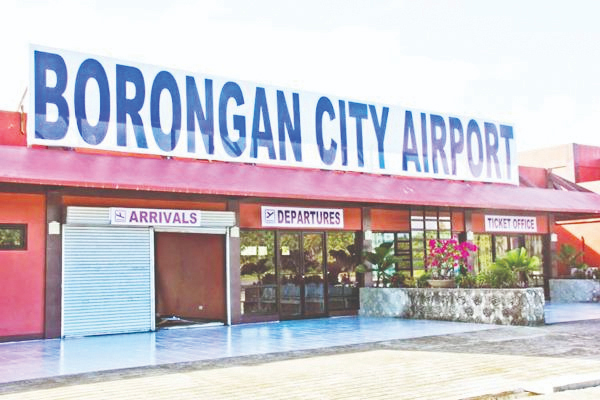
Among the airports inspected were those in Calbayog, Borongan, Catbalogan, Hilongos, Catarman, Guiuan, and Ormoc.
Only the airports in Calbayog, Borongan, and Catarman are operating commercially.
Emergency response teams, including Aircraft Rescue and Fire Fighting (ARFF) units, were immediately deployed to inspect runways, terminals, and other critical infrastructure after the tremor was felt across several parts of Eastern Visayas.
“Initial inspections showed no damage to airport facilities and operations remain normal,” CAAP said in its report.
Borongan Airport experienced a temporary power interruption following the quake, but airport operations were not significantly affected, authorities said.
The Philippine Institute of Volcanology and Seismology (Phivolcs) reported that the earthquake occurred at around 2:09 p.m. with its epicenter located nine kilometers northwest of San Julian, Eastern Samar, at a depth of 10 kilometers.
The tremor was felt in various parts of Eastern Visayas, prompting precautionary inspections of public infrastructure, including airports and transport facilities.
Phivolcs said no tsunami threat was generated by the earthquake but warned residents to expect possible aftershocks.
CAAP said it continues to coordinate with local authorities and airport personnel to monitor conditions and ensure the continued safety of airport operations in the region.
Eastern Visayas is among the country’s earthquake-prone regions due to its proximity to major fault lines and trenches, making rapid inspection and preparedness measures essential for critical infrastructure such as airports.
(GISELLE-ANN A. PADILLA, LNU STUDENT INTERN)