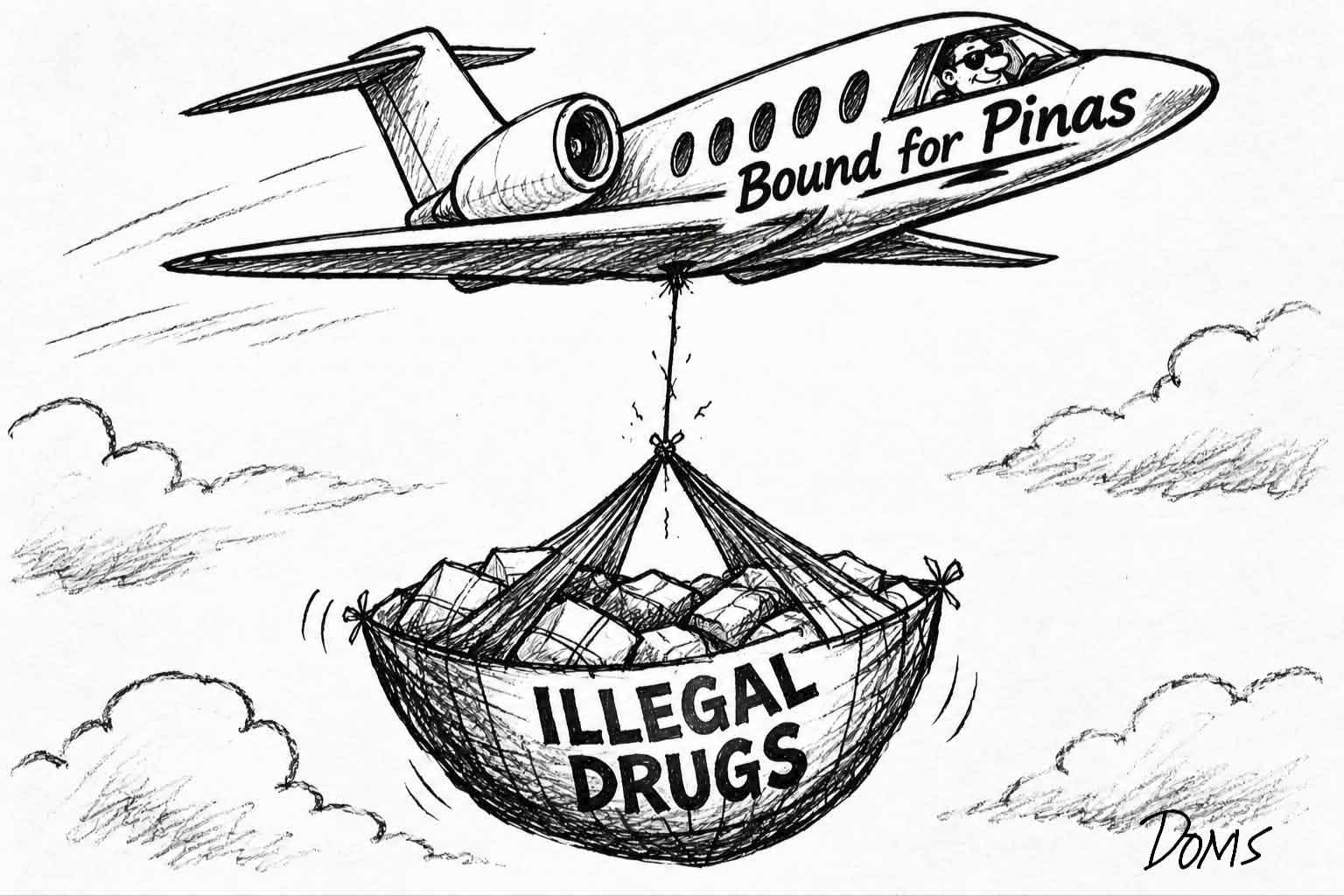
The reported shipment of a large quantity of illegal substances aboard a private plane bound for Manila from Laos raises serious concerns about cross-border drug trafficking. Such allegations demand an immediate and thorough investigation. Any attempt to smuggle illegal drugs into the Philippines must be met with the full force of the law.
The reported incident calls for close scrutiny of the flight’s circumstances, its passengers, its cargo, and its intended recipients. Authorities must establish whether the aircraft carried illegal substances, who arranged the shipment, and whether individuals in the Philippines were involved. These questions cannot go unanswered, especially when the alleged volume of the shipment suggests an organized operation rather than an isolated act of smuggling.
The use of a private aircraft, if confirmed, also raises questions about the effectiveness of existing monitoring and inspection procedures. Private flights must not become convenient channels for transporting prohibited substances beyond ordinary scrutiny. Customs officials, airport authorities, and law enforcement agencies must coordinate their operations, verify flight and cargo declarations, and investigate suspicious movements without granting special treatment to wealthy or influential travelers.
Equally important is identifying the people behind the alleged shipment, not merely those who may have handled the cargo. Drug trafficking networks depend on financiers, suppliers, transporters, intermediaries, and local distributors. Arresting low-level participants while allowing the organizers to escape accountability would do little to stop the trade. Investigators must follow the evidence, trace financial transactions, examine communications where legally authorized, and cooperate with their counterparts in Laos and other relevant jurisdictions.
The Philippine government must pursue this matter with urgency, transparency, and strict adherence to due process. Authorities should release verified findings when legally appropriate, prosecute those against whom sufficient evidence is established, and correct any weaknesses exposed by the investigation. At the same time, authorities must not treat the allegation as proof of guilt before the facts are established. The public deserves both effective action against drug trafficking and assurance that justice rests on evidence, not speculation or political convenience.