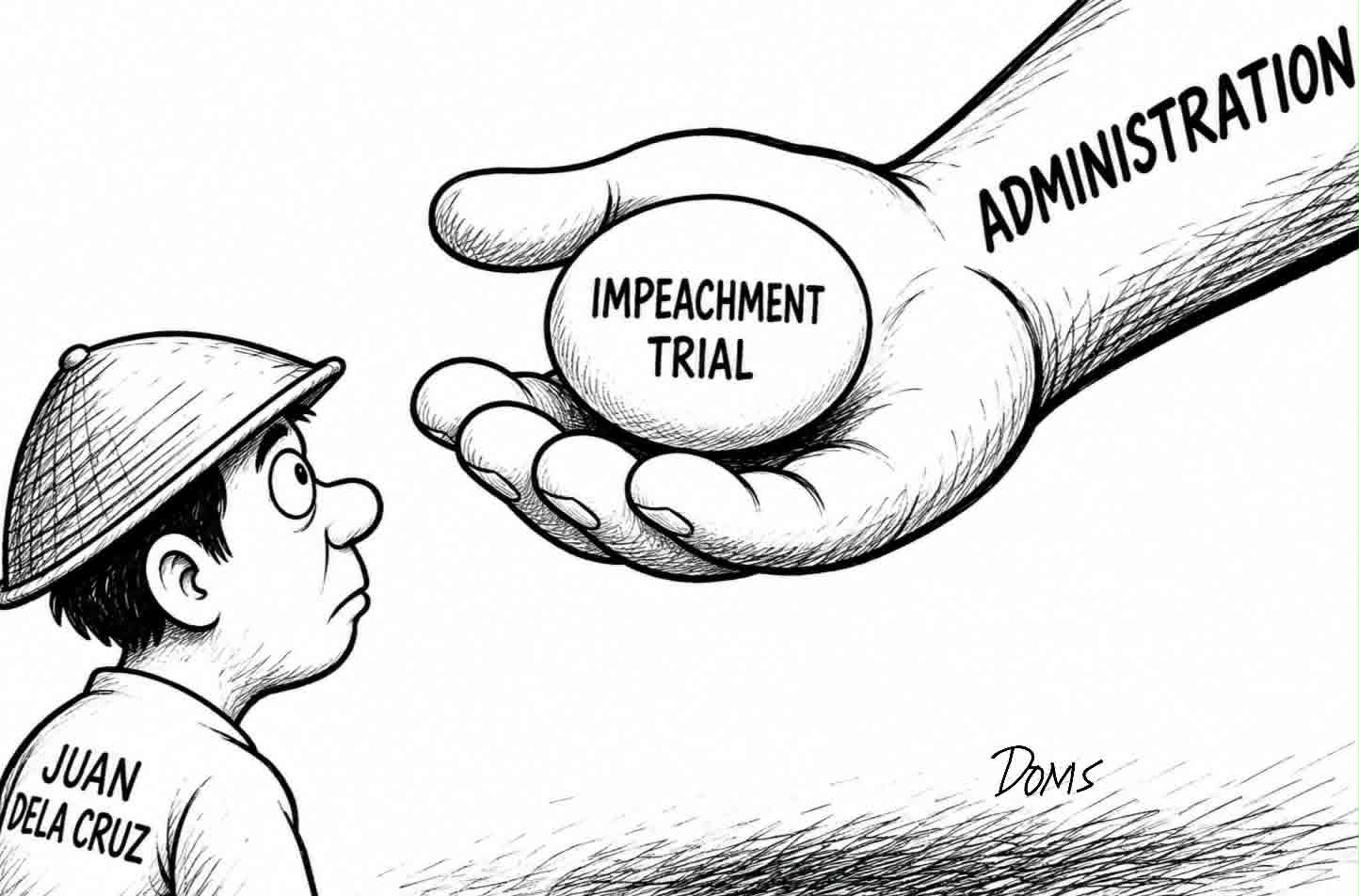
The impeachment trial of Vice President Sara Duterte has become a test not only of a single public official but also of the country’s justice institutions. Questions about impartiality and independence have naturally arisen given the highly charged political climate surrounding the proceedings. The administration carries the burden of proving that the process is guided by evidence, law, and due process rather than political advantage.
The first responsibility of the government is to protect the independence of senator-judges from any form of political pressure, whether real or perceived. A verdict accepted by the public cannot be produced by party loyalty, political alliances, or expectations of future rewards and punishments. Every senator-judge must be seen deciding the case on the strength of the evidence alone, even if that means ruling against allies or disappointing political supporters. If the administration truly seeks legitimacy for the outcome, it must publicly and repeatedly affirm that no member of the executive branch will interfere with the Senate’s judgment.
The government must also ensure that prosecutorial agencies, investigative bodies, and law enforcement institutions perform their duties consistently and fairly. Public confidence weakens whenever citizens perceive that some cases move rapidly while others involving powerful figures appear delayed or neglected. Whether such perceptions are justified or not, they affect the credibility of institutions and eventually the credibility of the impeachment process itself. Equal treatment before the law remains the strongest defense against accusations of selective justice.
Another essential safeguard is complete transparency throughout the proceedings. Hearings, evidence, arguments, and rulings should remain accessible to public scrutiny so that citizens can evaluate the process for themselves rather than depend on partisan interpretations from competing camps. The administration should welcome criticism, questions, and independent observation instead of treating them as political attacks. Openness does not weaken institutions; secrecy and suspicion do.
The only verdict that will endure is one that the public believes was reached honestly and independently. If the Vice President is found liable, the evidence must speak louder than politics; if she is acquitted, the decision must carry the same legal and moral weight. The administration therefore faces a responsibility larger than winning a political contest: it must protect the credibility of the country’s democratic institutions by ensuring that justice is not only done but is clearly seen to be done.