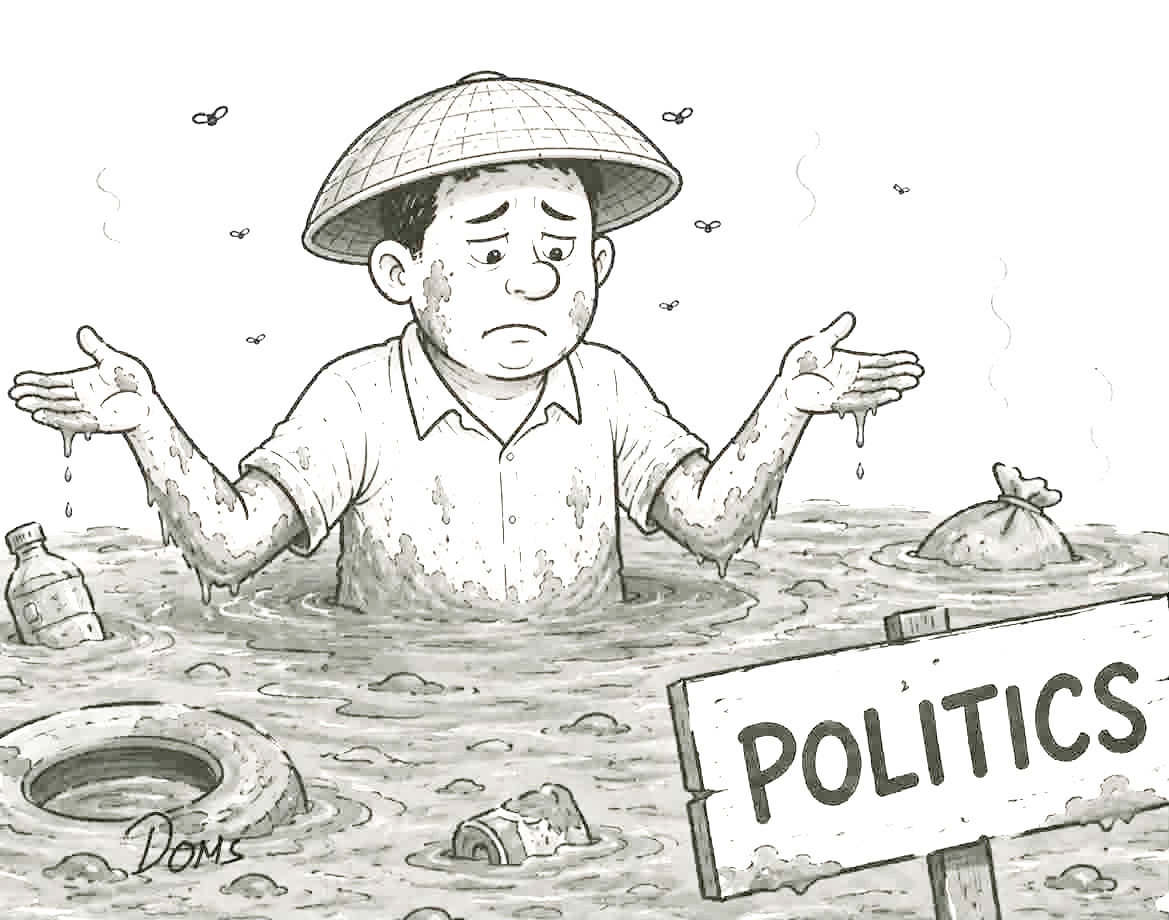
Philippine politics now moves at an alarming pace, with alliances shifting overnight and enemies turning into allies before the public can even make sense of it. The pace of these events has become so reckless that it often cheapens the seriousness of governance itself. What should be a solemn duty to serve the nation has too often become a contest of greed, ambition, and deception.
The rapid turnover of political loyalties and positions has made public life look less like governance and more like a market of convenience. One day, a politician condemns another in the strongest terms, and the next day, they stand side by side as partners, smiling before cameras as if nothing happened. Principles are abandoned with ease, and public declarations are treated as disposable. This constant shifting sends a dangerous message: in politics, conviction is negotiable, and truth can be traded for power.
Worse, many of those involved seem less concerned with solving national problems than with building personal empires. Public office has become, for many, a ladder to wealth, influence, and protection. Projects meant for public welfare are often tainted by allegations of overpricing, kickbacks, and misuse of funds. While ordinary citizens struggle with rising prices, poor wages, and unstable services, many in power appear busy strengthening their own circles and securing their own futures. That contrast is not only offensive; it is a betrayal of public trust.
This culture of dirty politics has also poisoned the national conversation. Instead of a healthy debate, what often takes place is character assassination, intimidation, and endless political maneuvering. Important issues are buried beneath noise, while investigations are often shaped by political interests rather than by the pursuit of truth. The public is left exhausted, confused, and cynical. It becomes harder to care because the spectacle is repetitive, and the outcome often seems predetermined by those who already hold power.
That is precisely why the public must not surrender to apathy, even when disgust feels justified. To stop caring entirely is to leave the political arena fully in the hands of those who abuse it. The answer is not indifference but sharper judgment, stronger demands for accountability, and the refusal to reward corruption and political opportunism at the ballot box. Politics may move fast, but the people must remain steady, watchful, and unafraid to call out those who have turned public service into private gain.