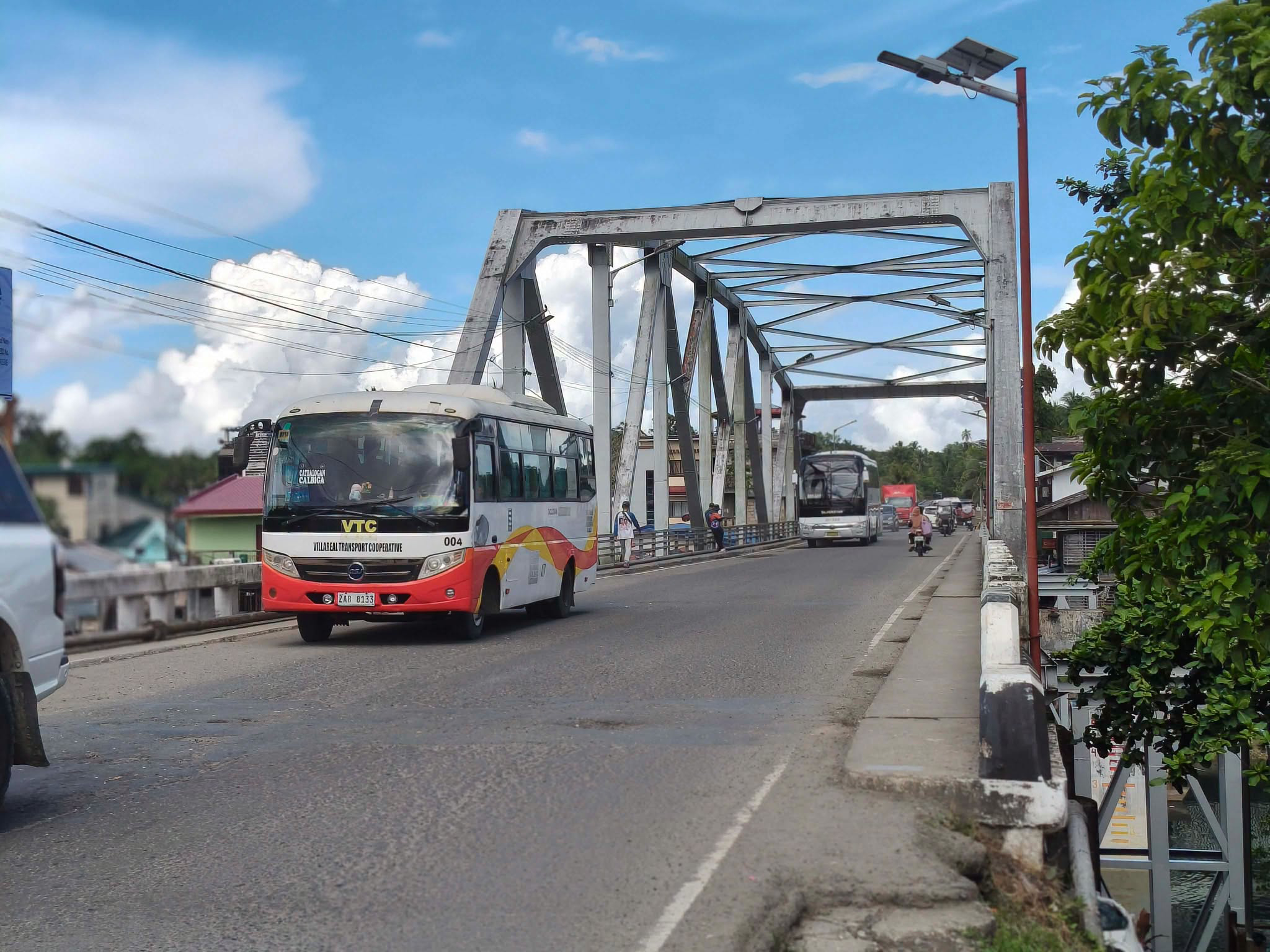
TACLOBAN CITY — Truckers, transport operators, and businesses across Eastern Visayas can now expect faster and more efficient travel after the Department of Public Works and Highways (DPWH) completed the initial strengthening works on Calbiga Bridge two months ahead of schedule, allowing the vital transport link to accommodate heavier vehicles once again.
The completion of the phase 1 portal shoring works marks a significant step in restoring the bridge’s capacity to handle larger cargo loads, easing transportation bottlenecks that had affected the movement of goods between Samar and Leyte in recent months.
DPWH Regional Director Engr. Edgar Tabacon said the retrofitting and strengthening project was undertaken to improve the bridge’s structural integrity, increase its load-bearing capacity, and ensure safer passage for motorists and freight carriers.
Beginning June 19, 2026, the Calbiga Bridge was reopened to two-way traffic for vehicles weighing up to 15 tons following a successful inspection conducted by DPWH engineers.
Vehicles weighing up to 30 tons are also allowed to cross the bridge under a controlled one-way traffic scheme from 10 p.m. to 5 a.m.
The accelerated completion of the project followed the February visit of DPWH Secretary Vince Dizon, who ordered the immediate implementation of strengthening measures and the release of funds for the construction of portal shoring structures designed to provide additional support to the aging bridge.
The Calbiga Bridge serves as a critical transportation link along the Pan-Philippine Highway in Samar, connecting communities, businesses, and supply chains across Eastern Visayas.
Restrictions imposed on the bridge earlier this year forced heavy vehicles to take the longer Wright–Taft–Basey route to reach Tacloban City and other key destinations, resulting in increased fuel consumption, longer travel times, and higher logistics costs.
With the reopening of the bridge to heavier loads, transport operators are expected to save both time and operating expenses while improving the flow of agricultural products, construction materials, consumer goods, and other essential commodities throughout the region.
Tabacon said the project aligns with the directive of President Ferdinand R. Marcos Jr. to address transportation challenges affecting motorists and truck drivers and to ensure the continued mobility of people and goods in Eastern Visayas.
He added that the strengthened bridge will help stimulate economic activity, support regional trade, and improve access to markets and services for communities in Samar and neighboring provinces.
DPWH officials said additional rehabilitation and long-term improvement measures for the bridge remain part of the agency’s infrastructure program to ensure the structure’s safety and reliability in the years ahead.
(LIZBETH ANN A. ABELLA)