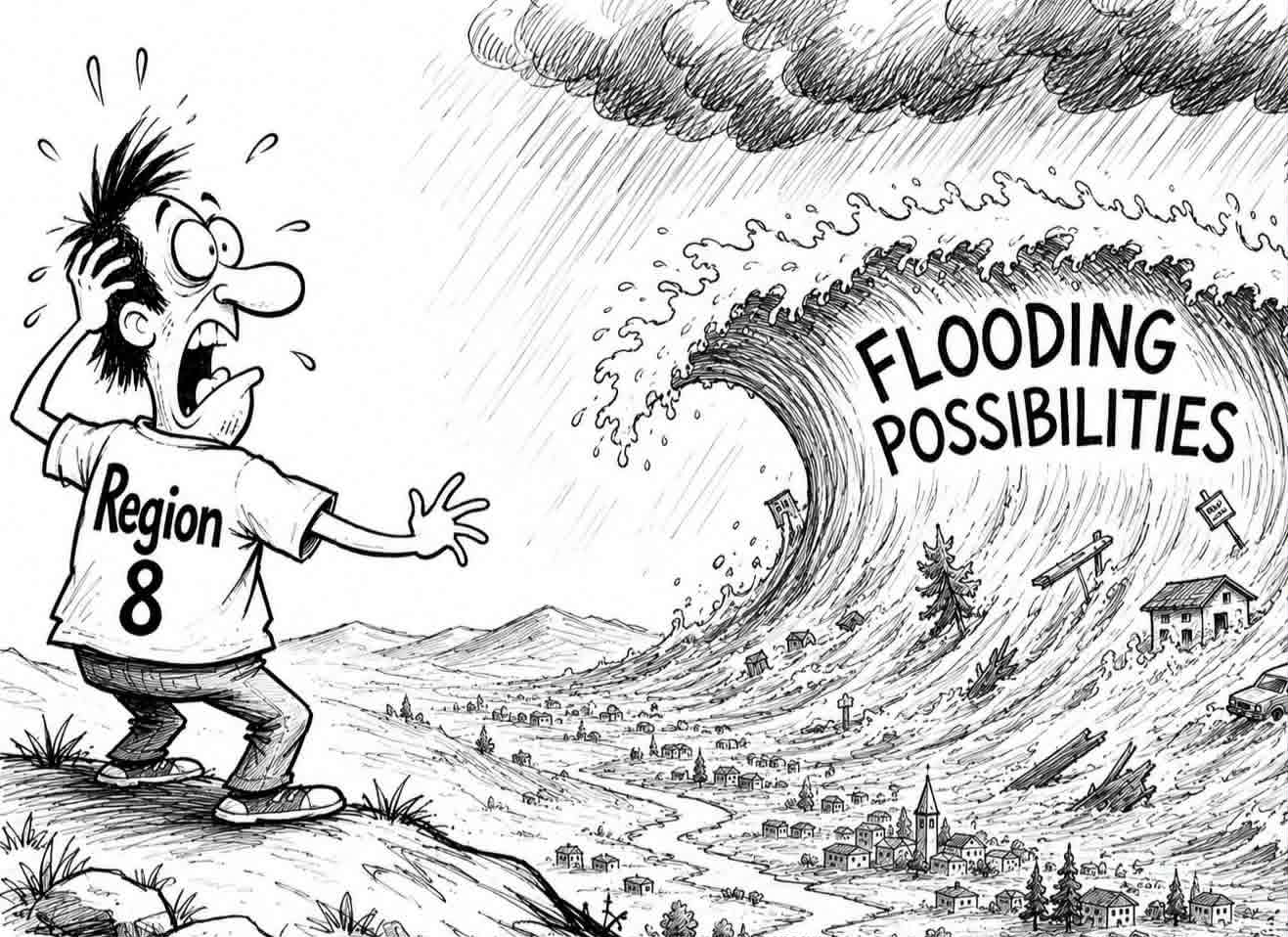
Severe flooding in Metro Manila and many parts of Luzon has again raised serious questions about the country’s flood-control projects. The massive destruction should serve as a warning to Eastern Visayas, a region that is no stranger to extreme weather. Flood-control structures that cannot withstand severe flooding are not protection at all.
The scenes in Luzon force attention beyond the floodwaters themselves and toward the infrastructure that was supposed to control them. When billions of pesos are spent on drainage systems, river walls, dikes, pumping facilities, and other flood-mitigation works, the public has every right to expect those projects to perform when heavy rains come. A flood-control project that fails because of poor materials, defective design, weak construction, or lack of maintenance is a costly failure; a project reported as completed but existing only in documents is outright betrayal. Public money intended to protect lives and property cannot be treated as a source of private profit.
Eastern Visayas has every reason to ask the same hard questions before another destructive flood provides the answers. The region regularly faces typhoons, prolonged rains, overflowing rivers, storm surges, and landslides. Are existing flood-control structures strong enough for conditions more severe than those anticipated when they were built? Were the correct materials used, were engineering standards strictly followed, and were contractors properly supervised? These questions must be answered through actual inspection and engineering tests, not through accomplishment reports prepared behind office desks.
The deeper concern is corruption. If irregularities in public works can occur elsewhere, there is no sensible reason to assume that Eastern Visayas is automatically immune from them; but suspicion alone is not proof, and every project must be judged through records, physical inspection, technical testing, and proper investigation. The government should therefore disclose project locations, contractors, budgets, specifications, completion dates, inspection reports, and actual physical accomplishments. Engineers and auditors must determine whether what taxpayers paid for is really standing on the ground and whether its quality matches what government documents claim. Accountability must reach not only dishonest contractors but also officials who approved, inspected, certified, or protected defective and nonexistent projects.
The worst time to discover a weak dike is when a river is already overflowing, and the worst time to discover a ghost project is when communities are already underwater. Flood-control projects throughout Eastern Visayas must therefore be subjected to rigorous, independent, and transparent inspection before the next major calamity arrives, with defective structures repaired and proven irregularities prosecuted. Nature cannot be ordered to weaken its rains to accommodate corruption and poor construction; the government must make its infrastructure strong enough to protect the people when those rains come.