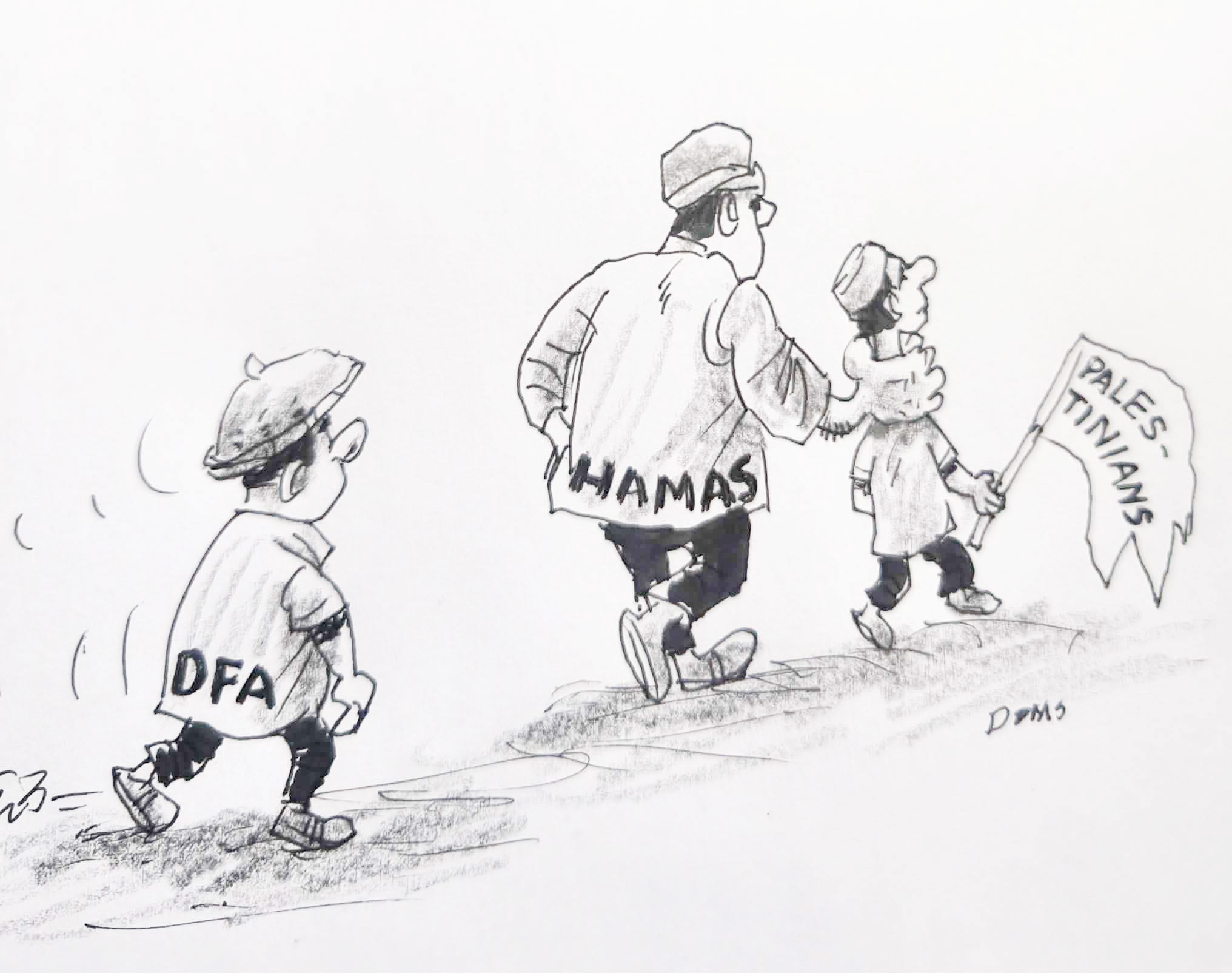
The Philippine delegation’s walkout during Israeli Prime Minister Benjamin Netanyahu’s address to the United Nations General Assembly was a poorly judged diplomatic protest. Such a public rebuke deserves serious criticism. Philippine diplomacy should demonstrate greater restraint and judgment.
The Department of Foreign Affairs confirmed that the delegation joined the September 24 walkout, explaining that it expressed support for peace in the Middle East and a viable Palestinian state. Those objectives deserve consideration, but the method remains open to challenge. Remaining seated would not have signaled approval of Netanyahu’s policies; it would have allowed Philippine representatives to hear his position and respond with a clear, formal statement. A government should explain precisely what it condemns, what it demands, and how its proposed action serves peace. Walking out conveys displeasure more readily than it communicates a workable position.
Israel’s assistance after Typhoon Yolanda deserves a substantial place in the country’s diplomatic memory. Its 148-member delegation provided relief and helped with rescue, reconstruction, and water supply restoration, while its field hospital treated more than 2,800 victims, performed operations, and assisted childbirth. These were concrete services to Filipinos facing desperate conditions. Such assistance does not purchase permanent agreement with Israeli policy, but it strengthens the case for expressing disagreements with care and respect. A country that remembers help received should weigh the necessity and consequences of publicly rebuking the country that provided it.
Criticism of the walkout, however, must remain accurate: protesting Israel’s conduct does not by itself establish allegiance to Hamas. Hamas’s killing of civilians in the October 7 attack warrants unequivocal condemnation, and concern for Gaza must never become an excuse for those atrocities. The comparison with Abu Sayyaf is defensible as a demand for consistency in condemning violence against civilians, but it cannot establish that Philippine diplomats endorsed terrorism. Nor should Palestinian civilians be treated as interchangeable with Hamas or required to prove that they have helped Filipinos before their suffering merits concern. A credible argument against the delegation’s conduct must distinguish diplomatic misjudgment from an evidence-free accusation.
The DFA should explain why a walkout was preferable to direct engagement and what concrete diplomatic purpose it achieved. It should reaffirm opposition to terrorism, insist on civilian protection, and communicate its objections to Israeli policy through sustained, explicit dialogue. It should also acknowledge Israel’s assistance to the Philippines without suggesting that gratitude requires silence over wrongdoing. The delegation chose a public rebuke when a firm, reasoned response would have better expressed the country’s position. Philippine diplomacy owes the public a policy whose principles and practical purpose are equally clear.