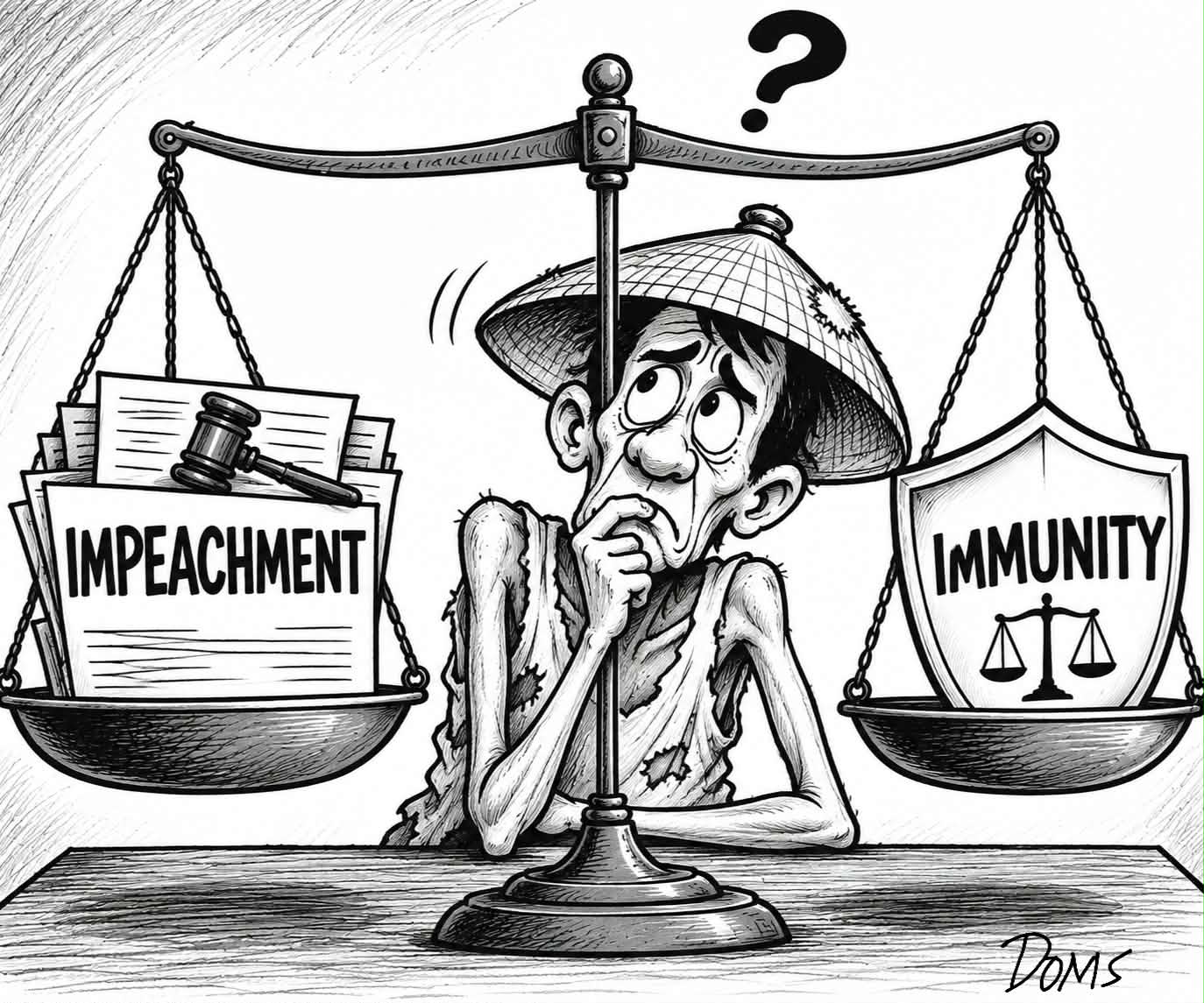
The filing of grave-threat charges against Vice President Sara Duterte has raised serious questions about immunity, political persecution, and the lawful limits of state power. Her position as an impeachable official does not automatically place her beyond the reach of the criminal courts. The case must therefore proceed under strict judicial independence, free from both political manipulation and claims of privilege unsupported by law.
The 1987 Constitution does not declare that all impeachable officials are immune from criminal prosecution while holding office. Article XI identifies the President, Vice President, members of the Supreme Court, members of the constitutional commissions, and the Ombudsman as officials removable through impeachment, but that common mode of removal does not give all of them presidential immunity. Philippine jurisprudence has recognized temporary immunity for an incumbent President because of the unique demands of that office, but this protection has not been extended automatically to the Vice President. Impeachment concerns removal and disqualification; a criminal case determines guilt and imposes penalties. These are separate proceedings governed by different standards.
Still, the absence of immunity does not give the government permission to turn law enforcement into political punishment. A warrant must rest on probable cause independently determined by a judge, and its implementation must be professional, proportionate, and respectful of the accused’s rights. If the authorities already knew Duterte’s location, they owe the public a clear explanation of why her mother and children were allegedly approached. Relatives must not be frightened, pressured, or used as instruments to force the surrender of an accused person. Any surveillance must likewise have a lawful purpose and must not become a campaign of intimidation financed by public money.
Duterte, for her part, cannot defeat the jurisdiction of a court merely by expressing distrust of the police or alleging political hostility. She may challenge the warrant, question the court’s jurisdiction, seek protective arrangements, demand accountability for misconduct, and present every available defense through counsel. Posting bail allows her to contest the accusations without remaining in detention, but it does not settle whether the charges are true. Her 2024 statements concerning President Ferdinand Marcos Jr., the First Lady, and then-Speaker Martin Romualdez warrant sober judicial examination, as threatening language from a high official cannot simply be dismissed as political theater. At the same time, an accusation is not a conviction, and public officials must stop speaking as though the court’s final judgment has already been written.
The proper answer is neither blanket immunity nor politically driven prosecution. The court must decide the case solely on admissible evidence, while the police and the DILG must disclose and justify every action taken against Duterte and her family. Any officer who used surveillance or enforcement powers for intimidation must be held accountable, just as the Vice President must answer the charges through lawful proceedings. Let justice operate without fear, favor, spectacle, or partisan command—for when the law is bent either to shelter the powerful or destroy an opponent, the Constitution itself becomes the casualty.