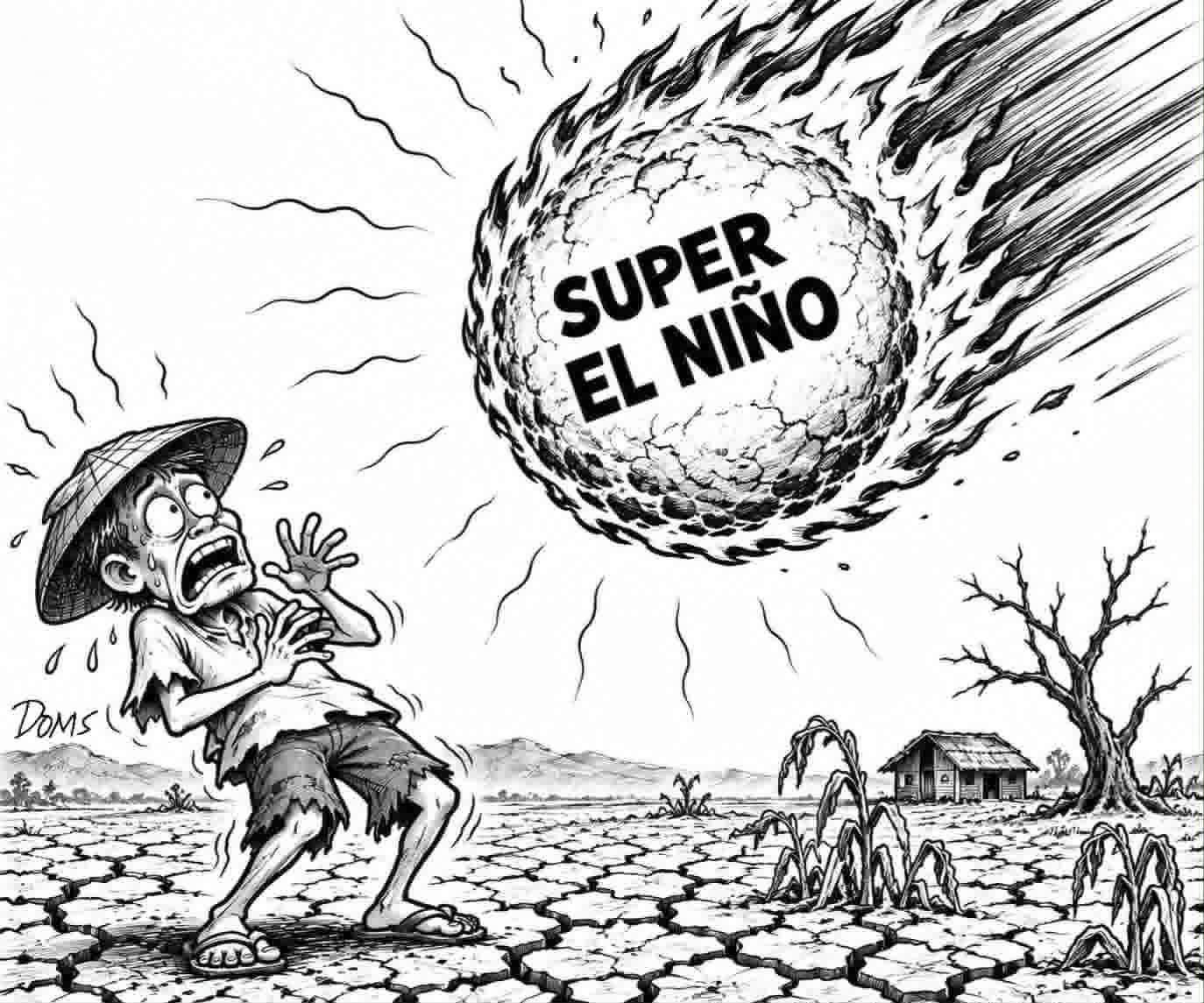
Amid the political squabbling flooding the country today, the threat of a super El Niño demands more serious, immediate preparation. Its destructive effects could reach farms, homes, schools, workplaces, power systems, and water supplies. Complacency in the face of this danger would be a grave failure of public leadership and civic responsibility.
Prolonged heat and inadequate rainfall can devastate agriculture, especially in communities dependent on rain-fed farms. The soil in some rice fields is already cracked and dry. Rice, corn, vegetables, coconut, and other crops may see reduced yields, while livestock and fisheries may also face severe stress. When production declines, farmers lose their income and consumers face higher food prices, making hunger and poverty even worse for families already struggling to meet their daily needs.
Water scarcity is another serious consequence that appeals for conservation alone cannot address. Reservoirs, rivers, wells, and irrigation systems may fall below dependable levels, forcing households, hospitals, schools, businesses, and farms to compete for limited supplies. National agencies and local governments must inspect water sources, repair leaking systems, establish fair distribution plans, and prepare emergency supplies before shortages become critical.
Extreme heat also threatens public health and essential services. Children, older persons, outdoor workers, pregnant women, and people with existing illnesses are particularly vulnerable to heat exhaustion, heatstroke, dehydration, and respiratory problems. At the same time, heavier electricity demand for cooling may strain the power grid, while low water levels can weaken hydroelectric generation. Work and class schedules, health advisories, fire-prevention measures, and power contingency plans must therefore be prepared in advance.
The country must confront a super El Niño through disciplined planning, accurate public information, and coordinated action from the national government down to every barangay. Authorities must support farmers, secure food stocks, protect water supplies, strengthen health facilities, prepare the power sector, and assist families most exposed to hardship. Preparation must begin before the fields dry, the taps weaken, and the heat claims lives, because warnings ignored today will become emergencies suffered tomorrow.