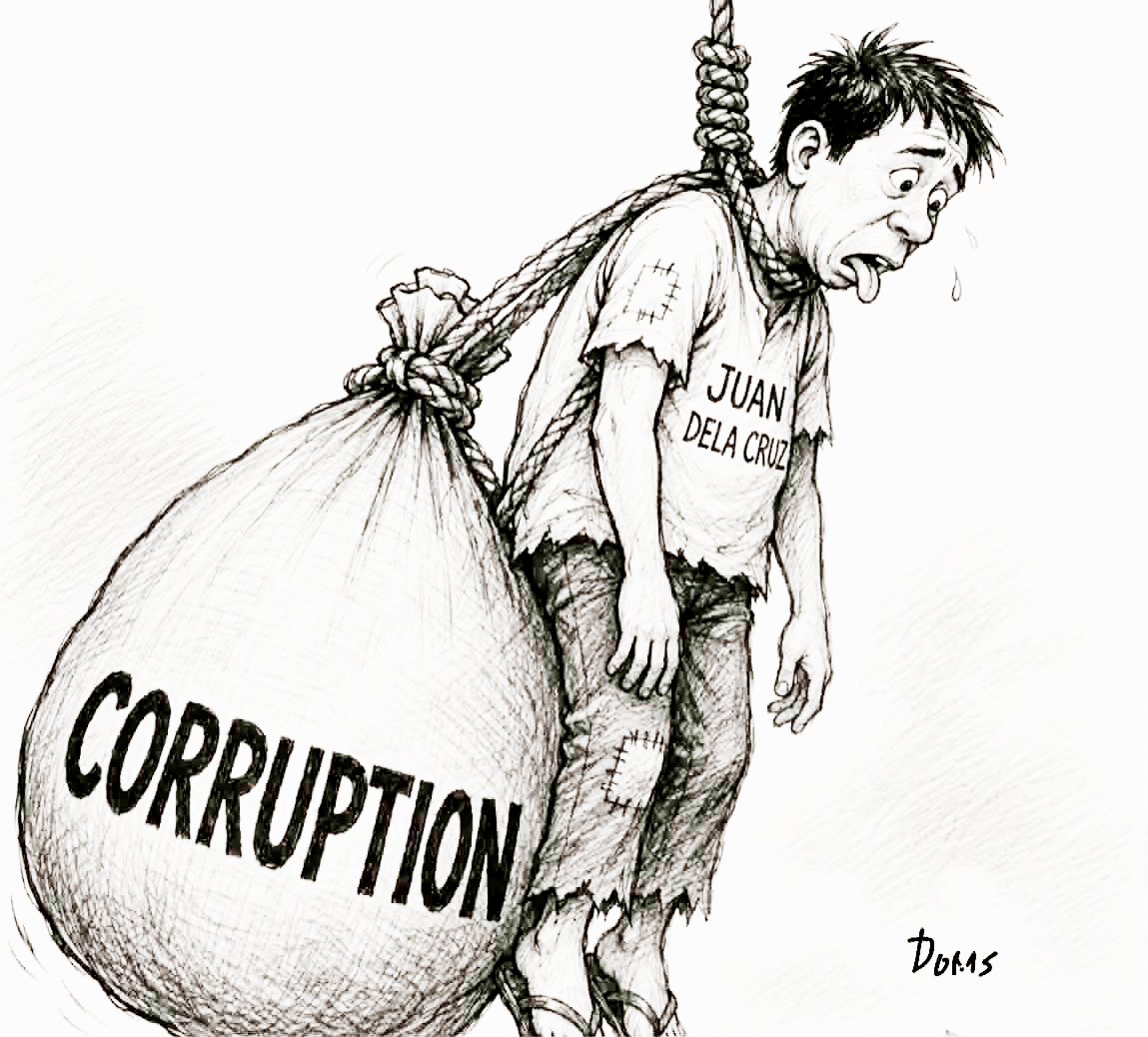
Filipinos today are gripped by a deep sense of hopelessness over the state of local and national affairs. Corruption appears so widespread that public office is increasingly viewed not as a platform for service but as a pathway to personal enrichment. This situation continues to rob the nation of progress, dignity, and opportunity.
The despair stems not merely from the existence of corrupt officials but from the apparent collapse of public trust across many sectors of government. Citizens have witnessed elected leaders, appointed officials, and influential bureaucrats repeatedly implicated in scandals involving public funds, questionable contracts, and abuse of authority. What makes the problem even more discouraging is that corruption often survives changes in administrations. New faces replace old ones, but the system remains largely unchanged. Many who once criticized wrongdoing eventually become participants in the very practices they previously denounced.
The pattern has become painfully familiar. Journalists who once exposed corruption sometimes enter politics only to become indistinguishable from the officials they once scrutinized. Young and idealistic leaders begin their careers speaking of reform, accountability, and public service, yet many eventually conform to the habits of the institutions they join. Even individuals who publicly project strong religious convictions have not been immune from accusations of dishonesty and misuse of public resources. These realities have convinced many Filipinos that corruption is no longer simply a problem of individuals but a deeply rooted culture.
The consequences extend far beyond stolen money. It is one of the principal reasons why the country struggles to keep pace with neighbors that have achieved stronger economic growth and more efficient public services. The situation becomes even more alarming when those who hold power use government machinery to obstruct investigations, silence critics, intimidate whistleblowers, or shield allies from accountability. In such circumstances, corruption ceases to be an isolated crime and begins to resemble a governing principle.
The nation cannot surrender to despair, but neither can it ignore reality. Genuine reform requires fearless law enforcement, independent institutions, transparent governance, vigilant journalism, and citizens who refuse to normalize dishonesty in public life.
Accountability must apply equally to allies and opponents, to the powerful and the ordinary alike. Many Filipinos continue to place their hope in moral renewal and divine guidance, yet faith must be accompanied by collective action and courage. The fight against corruption will remain difficult, but the alternative is a future in which poverty, injustice, and public frustration become permanent features of national life.