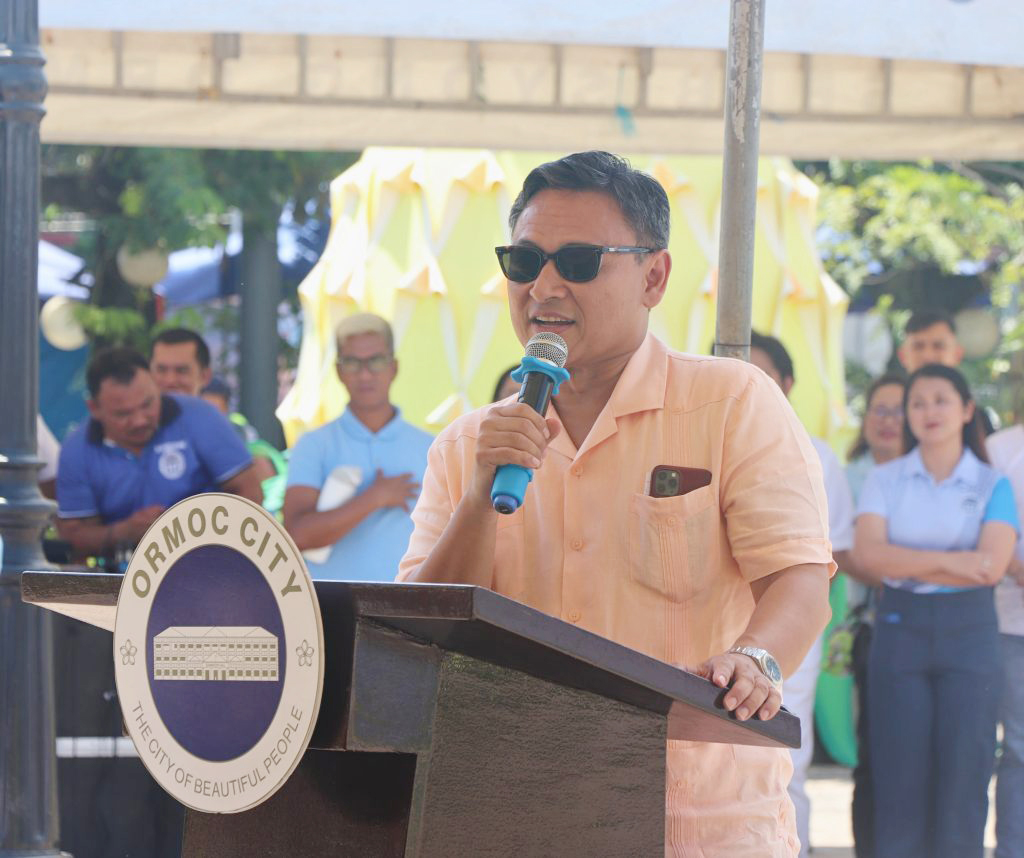
ORMOC CITY (PIA) — Amid ongoing debates about the future of the country’s K–12 program, Department of Education (DepEd) Secretary Juan Edgardo Angara clarified that Senior High School (SHS) will be strengthened to meet the needs of Filipino learners.
Secretary Angara, who was in Ormoc City for the ongoing National Schools Press Conference, said reforms are already underway to improve the current system rather than dismantle it.
“The K-12 program is a law – we cannot do anything about it. What we need is to strengthen the curriculum so it becomes more relevant, efficient, and beneficial to learners,” Angara said.
Following President Ferdinand R. Marcos Jr.’s directive, the DepEd is making improvements in SHS curriculum, focusing on aligning classroom instruction with real-world skills, ensuring that students are not only academically competent but also industry-ready.
DepEd Memorandum No. 12, Series of 2026, provides for the full implementation of the Strengthened SHS Curriculum in Grade 11 starting School Year 2026–2027 to improve employability and academic readiness.
Key changes include reducing core subjects to five, removing traditional strands in favor of flexible elective clusters such as STEM, Arts, Business, Technical, and increasing specialized training for Grade 11.
The strengthened SHS curriculum introduces key structural, instructional, and content reforms to foster mastery of foundational skills, enhance learner choice based on ability and aspirations, and improve workforce readiness.
These changes are designed to ensure that learners acquire relevant skills and competencies aligned with the demands of higher education, middle skills development, employment, and entrepreneurship.
Work immersion will also remain a cornerstone of the program. Under the strengthened SHS, work immersion will be expanded and strengthened through partnerships with local industries.
“Our goal is to make sure that students leave school prepared, whether for college, employment, or entrepreneurship,” Angara said.
Through partnerships with various industries, learners are exposed to actual job environments with greater access to on-the-job training opportunities, giving them a glimpse of real workplace environments before they graduate and helping them develop technical skills, work ethics, and professionalism.
As reforms continue, DepEd underscores its commitment to making education more relevant, ensuring that what students learn in the classroom translates into meaningful opportunities beyond it.
(ACR, PIA Leyte)