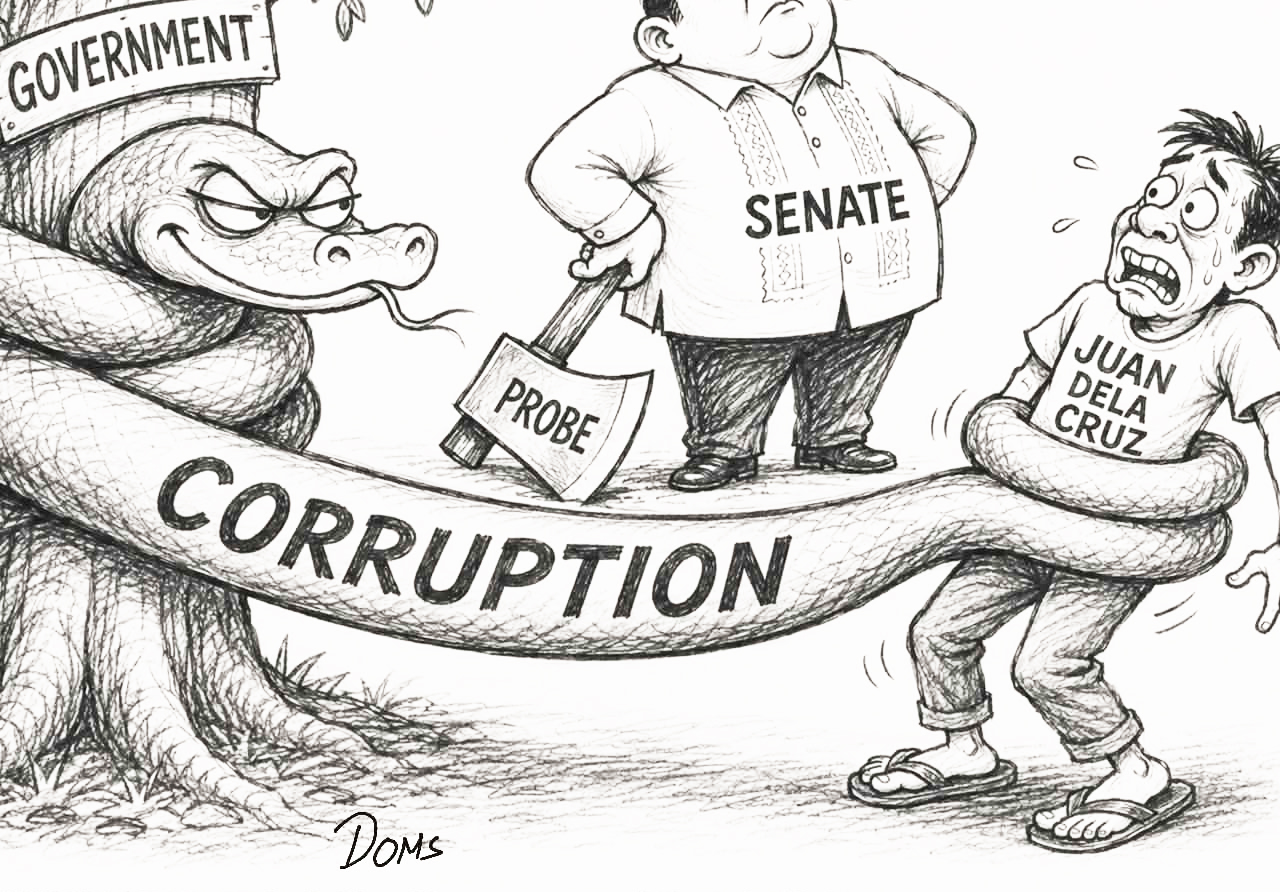
Corruption scandals left hanging by those in power are among the gravest wounds a nation can suffer. It becomes far worse when the very people expected to investigate are named by whistleblowers as participants in the wrongdoing. That situation is not merely a failure of governance; it is a deliberate betrayal of public duty.
When corruption is purposely left unresolved, the damage does not end with stolen public money. It teaches citizens that justice can be delayed until it dies. In Malaysia, the 1MDB scandal showed how billions could vanish while political machinery worked to slow down accountability. The scandal dragged on for years before decisive action came, proving that delay itself can serve as a weapon of protection. That same pattern appears wherever the accused holds enough power to shape the investigation.
The danger grows when corruption becomes normal. In Brazil, Operation Car Wash uncovered a huge network of bribery involving political and business elites. Yet even after exposing the scheme, political struggles and institutional pushback weakened the effort and divided the public. This is the tragedy of unresolved corruption: even when the truth comes out, power can still blunt justice. The people are then left to wonder whether the law is real or merely selective.
The burden often falls hardest on those who speak. In Russia and South Africa, whistleblowers and investigators have repeatedly faced threats, political attacks, or isolation while exposing wrongdoing linked to the powerful. During the era of “state capture” under Jacob Zuma, investigations revealed how public institutions were bent to serve private interests. Such examples show a cruel pattern: the accused are protected while the truth-tellers are punished. This turns justice upside down and warns others to remain silent.
The answer is simple but difficult: independent investigations, fearless institutions, and legal protection for whistleblowers. Corruption cannot be fought by those who benefit from it, because conflict of interest kills honesty at the start. The lesson from Brazil, Malaysia, and South Africa is clear: unresolved corruption poisons nations far beyond the stolen funds. If our government keeps burying scandals to save the powerful, it is not preserving order—it is preparing the collapse of our economy and national stability.